An all-women cab service, a children’s shelter and a café run by acid-attack survivors invite visitors to see the famed tourist route beyond its monuments.
In India’s Golden Triangle, Another Side of the Country Awaits
By Robert Liwanag | January 5, 2026
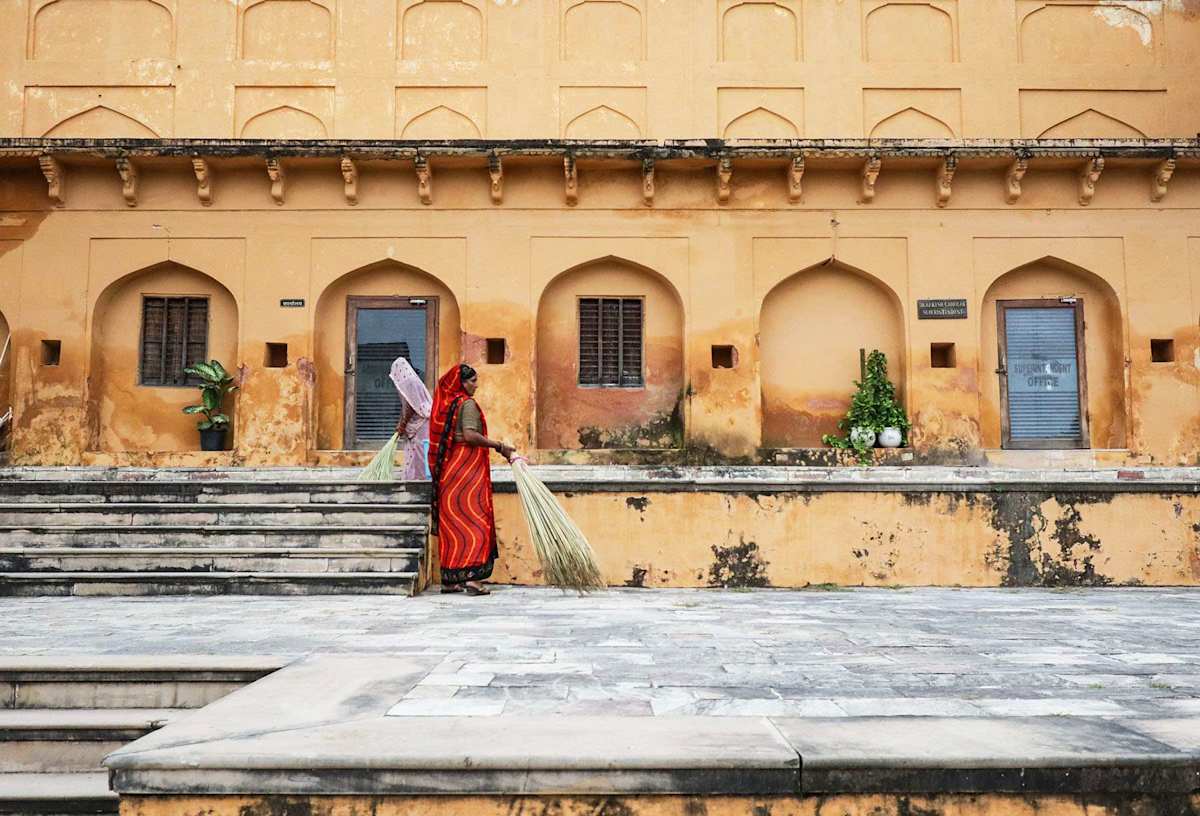
Amer Fort’s yellow sandstone, naturally weathered, stands out in every corner of the complex.
Robert Liwanag
Just after 5 a.m., the line outside the Great Gate of the Taj Mahal is already hundreds deep. We’re all here for the same reason: to see the iconic Mughal-era mausoleum at sunrise. In 1632, Emperor Shah Jahan ordered its construction to honor his late consort, Mumtaz Mahal. “It’s a famous symbol of love, but also of power and history,” says Raghu Rathore, a guide with G Adventures, a small-group tour company that blends adventure travel with social responsibility. And it doesn’t disappoint. The sheer scale and artistry of the complex are awe-inspiring, but what lingers is the overwhelming stillness of the tomb itself, where guards strictly forbid photographs and a low hum resonates beneath the soaring dome. While the Taj Mahal is the centerpiece of our itinerary, we’re also exploring corners of India that most travelers never see. During our journey, we connect with a range of community-based enterprises supported by Planeterra, a key partner of G Adventures. These projects are entirely owned and operated by locals, designed to uplift and empower communities while also enriching visitors’ experiences. Planeterra supports initiatives in more than 78 countries, and seven in India alone. Our days may be filled with tuk-tuk rides, wild macaques and the vivid haze of Holi powders, but these grassroots initiatives allow us to experience another dimension of even the most iconic places. Responsible travel has been gaining real momentum. In a 2025 report from Booking.com, 53 percent of travelers said they are now conscious of travel’s impact on communities and the environment, while 69 percent want to leave places better than they found them. But what does responsible travel actually look like in a country as vast and complex as India — home to both the world’s fourth-largest economy and the lowest gross domestic product per capita among G20 nations? Booking a homestay or hiring local guides are meaningful choices, but perhaps it truly starts with refusing the glossy postcard ideal and embracing a deeper, messier and far more meaningful version of a beautiful place.
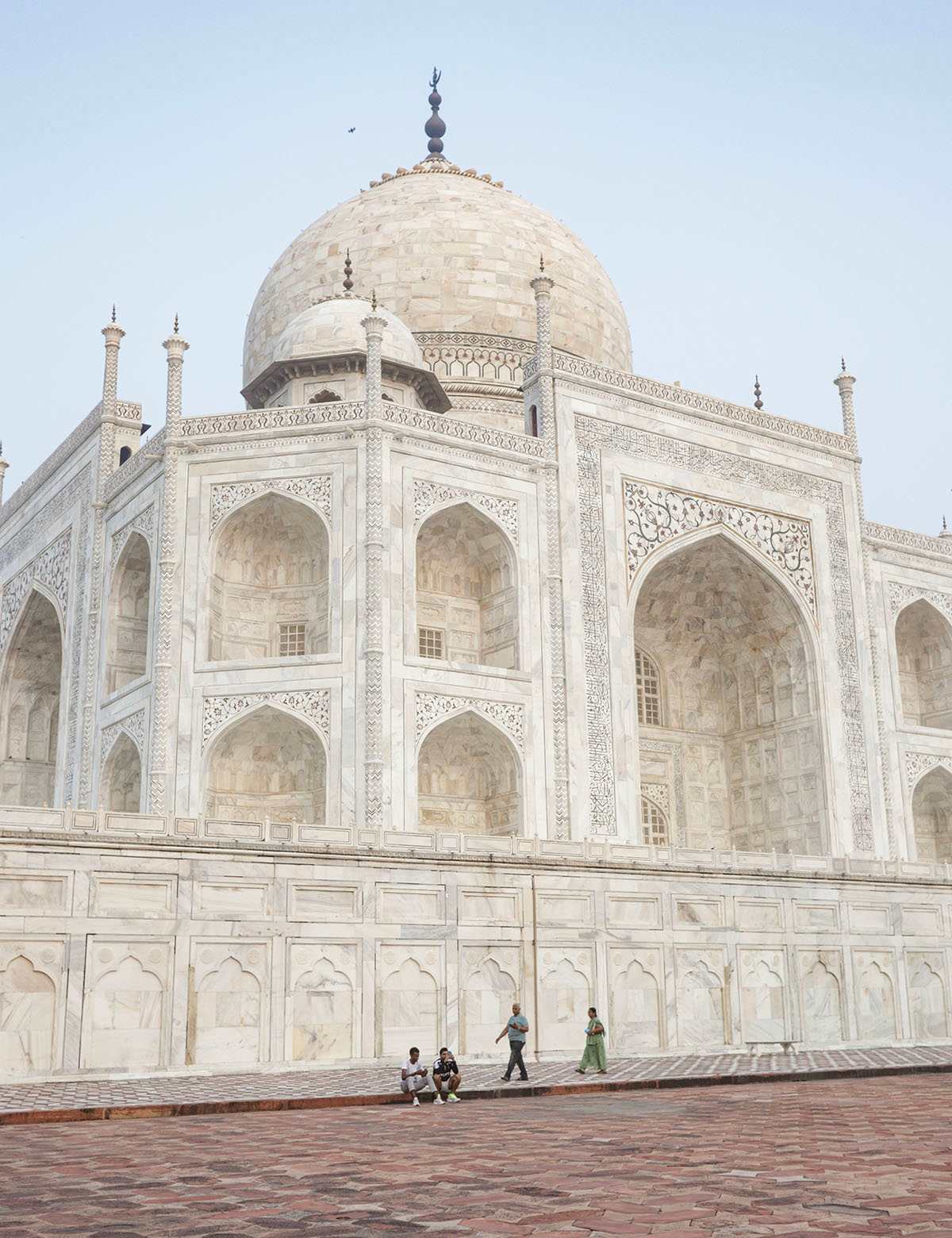
Islamic, Indian and Persian influences merge to create the Taj Mahal’s revered symmetrical design.
Robert Liwanag
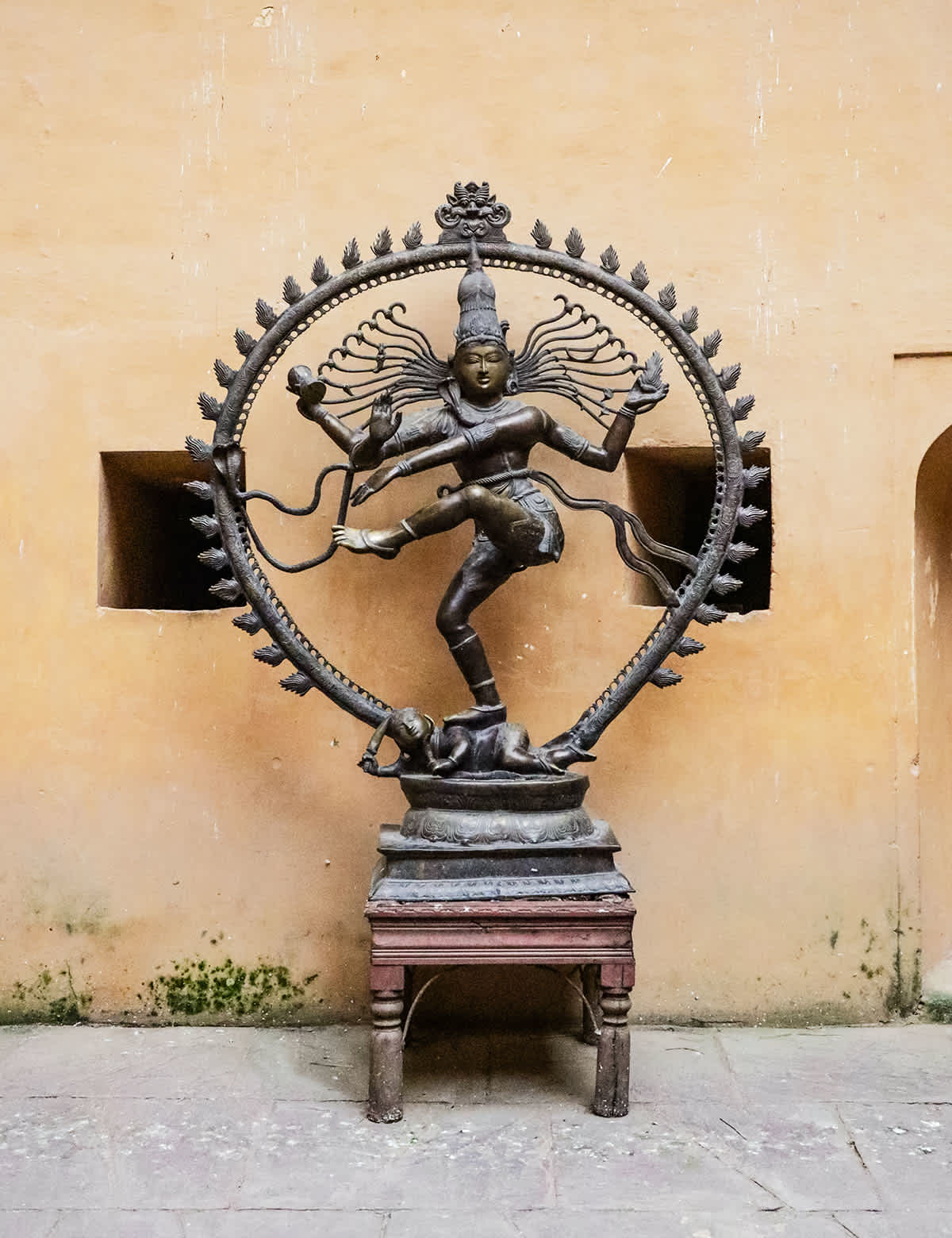
Nataraja, depicting the Hindu god Shiva as a dancer, is among the many exquisite statues and artworks that adorn Amer Fort.
Robert Liwanag
Women With Wheels
Three days earlier, I touched down in Delhi — the first stop on northwest India’s Golden Triangle, a storied tourist circuit that includes Agra, home to the Taj Mahal, and Jaipur. At the airport, I meet Ipshita Kamra, the Delhi city chief for Women With Wheels, a social enterprise that provides women from marginalized communities a path behind the wheel. She leads me to Lalita, dressed in a teal and pink kurta with matching trousers, who will drive me to my hotel near India Gate, the city’s answer to the Arc de Triomphe in Paris. A lifelong Delhi resident, she was among the first women to claim her seat in the program when it launched in 2008. To many Westerners, an all-women cab service might seem like a novelty. In India, it’s a matter of safety and independence. Unfortunately, the country continues to struggle with entrenched gender inequality: In the World Economic Forum’s 2024 Global Gender Gap Report, India ranks 129th out of 146 countries. Further, more than half of Indian women aged 15 to 29 are neither employed nor enrolled in school, and over 90 percent of working women have jobs with limited job security, protections or benefits. Now, the network has trained and provided employment for more than 5,000 women across India. Cruising through the near-empty streets of Delhi past midnight, I hadn’t considered that a simple cab ride could bring about something so transformative. Through a partnership with Baton Transport, a European trucking firm, 18 drivers from Women With Wheels now command 40-foot tractor-trailers across Europe, navigating roads through Germany, France, Italy and Spain. Lalita, once an expert of Delhi’s streets, now drives international routes.
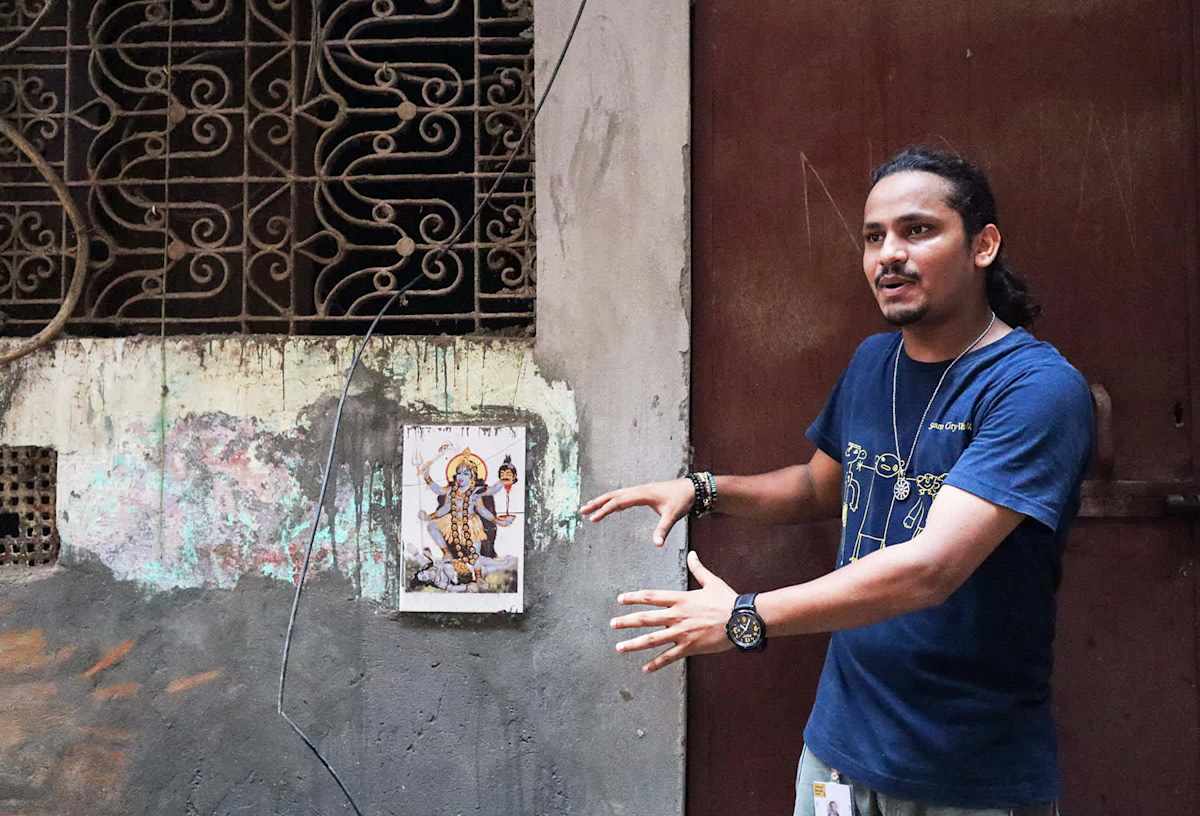
Salman from Salaam Baalak Trust guides visitors through Central Delhi, where there is an abundance of religious street art, including depictions of Kali, the Hindu goddess of time, death and female empowerment.
Robert Liwanag
Salaam Baalak Trust Delhi
“Any trip that starts in New Delhi must begin with a walking tour,” advises Rathore. He’s correct. In the neighborhood of Paharganj in Central Delhi, our guides, Kajal and Salman, lead us through a vision of India I couldn’t wait to experience — what Rathore affectionately calls an “organized mess.” The honking is constant, food stalls spill into the streets and timeworn colonial-era buildings twist into a maze. Beiges and grays dominate the cityscape, punctuated by bright splashes of color: pink teddy bears for sale in a shop, saris drying on balconies and a stray rickshaw. At one crossing, Salman laughs and says, “Here’s your Indian stoplight,” simply raising his hand. A row of motorcycles halt, and we walk on. Our walking tour is an activity provided by Salaam Baalak Trust Delhi, a nonprofit offering shelter and support to unhoused and working children in the capital. Established in 1988 by Indian-American filmmaker Mira Nair, the organization has provided shelter to over 42,000 children, supported the literacy of more than 89,000 and distributed 9.7 million meals to date. What’s more, it also delivers services like music classes, mental-health programs and even classes in self-defense. Our guides know Salaam Baalak Trust and the streets of Central Delhi like the backs of their hands. Through the organization’s City Walk initiative, young adults like Salman and Kajal hone their communication skills by guiding strangers around the city they know best. Salman came to the Trust in 2010 after losing his father and becoming homeless in Delhi with his mother and sister. Now, he dreams of Bollywood stardom. “I’m very proud to tell my story,” he says. Kajal’s goals are more modest, but no less life-changing. A longtime member of the Trust, she arrived at age seven after her parents sought to shield her from a stressful home life. After signing up for a course in aviation, hospitality and travel management, she is now a guide at G Adventures, leading visitors like me through the Golden Triangle and beyond.
Salaam Baalak Trust Delhi has provided shelter to over 42,000 children, supported the literacy of more than 89,000 and distributed 9.7 million meals.
Kajal and Salman’s stories are all too common. Whether due to the death of a parent or a flood that destroys a home, many children arrive in Delhi with nothing. At first, they might find work at a tea stall, but often they’re targeted by gangs and drawn into stealing or begging. For girls, the dangers are even more specific: Many are runaways escaping abuse. “In a few places, girls are still seen as burdens to be shed as early as possible, so child marriages and dowries remain common,” says Kajal. Alone and vulnerable in the city, some are coerced into sex work. Kajal points out that GB Road, the city’s main red-light district, sits near the New Delhi Railway Station. Our tour around Delhi wasn’t always comfortable, but it wasn’t meant to be. For every simple sensory delight, from the sight of modaks (sweet dumplings) at a restaurant to the sound of Indipop echoing down an alleyway, we also confronted stark economic disparities. But this isn’t poverty tourism. There are no tricks or scripts, just stories from the heart. In its own way, this walk is as rewarding as seeing the Taj Mahal for the first time. Both experiences open windows into India’s diverse realities.
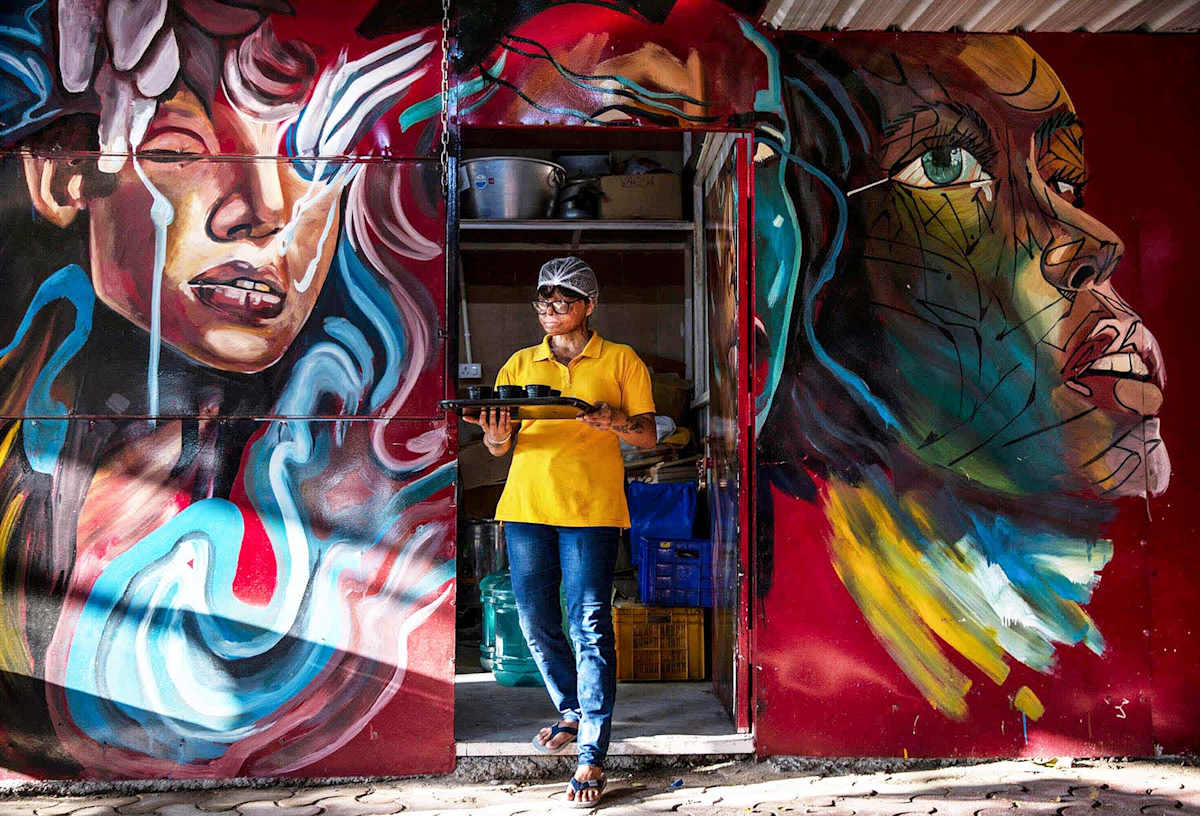
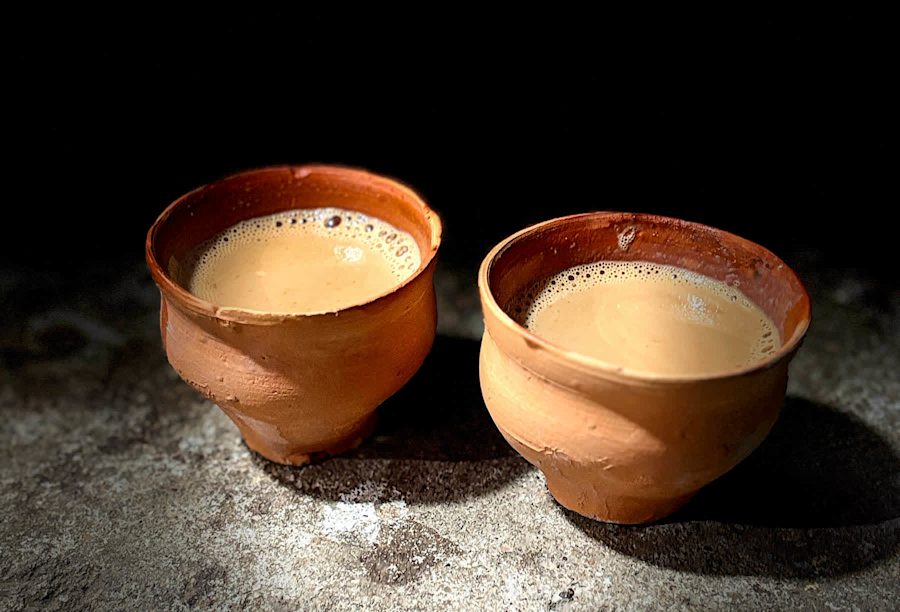
When in Noida, sip chai and pick up unique souvenirs at Sheroes Hangout, a café run by acid-attack survivors.
Imago/Javed Dar/Alamy
Sheroes Hangout
On a nondescript street, just a half-hour walk from India’s most famous landmark, sits a small café of great significance. In Agra, Sheroes Hangout is operated entirely by acid-attack survivors — women who were targeted by assailants seeking to punish, control or silence them. Instead, these women have reclaimed their lives. Inside, the café is filled with books, paintings, saris and the strong aroma of chai, while the menu follows a pay-what-you-can model. In all, around 50 survivors work at three Sheroes cafés in Agra, Lucknow and Noida. Visitors can grab a seat and unwind with arts and crafts or have their hands decorated with henna by one of the talented women working there. Opened in 2014, Sheroes campaigns for Stop Acid Attacks, an initiative dedicated to raising awareness about acid attacks and providing crucial support to survivors. “The idea was to create a safe, inclusive and dignified space that went beyond charity,” says co-founder Ashish Shukla. “We wanted survivors to lead their own narratives, interact confidently with the public and earn a livelihood with pride.” On this particular afternoon, we meet four of them — all wearing matching T-shirts that read “My beauty is my smile.” One of them is named Rukaiya. In 2002, at just 14 years old, Rukaiya was attacked by her sister’s brother-in-law — a man whose marriage proposal she had refused. At the time, her family’s financial constraints and her age prevented them from pursuing legal action. It wasn’t until 2023 that her case was finally filed. By 2025, compensation had begun. Due to the easy availability of acid, it’s estimated that around 300 acid attacks take place in India each year. And they are not always related to familial disputes. As we share tea, the women tell us about Yeto, attacked at age three in a random act of violence in Agra, and Geeta from Meerut, who was working in a shop when two unidentified boys on a motorbike threw acid on her face before speeding away. There’s something quietly revolutionary about Sheroes Hangout. Here, survivors are celebrated, not pitied. As many cultures around the world still sometimes shroud trauma in silence, this café gives those accounts a place to be heard. But it’s also a refuge — a space where the healing power of stories stands alongside the soothing comfort of tea and coffee, served with a smile.
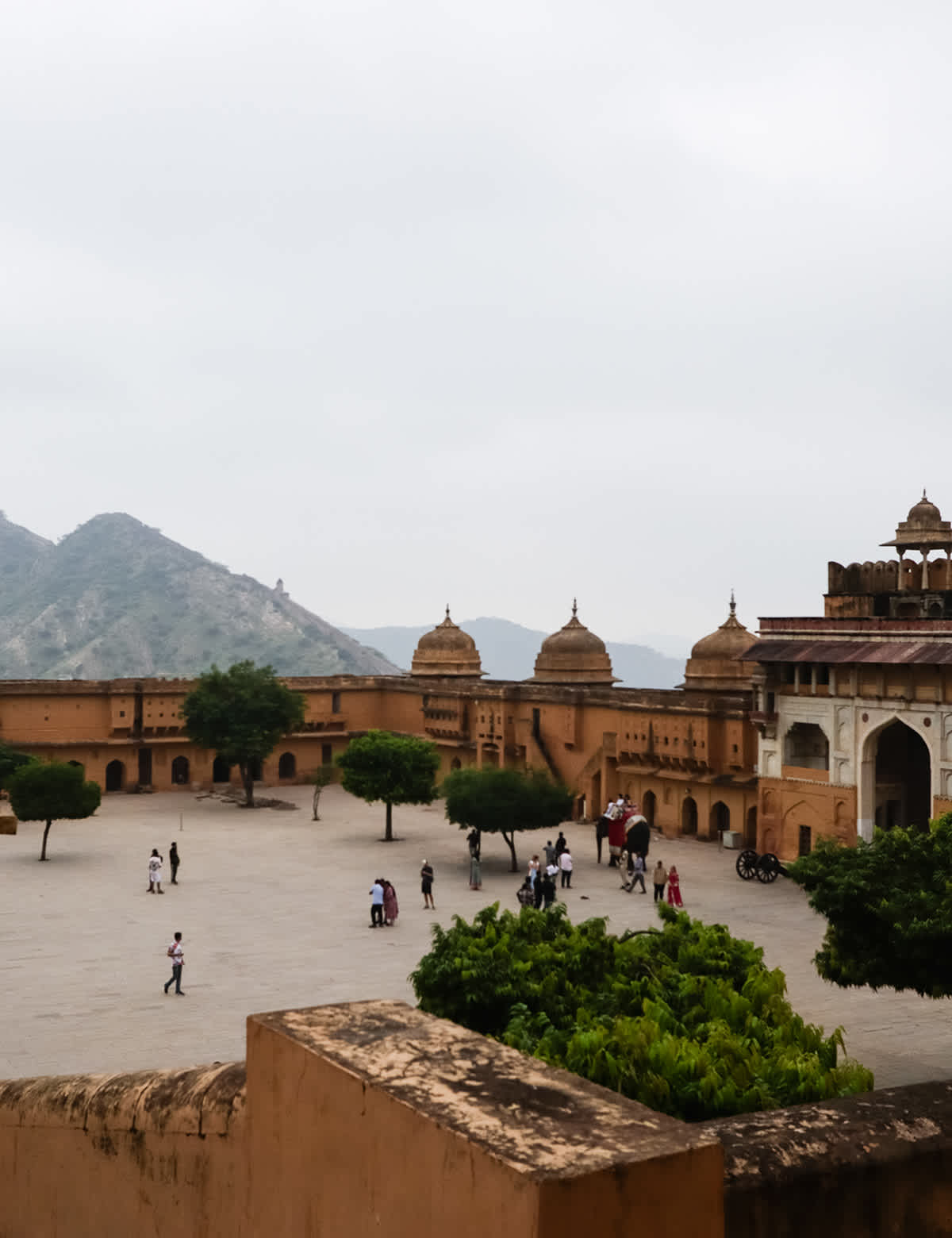
Just outside Jaipur, the lavish Amer Fort climbs four levels, each with its own expansive courtyard.
Robert Liwanag
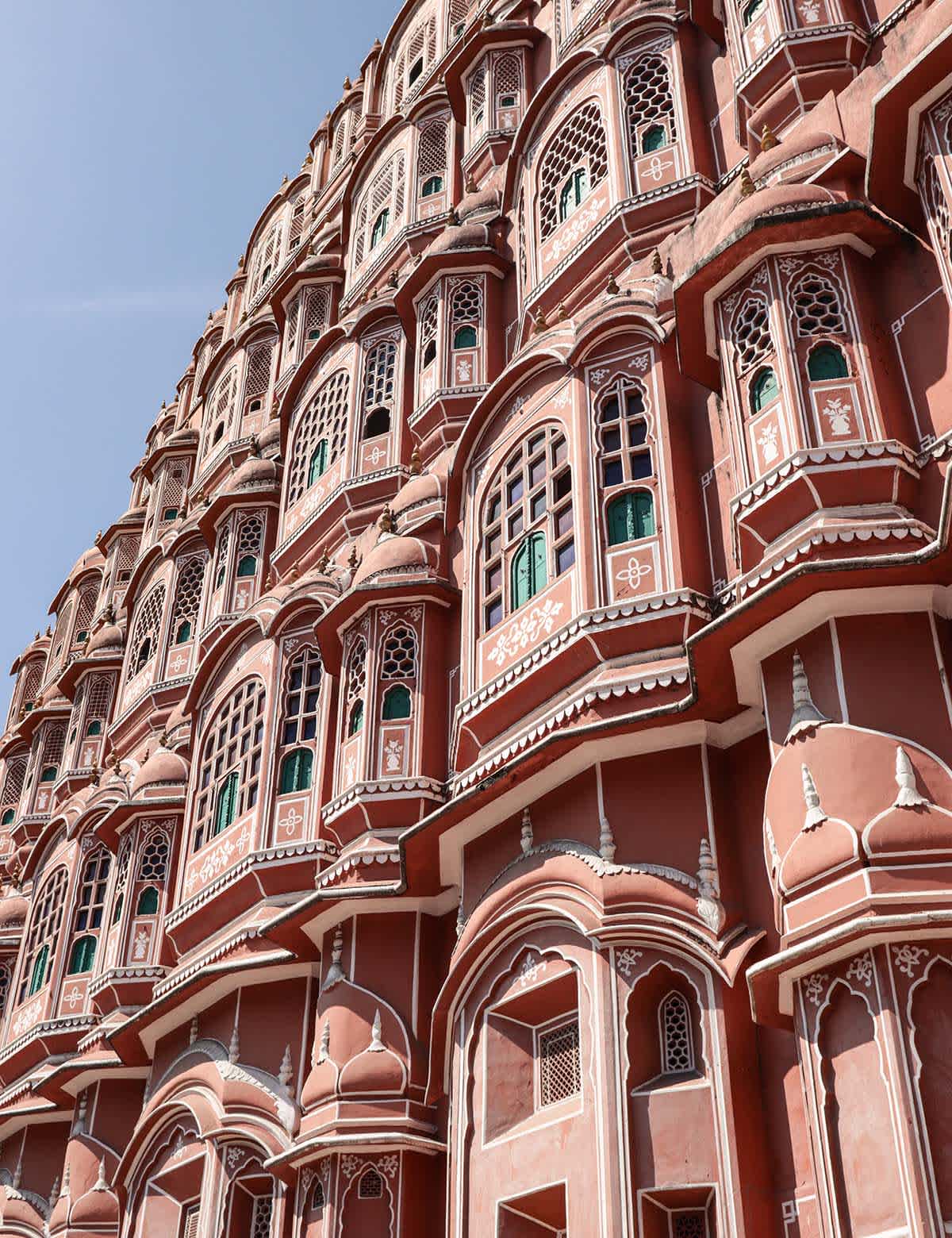
Hawa Mahal (“Wind Palace”), an enduring symbol of Jaipur, features 953 windows to circulate air and let royal women look out over the streets in privacy.
Robert Liwanag
My journey ends in Jaipur with two more landmarks. First, the majestic Amer Fort, its once-bright yellow walls now faded with time. Then, on the morning of my departure, I take a leisurely stroll through the city before stopping at Hawa Mahal, the red sandstone palace that resembles a honeycomb. As I soak in the scene, I realize India has gifted me something I look for in all of my travels: a new perspective. One that sees beauty not just in palaces, but in the survival and perseverance of its people. I came to India for the monuments, but I leave thinking of women steering their futures on the road, young adults leading the way through the streets and survivors building new lives in a café filled with community, warmth and chai. At the Taj Mahal, Rathore told us that Shah Jahan, after being overthrown by his son Aurangzeb and exiled to a prison cell in Agra Fort, spent his final years gazing longingly at the monument to his lost love. “That’s the legend, anyway,” he admitted. “It’s probably not true.” The stories I witnessed, though, are. ✦
Explore More
A Journey Through Kazakhstan, Where Old and New Collide: Our writer travels across Kazakhstan, a former Soviet republic the size of Western Europe, where nomadic traditions and shimmering spires coexist in a wildly prosperous present. Inside Kanazawa’s World of Traditional Crafts: Artisans in Japan’s epicenter of crafts, are preserving traditional ways by reinventing them for modern life — and visitors have a role to play. A Leisurely Walk Around South Korea’s Largest Island: Jeju Island’s walking paths meander past waterfalls, volcanic cones and countless farmers’ fields, encouraging all who wander them to slow down and smell the buckwheat. Follow Range on Instagram, Facebook and Pinterest. Sign up for the Range newsletter to receive expert advice, award-winning stories and the latest travel trends in your inbox.