The Canadian astronaut, a member of NASA’s Artemis II mission, has always looked to the stars. Soon, he’ll be one of the first people to travel 5,000 miles beyond the moon.
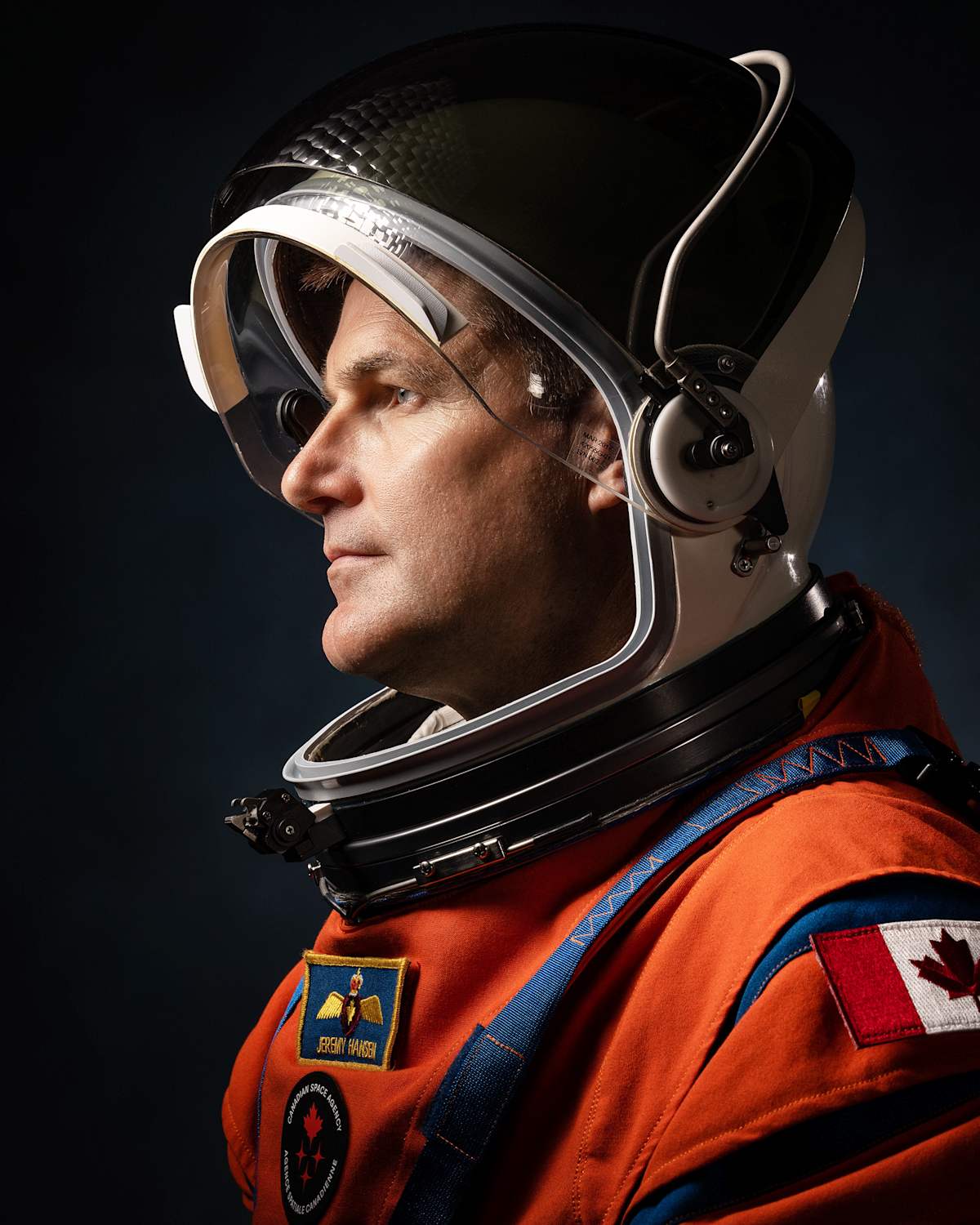
From earning his wings at age 16 with the Royal Canadian Air Cadets to becoming a CF-18 fighter pilot and later training astronaut candidates, Colonel Jeremy Hansen’s trajectory has been marked by a deep fascination with flight and exploration. Now, as part of NASA’s Artemis II mission, along with American crewmates Reid Wiseman, Victor Glover and Christina Koch, Hansen is set to become the first Canadian to travel around the moon. The 10-day expedition, slated for sometime after September 2025, will test the boundaries of human space exploration and pave the way for future lunar missions, including landing the first woman on the moon on Artemis III. “The Artemis II mission is very much a testing and development mission; we’re literally creating it as we go along,” says Hansen from Houston, where he and the crew are training. It’s clear that being the first Canadian to head to the moon isn’t just a personal milestone (though he’s dreamed of getting there since he was a boy) but a testament to something larger. “We’re not challenging a crew of four humans to fly around the moon. We’re challenging a huge team to come together and do something in a way that hasn’t been done before.” Range: What’s involved in training for the Artemis II mission? Jeremy Hansen: It’s the first time we’re putting humans on the Space Launch System rocket and Orion spacecraft, so there’s no obvious path from starting at zero — we’re figuring out what a crew really needs to know, and we’re building the training tools. Last week, for example, I was in a simulator that’s still under development. We worked with mission control to simulate failures, communicating back and forth as if I were in space.
Start Planning Your Trip
R: Is there anything from home that you’ll be taking with you? JH: We’ve created a mission patch in collaboration with an Anishinaabe elder and an artist from the Sagkeeng First Nation in Manitoba. This patch represents the Seven Sacred Laws, reflecting the richness of Indigenous cultures. I’m also taking tiny moon pendants that I’ve given to my wife and three children. They’re wearing them now, and I’ll collect them before we launch to fly with me. R: What are you most looking forward to about the mission? JH: I’m looking forward to sharing the experience with my three colleagues. Being in deep space and looking back at our planet from the moon’s perspective will be incredible, and it will reinforce what I already believe: that every human is worthy of equal respect and that our future depends on collaboration. R: Like you, many people dream of traveling to outer space. What are your thoughts on the growth of space tourism? JH: There will be challenges, but I see it as a net positive. The more people who travel to space and see our planet from that perspective, the better for humanity. Government programs get things started, but the commercial sector is leaner, faster and can innovate more quickly. Space tourism is a natural extension of this. R: Back on Earth, what are some of your favorite travel destinations? JH: Some of my most memorable trips have been to remote parts of Canada. Last summer, a few of the crew were in Labrador exploring a crater called Kamestastin, which is sacred Innu territory. It’s a powerful place, both scientifically and spiritually. The crater is made of the same rock as a large portion of the moon, so it was like getting a preview of what we might encounter up there. ✦