Artisans in Kanazawa, Japan’s epicenter of crafts, are preserving traditional ways by reinventing them for modern life — and visitors have a role to play.
Inside Kanazawa’s World of Traditional Crafts
By Karen Gardiner | December 15, 2024
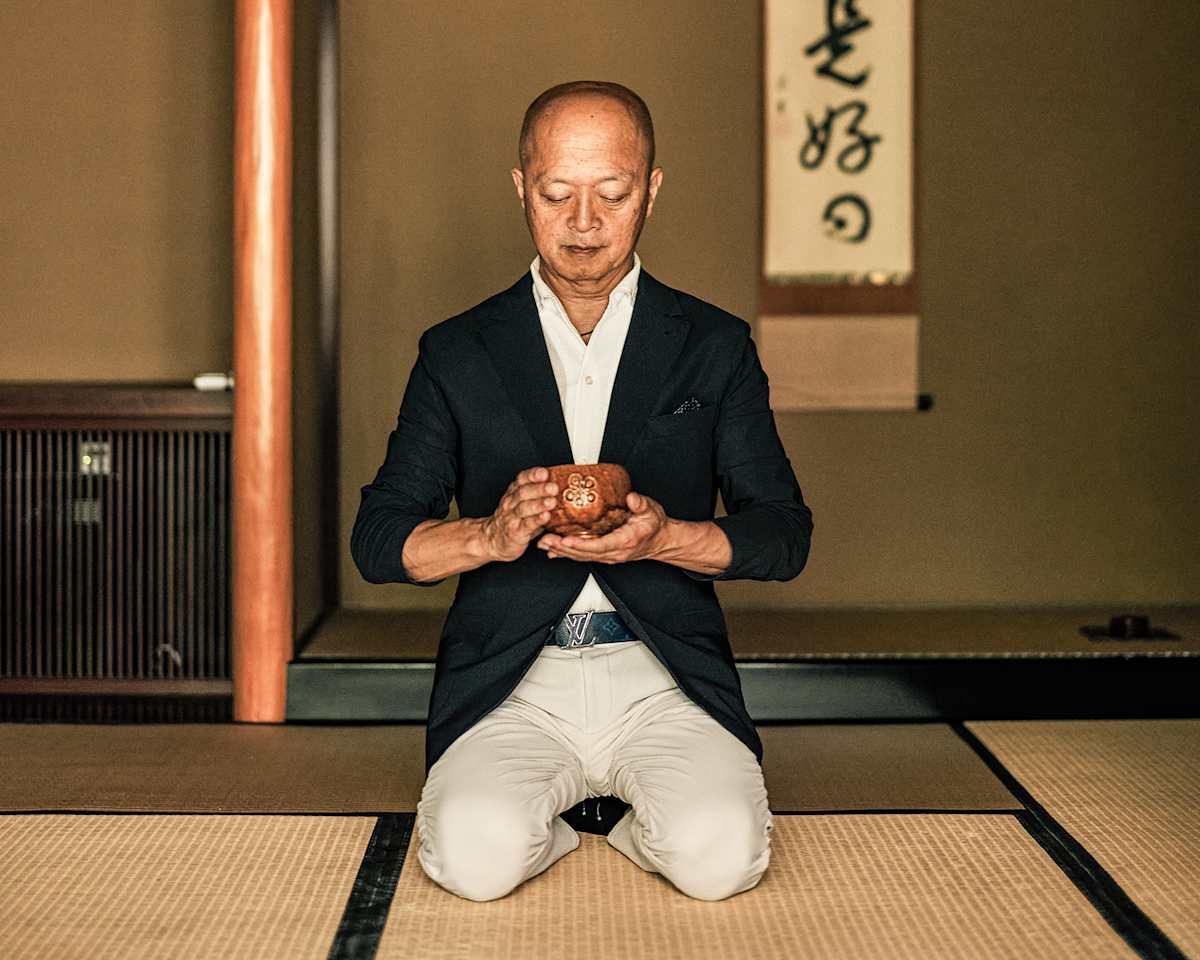
Toshio Ōhi Chōzaemon XI in the Ōhi Museum’s Shotonoma tearoom.
Nik van der Giesen
In a large, light-filled workshop, Koichiro Toshioka sits cross-legged in front of his spinning potter’s wheel. He pulls a lump of clay upward, thinning and raising its walls until it forms a bowl. Each movement builds on a legacy that runs through his family, including his grandfather, who’s pictured demonstrating his craft for a young Prince Naruhito in a black-and-white photo hanging on the wall above him. Toshioka is the fifth-generation master potter of Kutani Kosen, the last kiln making Kutani ware, a colorful style of porcelain, in Kanazawa. I’m not surprised by his stories about watching potters while he played in the workshop as a boy and eventually learning the craft himself through passed-down techniques. But I hadn’t expected Toshioka to introduce me to a concept that changes the way I think about the preservation of craft. The most important thing, he tells me, is to carefully watch, learn and imitate techniques — then “break, and go a different way.”
Higashi Chaya is one of Kanazawa's largest geisha districts.
Mitsuru Wakabayashi
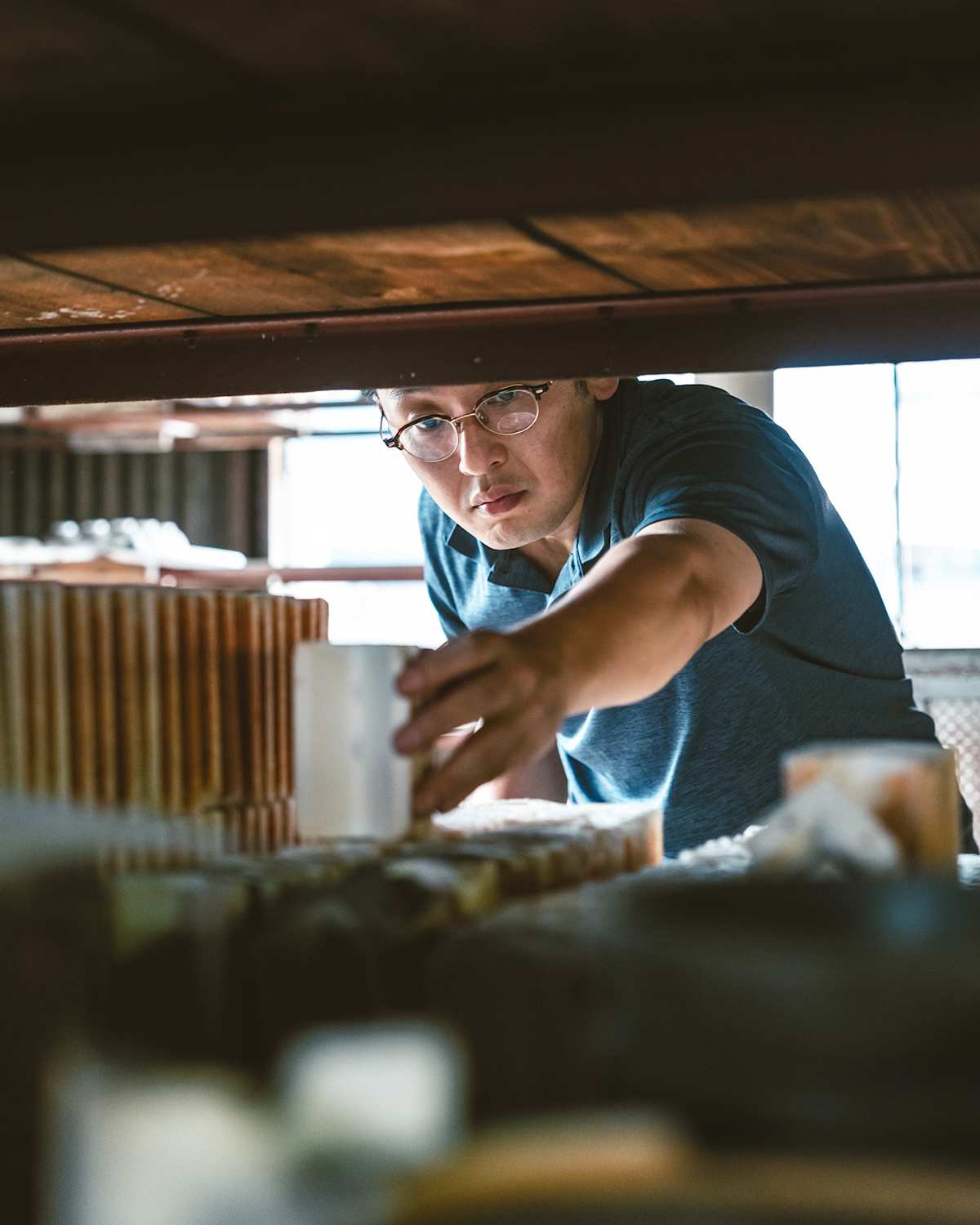
Master potter Koichiro Toshioka at work.
Mitsuru Wakabayashi
The concept of shu-ha-ri is embedded in Japanese culture, from the tea ceremony to martial arts. It describes the three stages required for mastery of skills: Learn the fundamentals, break with tradition, and transcend. The concept informs a learning process that results in masters who are steeped in the foundations of their craft, but capable of infusing it with new ideas — a mentality critical for the survival of traditions in a modern world. Over five days in this city of 460,000 on Japan’s west coast, I come to see that Kanazawa’s sensibility represents the concept’s purest expression. While lifestyles and tastes are ever-changing, Kanazawa’s craft culture endures not because its artisans dutifully preserve traditions, but because they nurture them in ways that allow them to evolve. And, as I discover, that has a lot to do with the city’s distinct history.
Plan your dream trip.
Kanazawa is obsessed with crafts. I see it as soon as I arrive at Kanazawa Station. Platform pillars are adorned in gold leaf, a concourse is lined with heritage craftworks — from ceramics to silk — and the exit takes me through a massive wood portal that references Shinto shrines and Noh theater. In my hotel, the Hyatt Centric Kanazawa, artisanal works are woven throughout guest rooms and public spaces, such as the Kutani-ware dishes that show each room number and the silk color sample reimagined as elevator art. But the city’s reverence goes beyond esthetics. Crafts are ingrained in Kanazawa’s culture and are the reason for its 430 years of peaceful prosperity. In the 17th century, the Maeda samurai clan, which ruled the region, was second in economic power only to the governing Tokugawa shogunate. Concerned that their arsenal would appear threatening, the Maeda left behind the cycle of war that had defined Japan for centuries. In a workshop in Kanazawa Castle, they redirected their weapon-making resources to the development of some 200 crafts, 36 of which are still practiced today, including gold leaf, pottery, lacquerware, metal inlay, embroidery and silk dyeing.
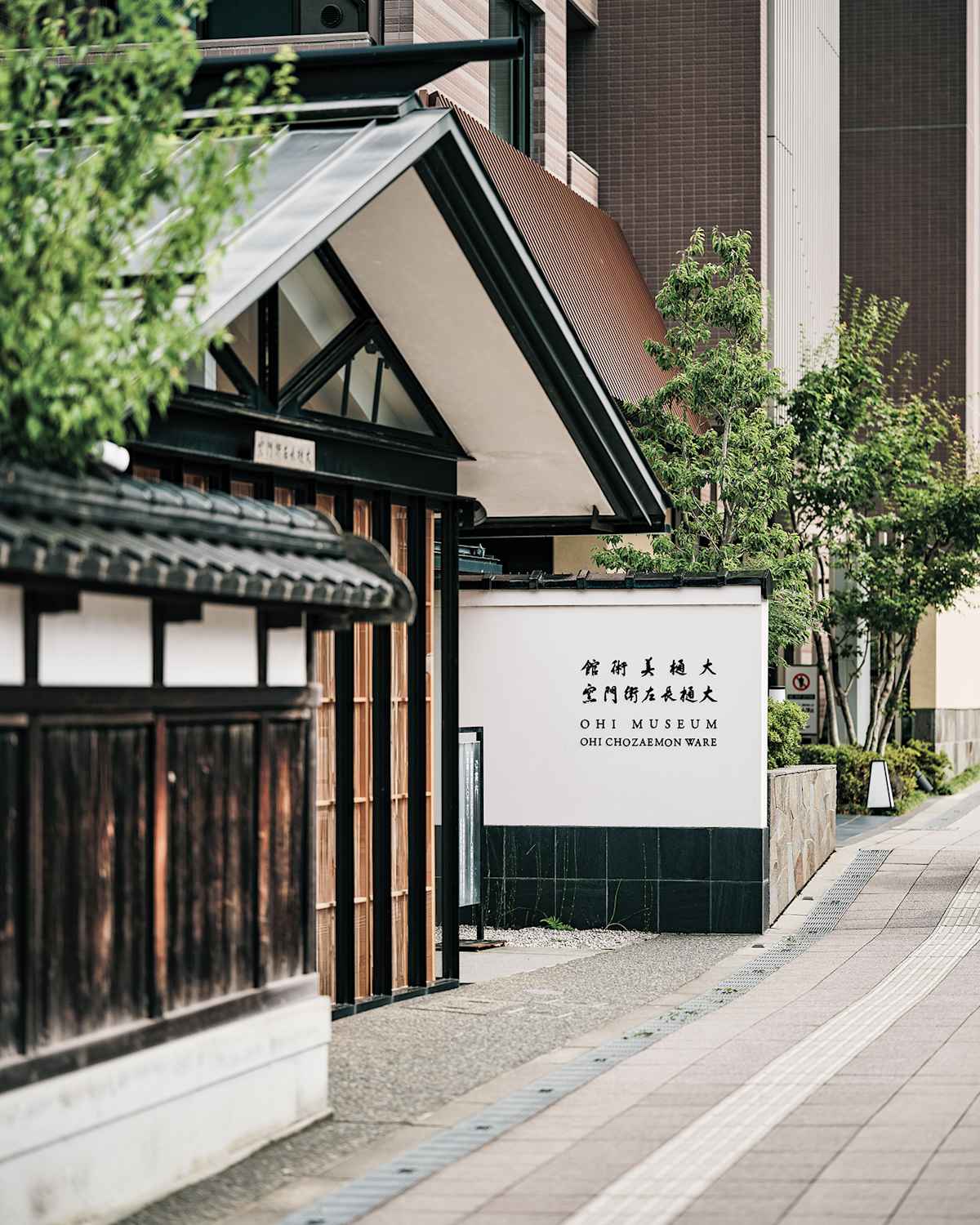
The Ōhi Museum celebrates tea ceremony and hand-shaped Ōhi pottery traditions.
Nik van der Giesen
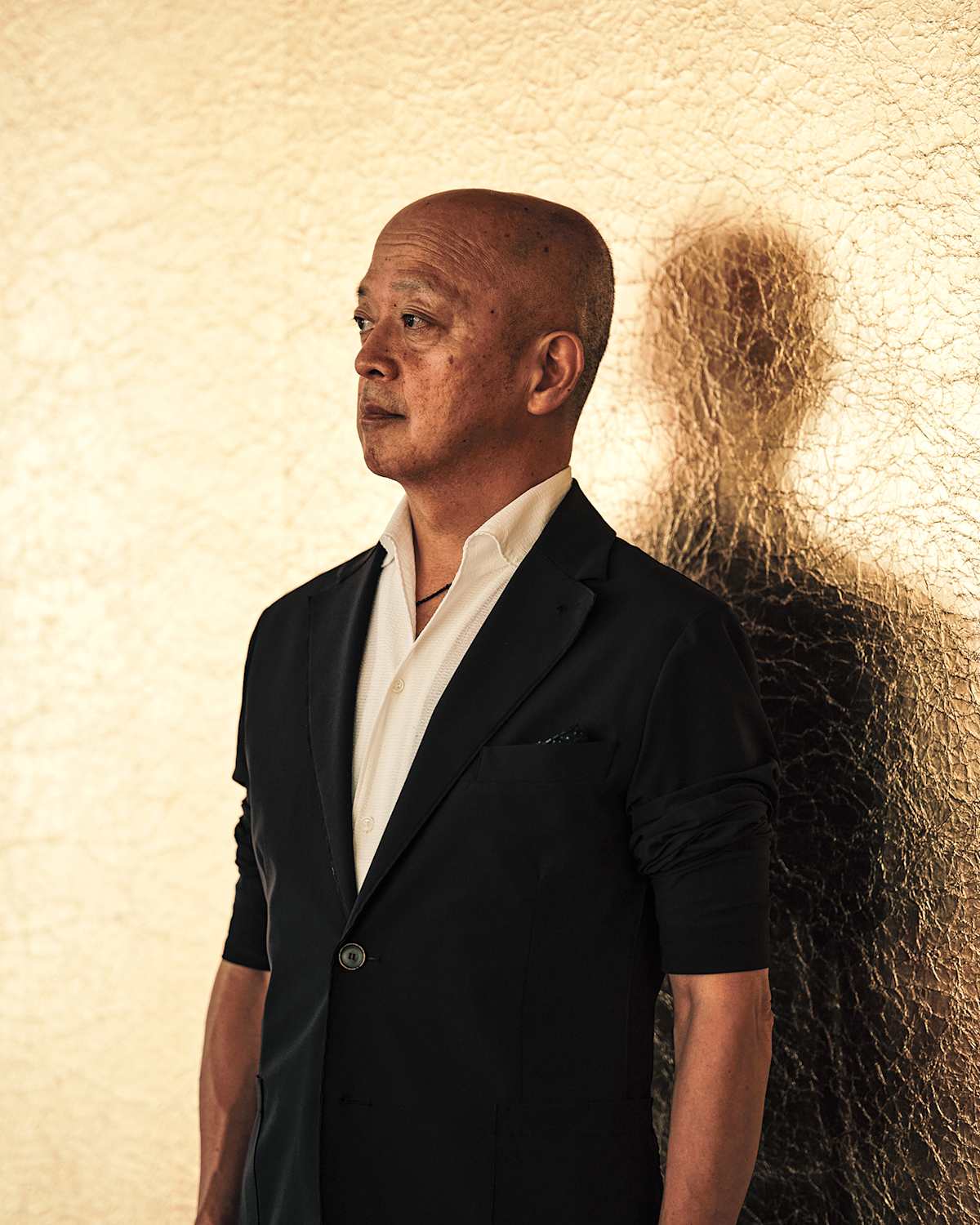
Toshio Ōhi in front of gold leaf-layered doors leading to a tearoom in the Ōhi Museum.
Nik van der Giesen
Having put down their swords, Maeda samurai focused on the perfection of refined pursuits such as the tea ceremony. But tea ceremonies need tableware — and, in keeping with the ritual, it needs to be meaningful. “Hosts have to tell a story about each of the ceremony’s components,” says Toshio Ōhi Chōzaemon XI, the 11th-generation head of a pottery-making dynasty, when I visit him at his family’s Ōhi Museum in Kanazawa’s historic center. Each item, I learn, is chosen for its symbolism, how it reflects the relationship between host and guest, and harmony with the season and setting. “The host has to think about it and the guests have to feel it,” he says.
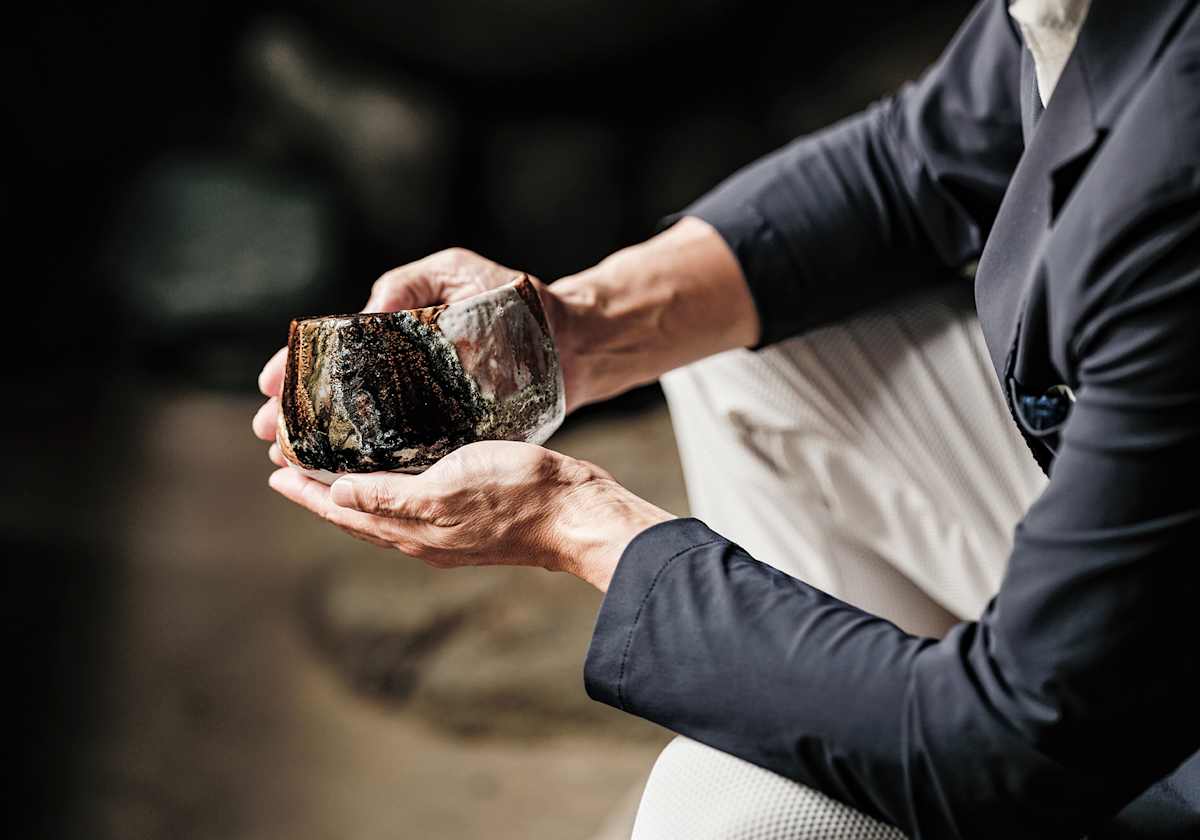
Toshio Ōhi made this bowl from fragments of bowls made by his father and grandfather, but which broke in an early-2024 earthquake.
Nik van der Giesen
Because the Maeda wanted the highest quality, they invited Japan’s best craftspeople to Kanazawa, including, in 1666, the first Ōhi Chōzaemon who refined pottery techniques learned in Kyoto to develop Ōhi ware, a rustic style of ceramics made without a wheel. For more than 350 years these techniques have been passed down through the family, with each descendant forging their own path. At the entrance to a gallery, Toshio Ōhi points to a piece that embodies where he’s taking Ōhi ware: a sculpture that he fired and rapidly cooled to resemble an asteroid.
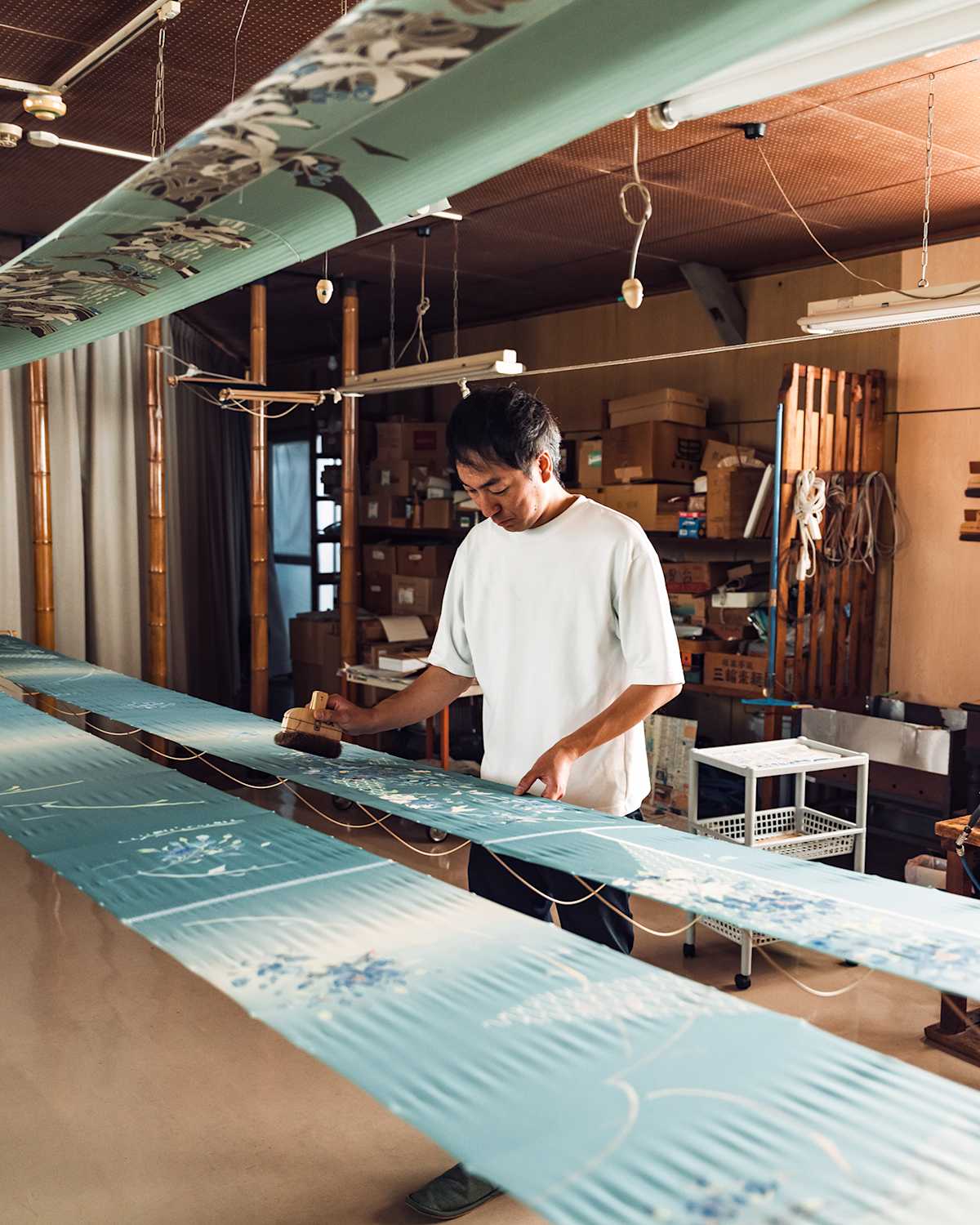
Hitoshi Maida uses a broad brush to apply background color to a long bolt of kimono silk.
Mitsuru Wakabayashi
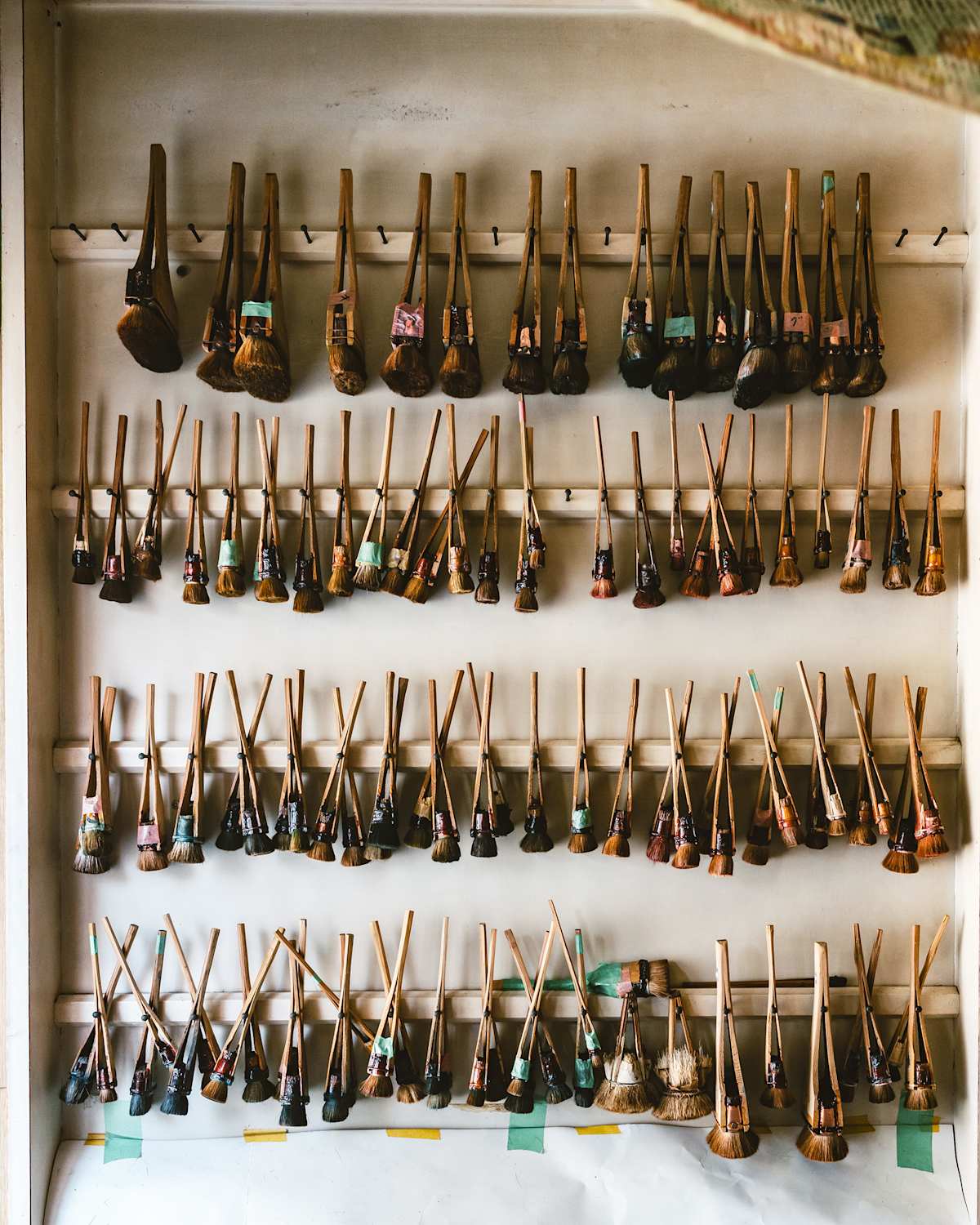
The brushes used for Kaga yuzen dyeing are made with deer hair.
Mitsuru Wakabayashi
Craftspeople here can adapt because Kanazawa’s samurai spirit offers more freedom than Kyoto’s aristocratic culture, Toshio Ōhi explains as he slides open the door to an intimate, low-ceilinged tearoom designed by architect Kengo Kuma. He nods for me to sit down on the tatami (mat) and pick up a roughly hewn, thickly glazed bowl: The museum continues the tea ceremony tradition by inviting visitors to select a bowl from its collection to drink from in the tearoom. Kanazawa crafts originally flourished through hospitality, which I see as I wander through Higashi Chaya, one of the city’s three well-preserved geiko (geisha) entertainment districts — the Edo-period wooden buildings lining its narrow streets and alleyways are home to teahouses and craft workshops. Today, tourism continues to support the crafts’ existence. Due to Japan’s shrinking, aging population and economic struggles, the number of artisans working in Kanazawa is declining, threatening the survival of traditional techniques. The city’s Ichigo Ichie program is a response to this, connecting local tour agencies with craftspeople offering studio visits to generate cultural experiences for visitors and income for artisans.
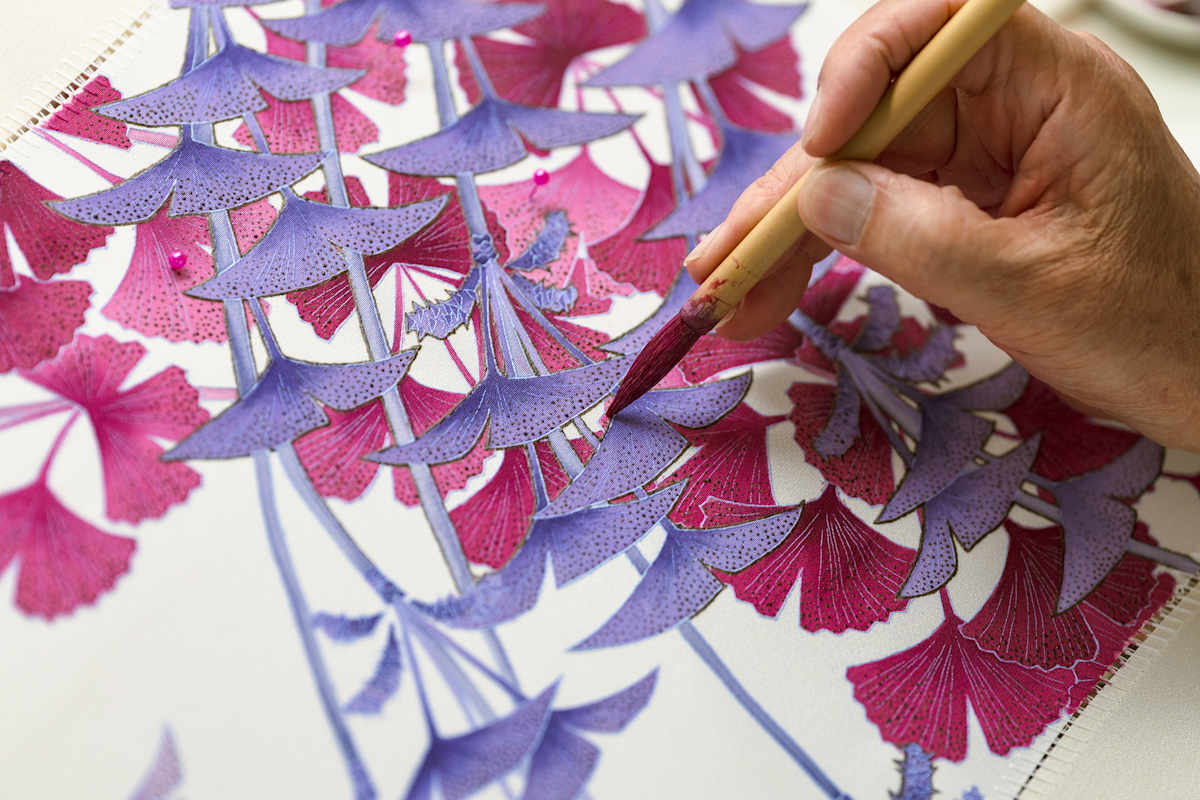
Hitoshi Maida paints directly onto a silk Kaga yuzen work.
Mitsuru Wakabayashi
I cross town, passing the stone walls and off-white tiled roof of Kanazawa Castle and the blooming pink plum trees of Kenroku-en (one of Japan’s Three Great Gardens), to visit one of the program’s most popular studios. Hitoshi Maida is a third-generation practitioner of the Kaga yuzen silk-dyeing technique. Inside the small showroom at the entrance to his studio, where kimonos are displayed on racks next to delicate floral arrangements, I admire a kimono that is jet black but for a bottom section edged with a cascade of colorful blooms. Maida points out a leaf, painstakingly hand-painted to appear as if an insect has nibbled away at it. Because it’s a freehand technique, Kaga yuzen allows for adaptability and realistic depictions of nature, Maida says, attributing this to Kanazawa’s samurai culture. Kyoto kimonos, by contrast, are still lavishly stylized as if to appeal to 18th-century elites. Few people wear kimonos these days, and only 130 artisans still use the Kaga yuzen method, compared with 240 two decades ago. “We are making every effort to ensure it doesn’t disappear,” says Maida, who incorporates strikingly modern designs in his kimonos and applies them to other products, too. He creates interior features, such as wall hangings for hotels, and accessories like card holders and handkerchiefs. I buy a pair of silk earrings, hand-painted with geometric shapes and wire-framed for a 3D effect.
Before I leave, Maida talks me through each of Kaga yuzen’s 15 steps, from sketching the design to drying the silk. With his guidance, I touch a brush to the edge of a floral motif and let the pink dye bleed to its center. Instantly, I see how the effect of the color gradation adds realism to the design. I indulge my artistic side again in Higashi Chaya, at the century-old Gold Leaf Sakuda factory. Kanazawa produces more than 99 percent of Japan’s kinpaku, or gold pounded into whisper-thin sheets. I carve a design into sticker paper, transfer it to a dish, cover it with a sheet of gold leaf, then peel away the paper to reveal my now gilded design. When I ask about the bits of gold I’ve discarded in the process, my guide tells me not to worry: The scraps are used for everything from food decoration — gold-leaf ice cream is a popular local treat — to facial masks. (Historically, kinpaku workshops’ main customers were temples and shrines, with their multitude of gilt figures and ornaments.)
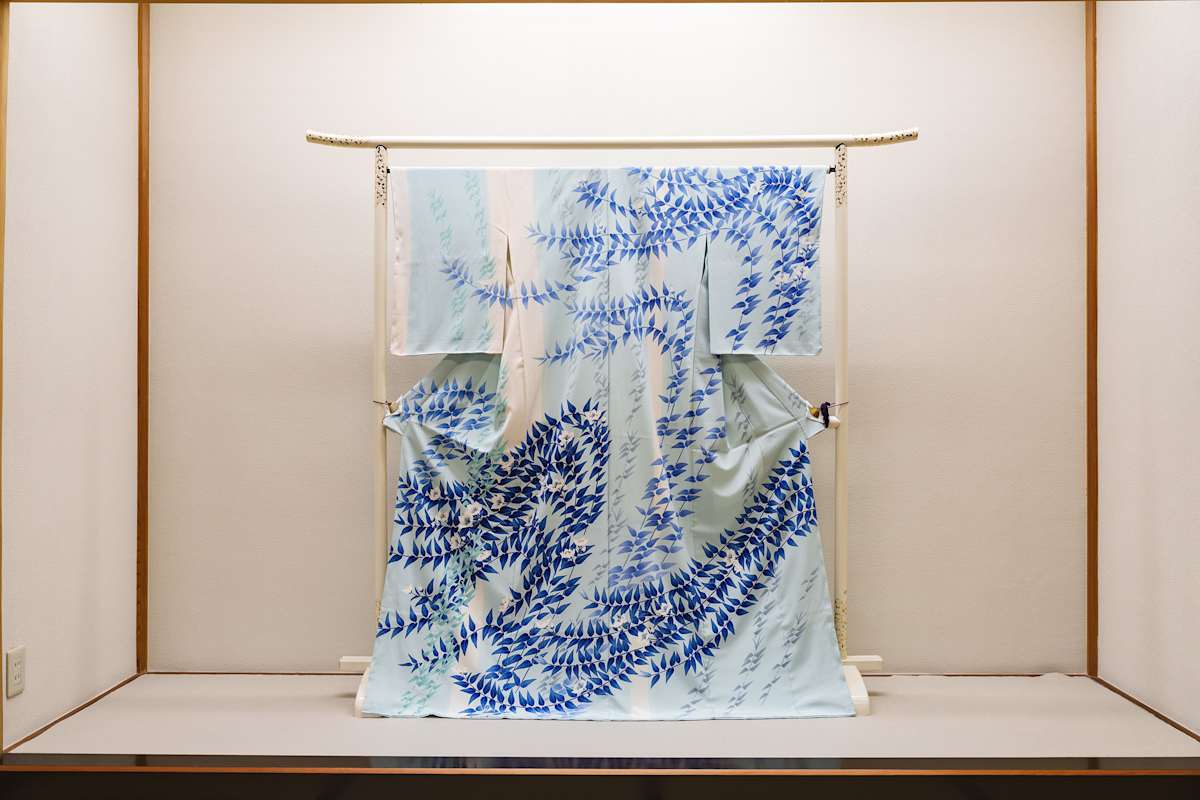
Kinshibai — or Golden Cup St. John’s Wort — provides the signature motif for this Kaga yuzen silk kimono dyed by Kenji Maida, father of Hitoshi.
Mitsuru Wakabayashi
The inventive ways that Kanazawa’s artisans evolve to appeal to new markets mean they don’t have to choose between survival and long-practiced traditions. These ways are taught at Kanazawa Utatsuyama Kogei Kobo craft school, set high on a hill facing the Sea of Japan, where artists on competitive scholarships study ceramics, lacquerware, silk dyeing, metalwork — and glasswork, the school’s modern addition to Kanazawa craft. Students here not only perfect their techniques, but also “challenge themselves, their artworks and mentalities,” says assistant director Jun Murakami. “They have to adapt to the needs of modern times,” he says, adding that the school hopes students stay in Kanazawa after graduation to keep producing, learning and teaching.
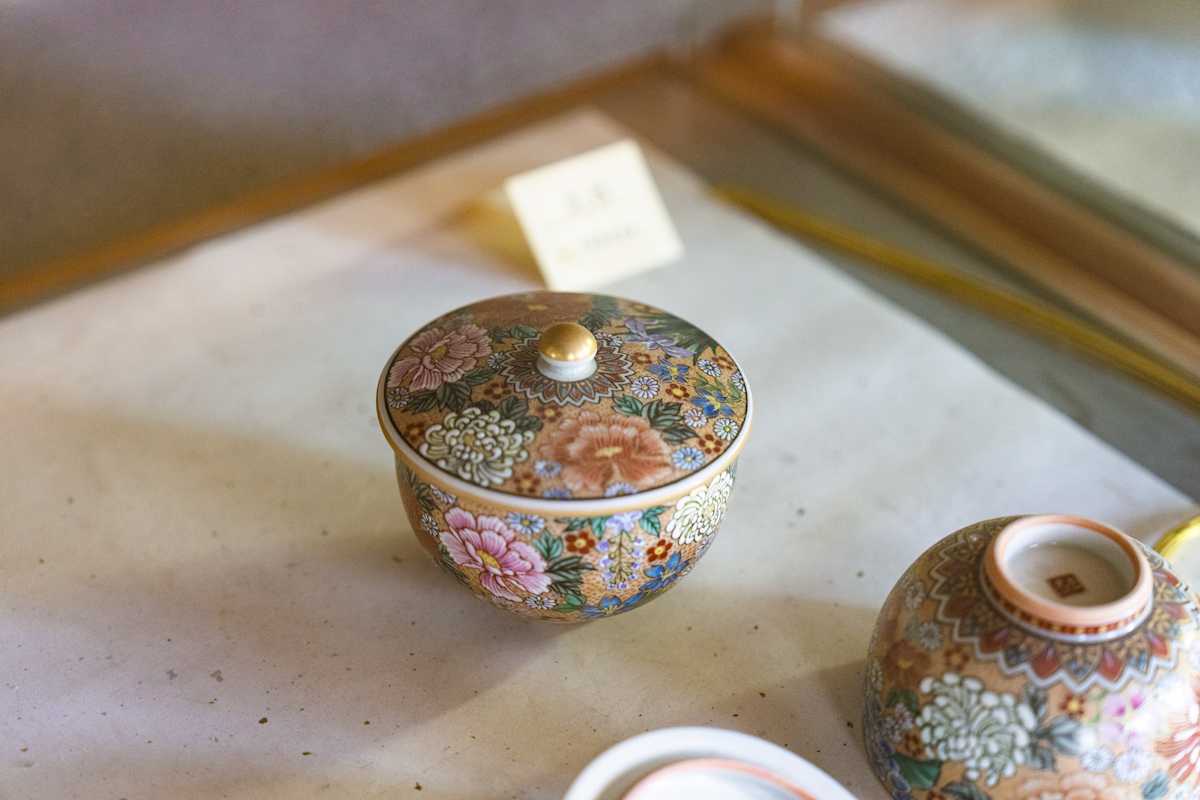
Since 1870, the Kutani Kosen kiln has made ceramics, such as this lidded teacup, in a naturalist style that is in constant evolution.
Mitsuru Wakabayashi
Glass artist Atsushi Ichikawa did just that: First coming from Tokyo 20 years ago to teach the then relatively new discipline at the craft school, he now has his own business making glass sculptures and accessories, from decorative multicolored zodiac animals to functional black-glazed tea bowls. “Kanazawa is a good environment for making art,” Ichikawa says, in his century-old former soy-sauce storehouse in Ono, the city’s port area, where a growing number of artists are drawn by the disused warehouses and cheap rent. Ichikawa tours me around the neighborhood, popping into spacious high-ceilinged and unheated studios, including craft school alum Eriko Asano’s. Inside an old can factory, she uses an intricate cut-glass technique to create a 3D effect in her dishes and jewelry, which feature delicate floral and geometric motifs.
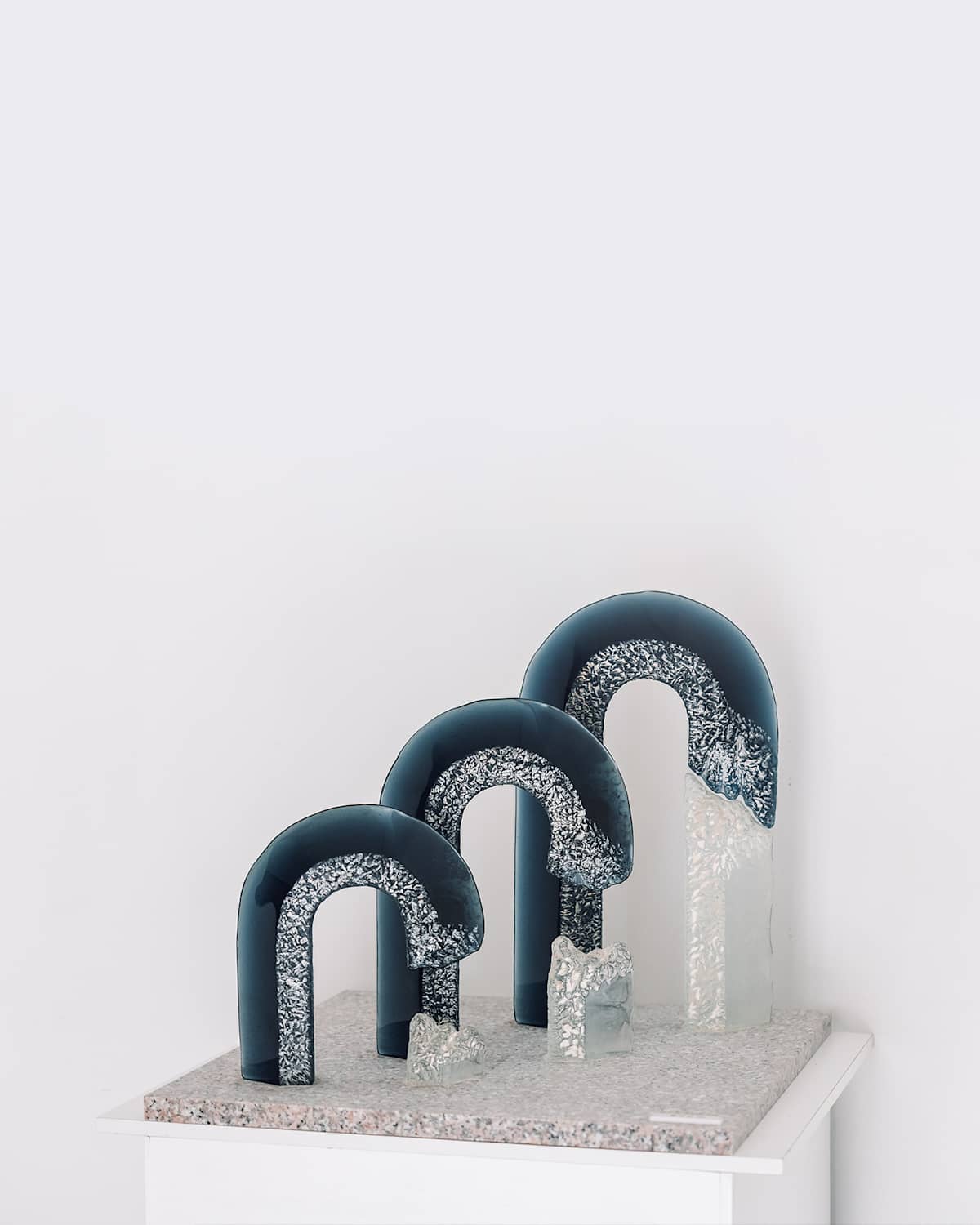
"Ryo – to my son," by glass artisan Atsushi Ichikawa, gets at the dual meanings of Ryo, which is both a Japanese name and the word for “mountain ridge.”
Mitsuru Wakabayashi
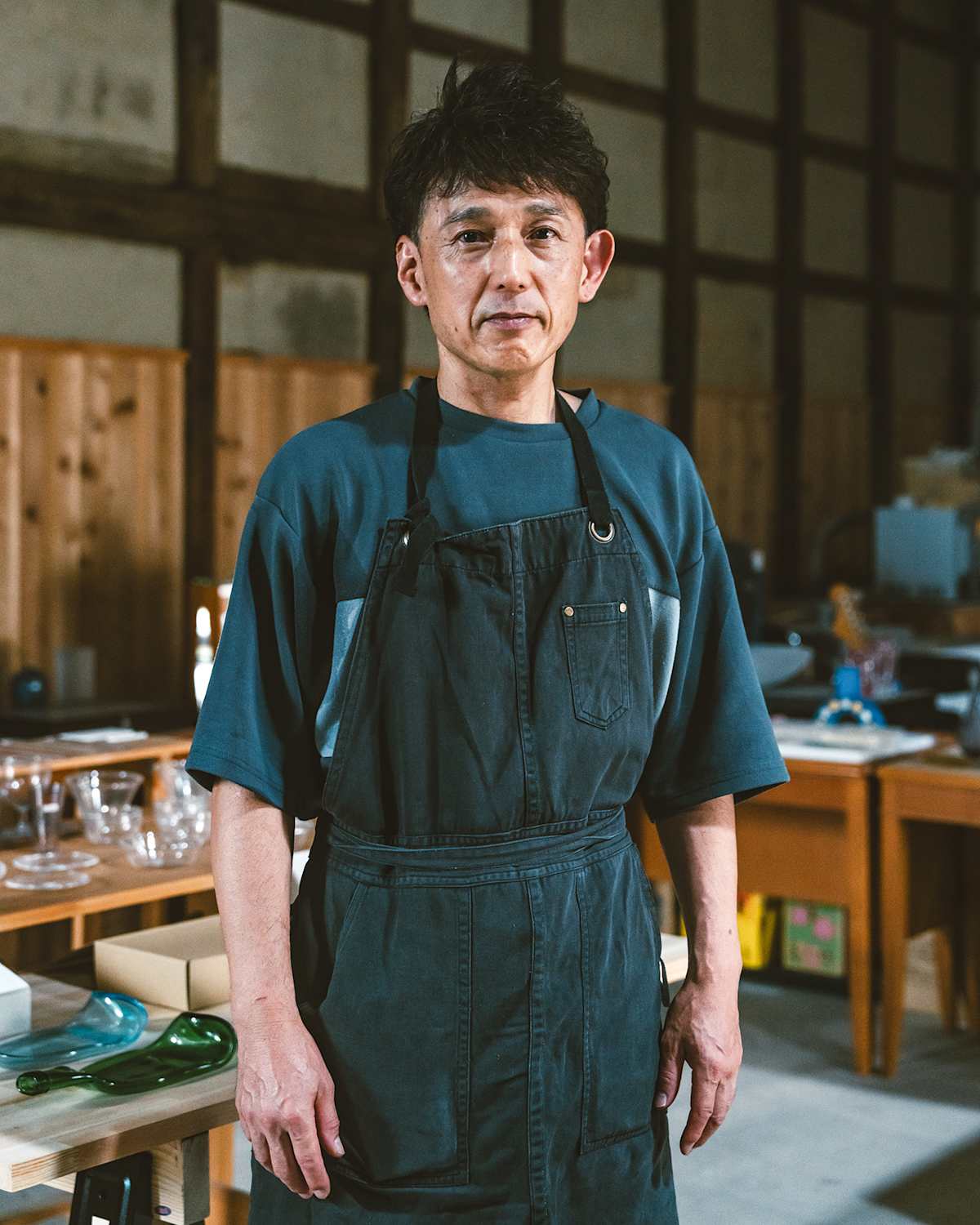
Glass artisan Atsushi Ichikawa at his studio.
Mitsuru Wakabayashi
Ichikawa’s down-to-earth persona and scrappy business seem suited to the grittier surroundings of the port, away from downtown’s neat preservation districts. He doesn’t sugarcoat the life of an artist — “It’s hard to make money,” he says — but he’s found freedom here to create his art his own way. He shows me a sculpture which, drawing from influences both traditional and modern, Japanese and foreign, depicts a glossy banana perched atop mochi (rice cakes) adorned with Kaga mizuhiki (knotted paper string), another of Kanazawa’s traditional crafts. After days of being immersed in Kanazawa’s craft culture, Ichikawa and his playful piece seem like the embodiment of the city’s dynamic attitude toward craftmanship and Japan’s concept of shu-ha-ri: Learn the fundamentals, break with tradition, then transcend. ✦