At a two-Michelin-starred restaurant where the menu teems with marvels, a humble cake proves the most delightful surprise.
Why the Kuih Bakar at Kuala Lumpur’s Dewakan Is Worth Traveling For
By Simon Bajada | February 28, 2026
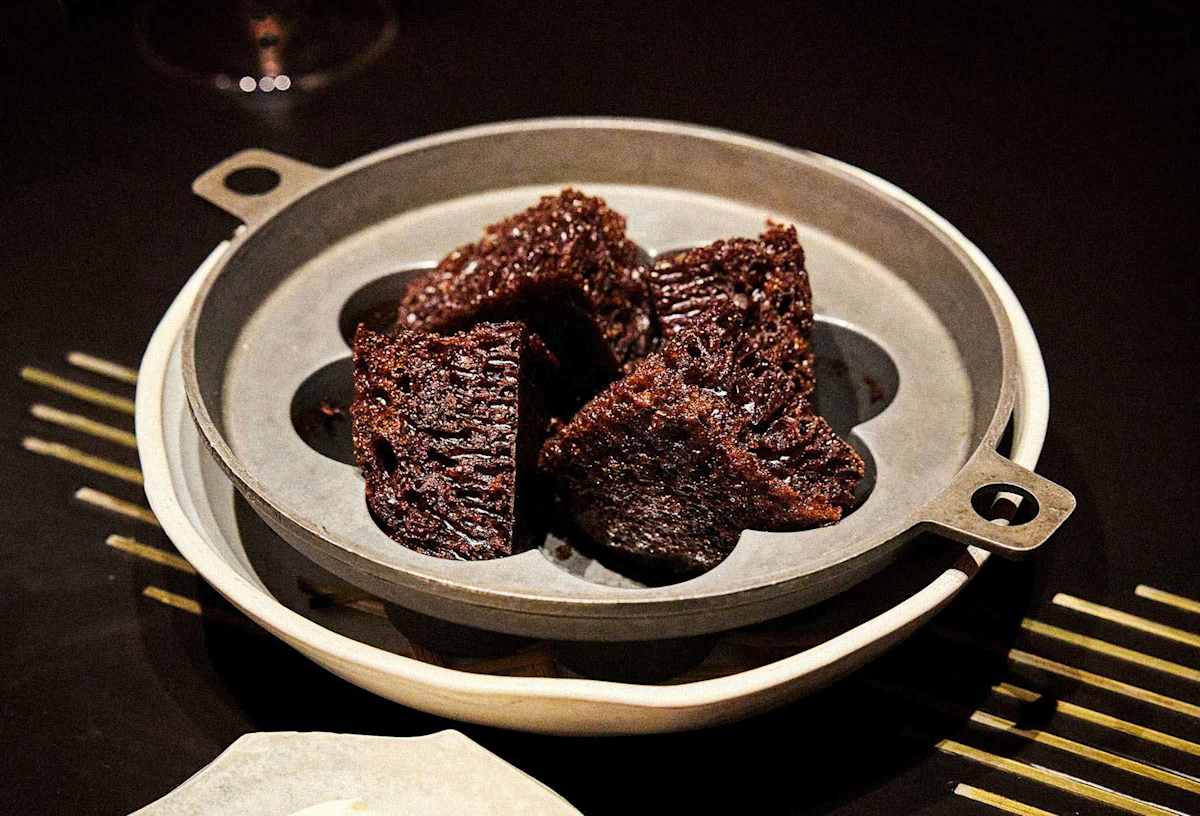
The kuih bakar at Dewakan is a standout.
Simon Bajada
Happening upon a quiet moment in Kuala Lumpur can feel like finding an oasis. After all, the streets pulse with color and movement: aromas from hawker stalls spill into the humid air, while scooters weave through a symphony of traffic and beeping horns. It is in the middle of this friendly mayhem, under the flickering neon lights of a night market, that I discover kuih bakar, a traditional Malaysian cake — “kuih” meaning cake or snack, and “bakar” meaning baked. The heat entices me to order an iced tea, but I can’t resist trying something unexpected. Slipping out of the crowd behind one of the vans, I sample a warm, pandan-tinged, custardy cake, quite unlike anything I am used to in Europe. Kuih bakar is not a single recipe per se, but a label for a family of sweet cakes associated with celebration. Traditionally made with wheat flour, pandan and sugar (though flavors range widely, from coconut to durian), it is cooked over coals in a cast-iron pan, like a miniature Dutch oven. Preparing kuih bakar is a labor of love: the batter is carefully mixed, the heat of the coals attentively monitored and the cake baked to fragrant perfection. Dense yet tender, these cakes are often reserved for weddings, Ramadan feasts or large village gatherings, where a matriarch might enlist relatives to prepare enough to serve hundreds, if not thousands — an act that binds family and community together.
Plan your culinary adventure.
My most memorable encounter with the dessert comes at Dewakan, the fine-dining restaurant run by chef Darren Teoh. Presented at the end of the meal, Teoh’s refined interpretation carries all the warmth and nostalgia of a childhood treat. He recalls eating it for afternoon tea before heading out to play, likening it to the comforting ritual of scones with tea in England. Dewakan’s version — using a technique reminiscent of a financier, with browned butter — is slightly more leavened, with a waxy, almost crumpet-like texture that contrasts beautifully with the denser, spongier versions found at bustling pasar malam (night markets) or in traditional village kitchens. Served in the cast-iron pan in which it was baked and paired with lime jam and softly whipped cream, it is like a Malaysian take on petits fours, which I often find overly sweet. Unexpected, and eaten 48 floors above the city with Kuala Lumpur spread out below, it becomes a memory for life — a serene moment amid the sensory overload of this extraordinary city. If you ever find yourself in Kuala Lumpur, seek out kuih bakar by booking a table on that 48th floor. If it’s not on the menu, let Dewakan guide you toward another dessert — anything that kitchen creates is a joyous ode to Indigenous Malay ingredients. Or look for one at a night market. In a city defined by its vibrancy, a simple, warm treat like this is a delicious way to connect with tradition. Where: Dewakan Restaurant No. 10 Persiaran KLCC Kuala Lumpur, Malaysia ✦
Explore More
Inside Bangkok’s Evolving Food Scene: In the heart of Bangkok, a new wave of restaurants is redefining haute cuisine — uniting modern sensibilities and deep-rooted traditions on the plate. 8 Food Photography Tips That Instantly Improve Your Photos: From choosing the perfect angle to selecting the right equipment, food photographer Simon Bajada serves up his top tips for making every plate look like a masterpiece. Meet the Local Chefs Breathing New Life into Tahitian Food: Chefs across French Polynesia are returning to traditional ingredients and redefining what it means to eat in paradise. Follow Range on Instagram, Facebook and Pinterest. Sign up for the Range newsletter to receive expert advice, award-winning stories and the latest travel trends in your inbox.