Home on the range or far afield, Nadia Lim is always cooking. The New Zealand chef dishes on her new show and cookbook — and why everyone should get a taste of farm life.
Nadia Lim on Bringing the Farm to the Table and Her Kitchen to the World
By Katie Sehl | October 10, 2025
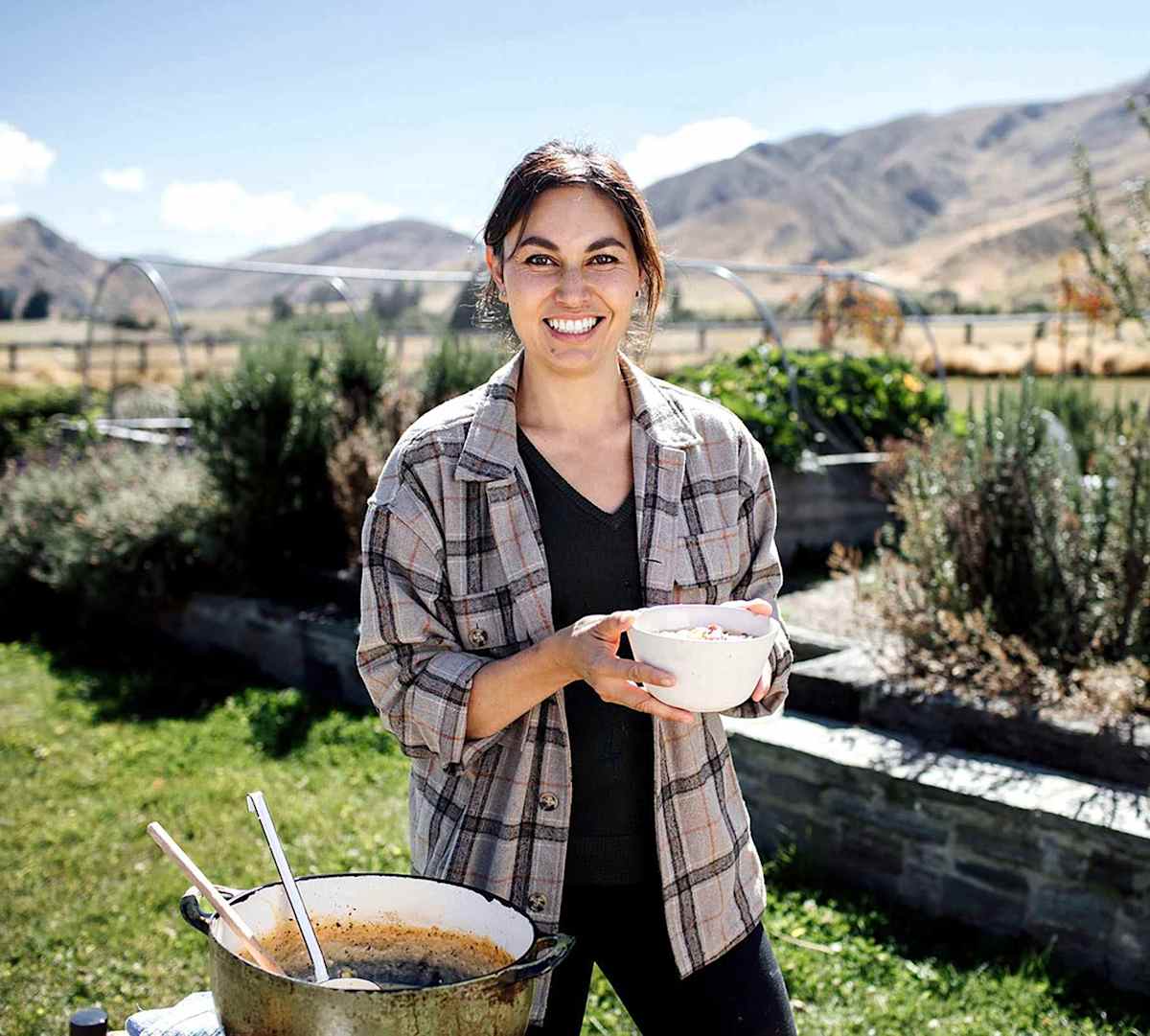
Nadia Lim won the second season of “MasterChef New Zealand” in 2011.
Courtesy of Nadia Lim
If it were up to Nadia Lim, farming would be part of the curriculum. “I don’t know why it’s not. It baffles me,” she says from her home on Royalburn Station, a regenerative farm she runs alongside her husband and other farmhands in the high hills of Crown Terrace, near Queenstown, New Zealand. “If you eat — and everyone does — you should really know how your food is produced.” It’s a conviction that has guided her from the ground up — starting with a TV crash course from the naked chef himself, Jamie Oliver, to studying dietetics, acing MasterChef New Zealand and co-founding My Food Bag, a meal kit service built on clean, healthy, locally sourced ingredients. Now, after more than half a decade on the farm, that ethos has taken root, and everyone’s welcome to dig in. This fall, Nadia’s Farm Kitchen — the spin-off to her wildly popular series Nadia’s Farm — invites viewers into her home for a countertop view of farm-to-table living. Keeners can cook along with her new cookbook of the same name, packed with family-friendly recipes and personal stories — including at least one about unruly roosters. For the full, field-trip experience? A visit to the farm is always on the table. Range: It’s been six years since you left your metropolitan life behind and became one of the free rangers behind Royalburn Station. What made you take the leap? Nadia Lim: My husband, Carlos Bagrie, is a fifth-generation farmer. His family has always been in sheep farming — it’s in their blood. He was the first in the family to break the line by going to university, where we met over 20 years ago. He studied marketing and psychology and went into the corporate world. Returning to farming was always in the back of our minds. So, when we got the opportunity, we took it. Carlos and I co-founded a business called My Food Bag, which is kind of New Zealand’s version of HelloFresh. We managed to sell down a big percentage of our shares to be able to buy a farm, because farms are very expensive. With my background in food, it’s a natural fit. From 12 years old, I always knew I wanted to write cookbooks, host cooking shows, and teach people how to cook. Winning MasterChef New Zealand 15 years ago kind of leapfrogged my career, and I’ve been working with food ever since. R: How did Royalburn Farm tours and experiences like the helicopter lunch offered by Alpine Luxury Tours come about? NL: A few generations ago, everyone in New Zealand had a direct connection of some kind to farming and farmers, so they understood where their food came from. Today, that’s pretty rare. A lot of people have never set foot on a real working farm. For that reason, Carlos and I agreed to do a show called Nadia’s Farm. We filmed three seasons depicting the ups and downs of our farming journey. It was as real as it gets: no script, no make-up artist. I was nervous about how it would be perceived because we were showing everything, all the failures, the death, the ugly, muddy parts of farming, as well as the beautiful parts. But the show had an amazing reception, and we got a lot of requests to host farm tours. We started hosting them informally, and they grew and grew until suddenly we had companies like Alpine Luxury Tours asking us to host their clients. The dining option that they offer is a natural fit because of my background in food. We host the lunches in a tiny cottage that was once the shearers’ quarters. It’s a beautiful spot on the farm with stunning views.
Plan your culinary adventure.
R: What do you hope guests take away from these experiences? NL: Ideally, I want them to have a relaxing time and take home an appreciation for how their food gets to their plate. I hope it doesn’t come across as brash, but my opinion is that if you eat, you should give a damn about farming. What you see and experience depends on the time of year, but when I lead the tours in the summer, we go into the sunflower field to eat sunflower focaccia, so guests can have a direct connection with their food and where it comes from. You can smell the aroma of the sunflower oil, then you can put your nose up to the sunflowers, crush the seeds and petals in your hand and it smells like the oil. R: Do you seek out similar experiences when you travel? NL: My way of traveling is probably quite different from how most people travel. I generally like to stay in one place, far from the touristy centers. When I was in Italy on a family holiday, we stayed in a tiny village in Umbria called Guardea for 10 weeks. We basically lived there. I like to live in a place as opposed to traveling through it. That way, you get to know the locals, and the best way to get to know them and understand their culture is through food. R: How does food become your way in — what’s the first step when you arrive somewhere? NL: I love to go to the local market and try cooking with the produce. I always end up inviting locals for dinner. I did that in Rarotonga, one of the Cook Islands, a couple of years ago. I picked up a bunch of fresh produce and then next minute, the woman who was managing the mini resort came around with her friends and family. They were teaching me recipes and showing me things. When everyone comes together around the table, it’s always the best experience by far. R: As someone who hosts both at home and on the road, in your opinion, what makes a good host? NL: A good host is a relaxed host. Your guests are going to remember the experience and what you bring to it. If you’re relaxed and fun, you could serve them anything — they’re going to have a good time regardless. R: On the flip side, what makes a good guest? NL: My tip for guests is to never turn up early. It can catch the host by surprise. Ten minutes after the agreed-upon time is ideal. R: Otherwise, you won’t have a relaxed host. NL: Yeah. If they’re caught off guard — doing their hair or having a shower — they’ll be thrown off. Ten minutes late is perfect timing. R: What can we expect to find in your new cookbook, Nadia’s Farm Kitchen? NL: I have a new TV show called Nadia’s Farm Kitchen. It’s a spin-off of Nadia’s Farm, which was a farm show with a little bit of cooking, whereas this is a cooking show with a little bit of farm. I’ve also created a cookbook to go with it, featuring all the recipes from the show. Along with more than 80 recipes, Nadia’s Farm Kitchen includes stories about life on the farm. It’s a true farm-to-table book that doesn’t shy away from the brutal truths of farm life.
Travel Bites
Favorite arrival ritual “When I get to the accommodation, the first thing I do is walk around the whole place and the surrounding gardens to get a sense of where we’ll eat and where the sun sets and rises. On a more micro level, I always pull the sheet out from the bottom of the bed. I hate tucked-in sheets.” One item you never travel without “My husband calls me “the princess and the pea,” and maybe there is some truth to that because I always travel with my own pillow. It’s a brand called Hyoumankind. It’s really supportive and small, and I travel the world with it.” Most treasured souvenir “I always bring back little mementos, most of them cooking-related, like a mortar and pestle I got in Thailand or a sashimi knife I got in Japan.” A place that is still on your bucket list “Mongolia. I’d love to travel with the nomads there, have the yurt experience and see what it’s like to live in extreme weather. I feel like the extremes make interesting people. It’s true with food. Grapes, for example, have a lot more character in extreme conditions because they have to adapt. I reckon it’s the same with people.” ✦
Explore More
Cookbooks to See the World Through in 2025: Recipes become roadmaps in these cookbooks, guiding you through kitchens and cultures around the world. Where to Eat in the World’s Top Cruise Ports: Before setting sail, fill your restaurant passport in cities like Vienna and Seattle. A Guide to Budapest’s Edgy Ruin Bar Scene: Sip and sup on Hungarian specialties at these 10 spots. Follow Range on Instagram, Facebook and Pinterest. Sign up for the Range newsletter to receive expert advice, award-winning stories and the latest travel trends in your inbox.