This rugged, majestic country and its surrounding isles invite exploration at a leisurely pace.
Why Scotland is Best Explored from the Water
By Cassandra Brooklyn | December 30, 2024
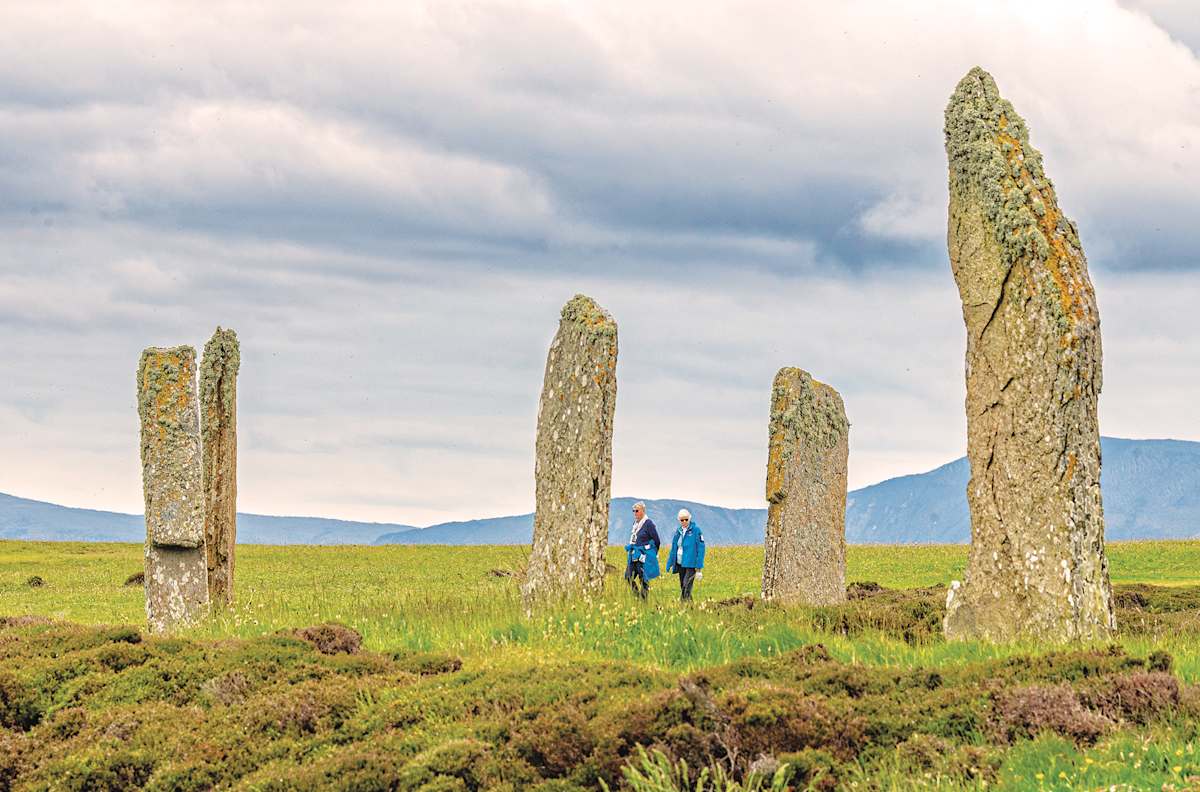
The Ring of Brodgar, in the Orkney Islands, is a 5,000-year-old ceremonial site.
Courtesy of Adventure Canada
A thick fog greets us on the tiny island of Foula, along with a young man named Paul who is one of only about 35 people who live here. He’s our guide for the day, and he explains that when the Romans first arrived in the Shetland Islands, they thought the world ended at distant Foula. Life on one of the most remote inhabited islands in the United Kingdom still follows the calendar implanted by Julius Caesar, celebrating Christmas and New Year’s 12 days after the rest of Scotland. In this strikingly self-sufficient community, most people have two or three jobs, doing everything from handling water and fire emergencies to operating the ferries. Paul says that there are efforts to maintain and even increase the population, but he admits that the lack of people is what gives the island its “mysticism.” We pass a small herd of Shetland ponies on our way to the cliffs, and the fog clears just long enough for us to make out stunning sea stacks in the distance.
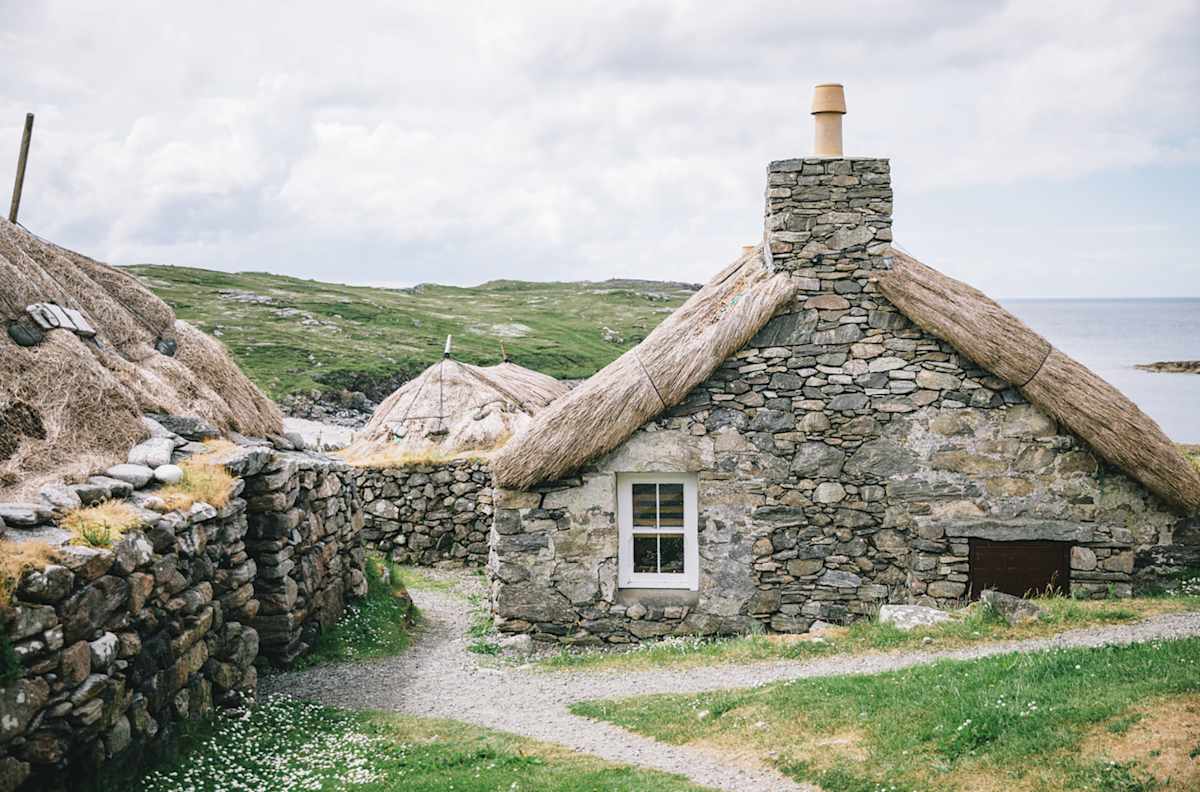
In traditional blackhouses, human inhabitants shared space with their livestock.
Liz Carlson for Adventure Canada
Plan an unforgettable cruise.
Scotland has nearly 800 islands (93 of which are inhabited), with most only accessible by boat and many without any accommodations. So, while most visitors are drawn to the verdant Scottish Highlands and the vibrant cultural capitals of Glasgow and Edinburgh, Adventure Canada’s circumnavigation of Scotland floats an off-the-beaten-path experience at a laidback pace. Over 11 days, our small ship, Ocean Endeavour, and its sturdy fleet of Zodiac boats ferry us to, through and along the cliffs, caves and beaches that make up the rugged Scottish coastline. We set sail from Glasgow and navigate north to the Shetland Islands, then back south to end the journey in Aberdeen, on the east coast of Scotland. Each day, we stop at a new destination where we can venture out in groups or on our own. We hike the hills along the Isle of Skye, and step back 5,000 years in the Orkney Islands to walk through some of the best-preserved Neolithic ruins in Europe. On Lewis and Harris, we visit thatched stone-wall blackhouses to learn how Harris tweed is weaved, and then explore the Calanais Standing Stones, which are older than Stonehenge.
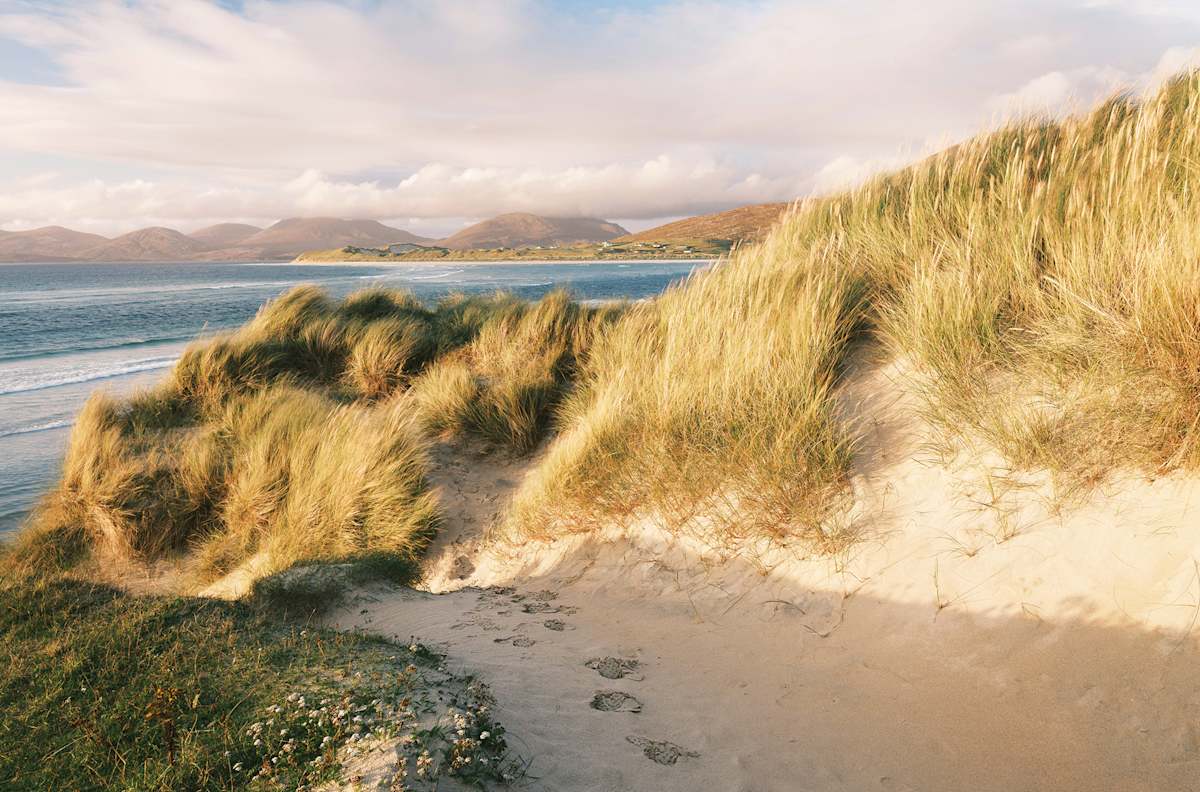
A “beachcomber stroll” might take place in a spot like the Seilebost Dunes, on the Isle of Harris.
Nils Leonhardt/Unsplash
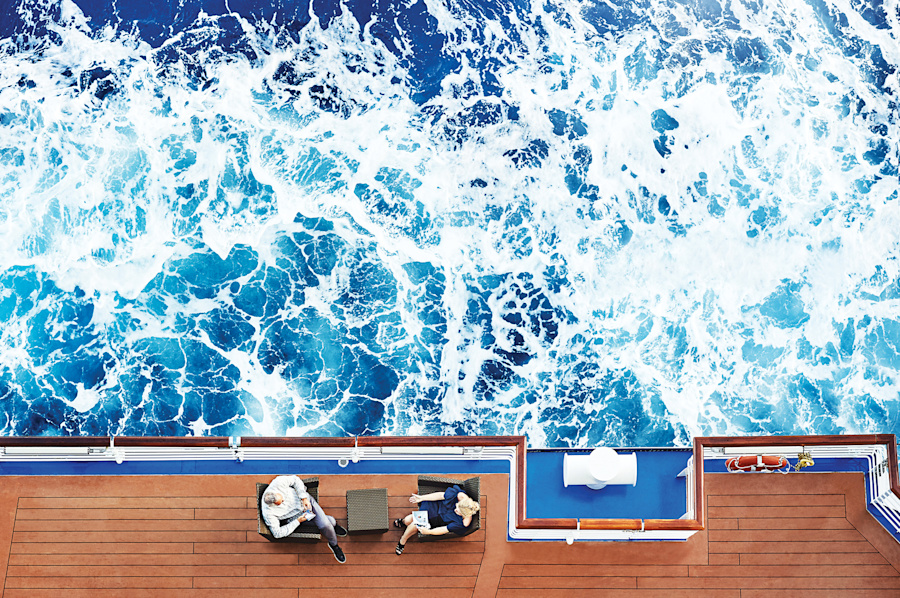
Each day’s itinerary offers a variety of active pursuits, such as hiking, biking and kayaking, with options for all fitness levels. While I scramble up steep cliffs, others join leisurely five-mile hikes with authors, explorers and historians, three-mile birding walks with a Scottish ornithologist or relaxed “beachcomber strolls” with a naturalist. Back on board, these experts also lead fascinating lectures nearly every day about local flora, fauna, history and even Scottish slang. In one of my favorites, a Scottish storyteller regales us with traditional tales, rhymes and folklore while we sip Scottish whisky from the bar. When not on excursions, I curl up in the lounge or out on the sun deck reading a book on the history of Scottish clans, borrowed from the on-board library, or I join hands-on workshops on knot tying or weaving. Ocean Endeavour accommodates fewer than 200 passengers, so it’s easy for a solo traveler like me to make friends — I quickly find regular dinner companions, who I also join for nightly films, concerts and other performances.
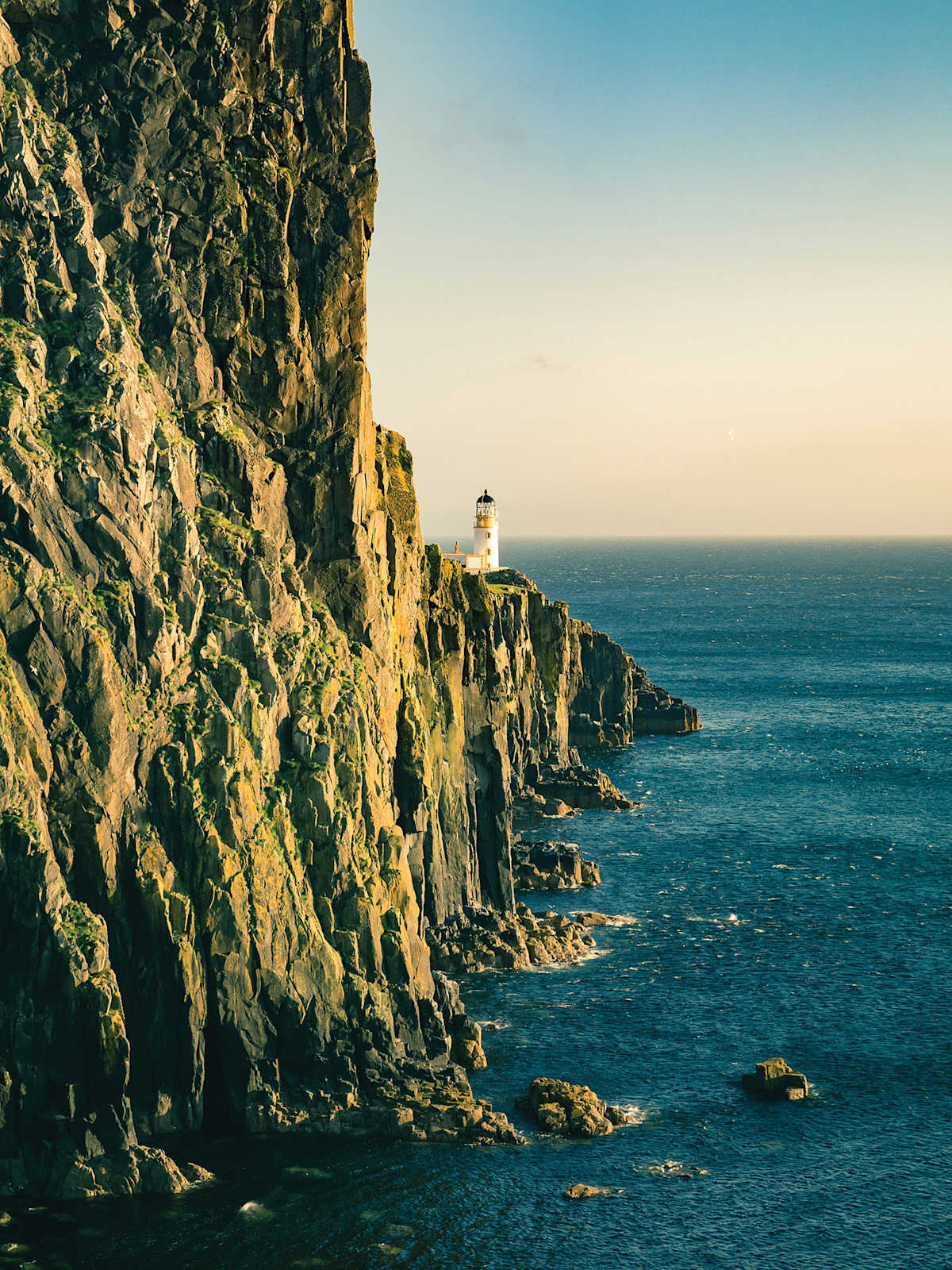
Neist Point Lighthouse is a beacon on the cliffs of the Isle of Skye.
Arnaud Mariat/Unsplash
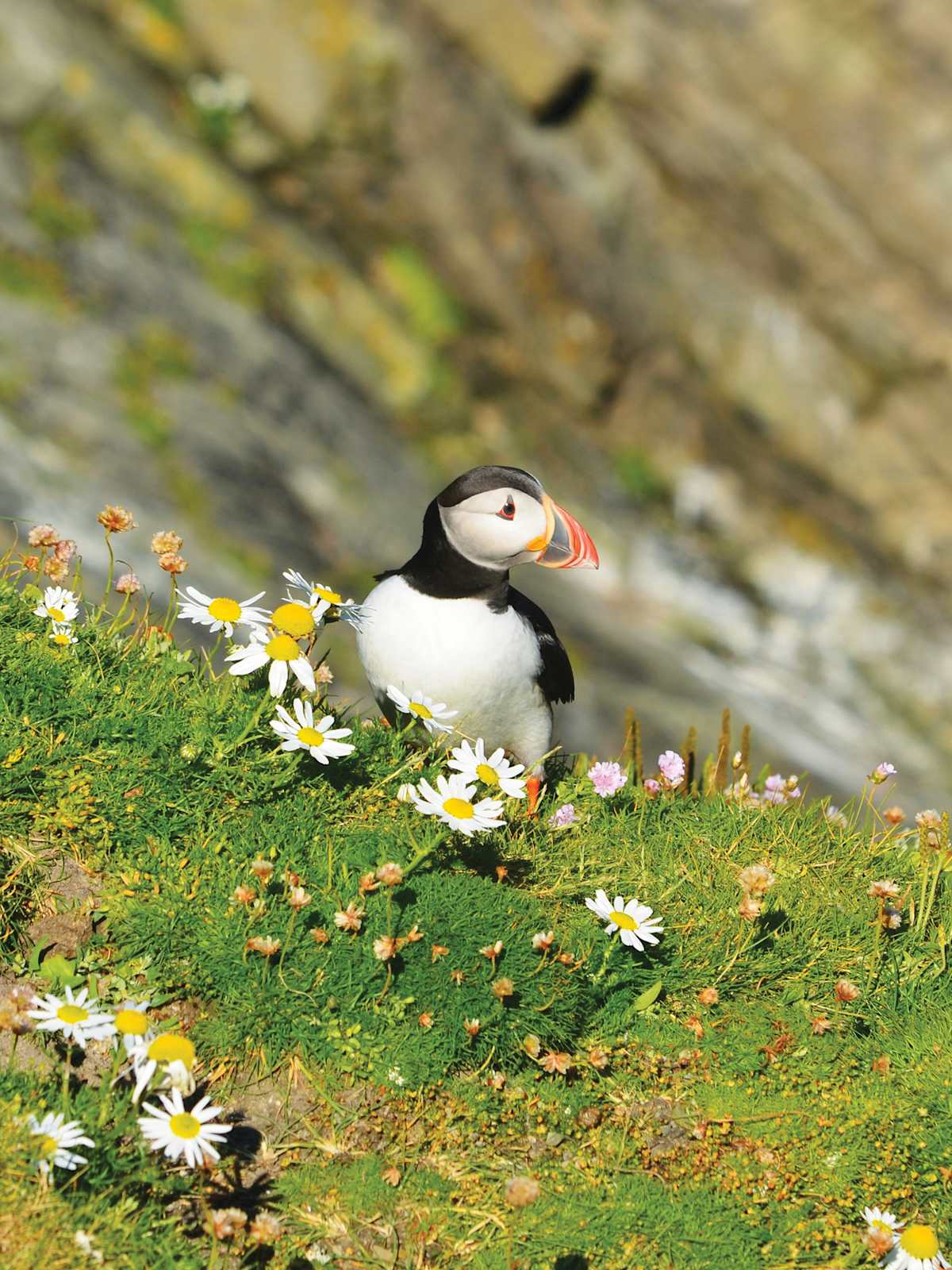
Puffins make their nests in cliffside burrows.
Federica Bisso/Unsplash
On the last full day of the trip, we set foot on Fair Isle, another far-flung Shetland island. I choose a bird-watching tour with our ornithologist, hopping in a Zodiac for close-ups of the craggy coastline en route to shore. It quickly becomes evident that the best has been saved for last. We hike up a small hill, sit down and get comfortable. For several days we have spotted puffins perched on high cliffs, but we have yet to see any up close. Our guide informs us that puffins make their nests in the cliffs just below us and, after only a few minutes, one puffin joins us. Then another, and another. Soon, dozens of puffins appear along the cliff ’s edge, digging, playing, fighting and flirting. Several fly up from the ocean, their beaks bursting with fresh fish to feed the pufflings in the burrows below. I sit cross-legged in the green grass, surrounded by tiny purple and yellow flowers, in no hurry to be anywhere else. The most adorable bird I have ever seen flaps its wings and dances just a few feet away, and I’m exactly where I want to be: in Scotland, exploring it slowly.
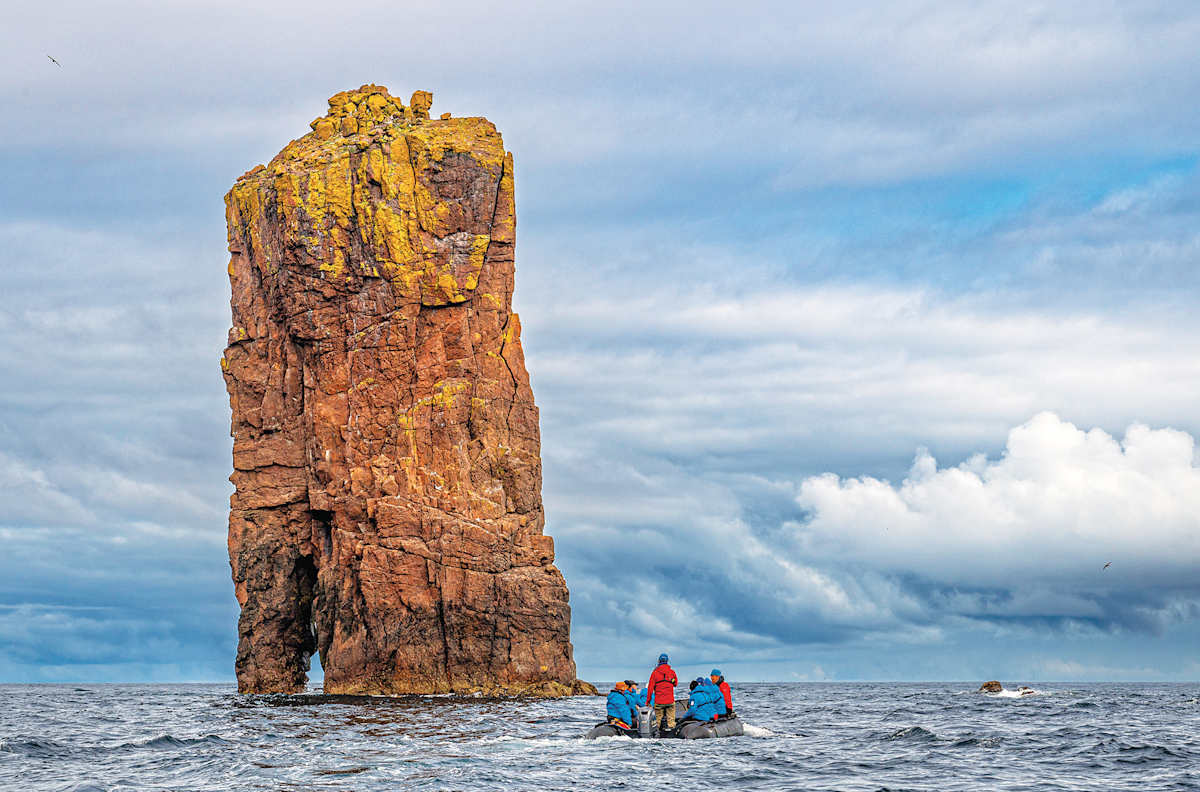
A Zodiac tour is the best way to see the cliffs, arches and caves of Papa Stour.
Minty for Adventure Canada
Three More European Expedition Cruises
The Azores with National Geographic-Lindblad Expeditions This nine-day sailing calls at seven Azorean islands, bringing you up close to volcanic landscapes and mountaintop lakes, and into historic fishing villages and vineyards planted in the black soil. While aboard, watch for whales — and get tips on capturing them from the ship’s resident photography pro. Norway with HX Hurtigruten Expeditions Set sail from Tromsø to Lofoten and back on an eight-day journey under the northern lights. You’ll see the fjords, islands and fishing villages of Arctic Norway, with skiing, kayaking and nature walks at each stop. The winter timing is ideal for delving into Scandinavian comfort, from warming beach bonfires to Nordic saunas. Iceland, Svalbard and Greenland with Seabourn Visit several iconic North Atlantic islands on a 13-day jaunt covering Iceland, Greenland and the gateway to the North Pole. The tour visits Iceland’s two largest cities before taking in the icy east coast of Greenland. The expedition then spends three days in Svalbard, one of the world’s northernmost islands, where polar bears run wild. ✦