Chefs across French Polynesia are returning to traditional ingredients and redefining what it means to eat in paradise.
Meet the Local Chefs Breathing New Life into Tahitian Food
By Jessica Huras | October 2, 2025
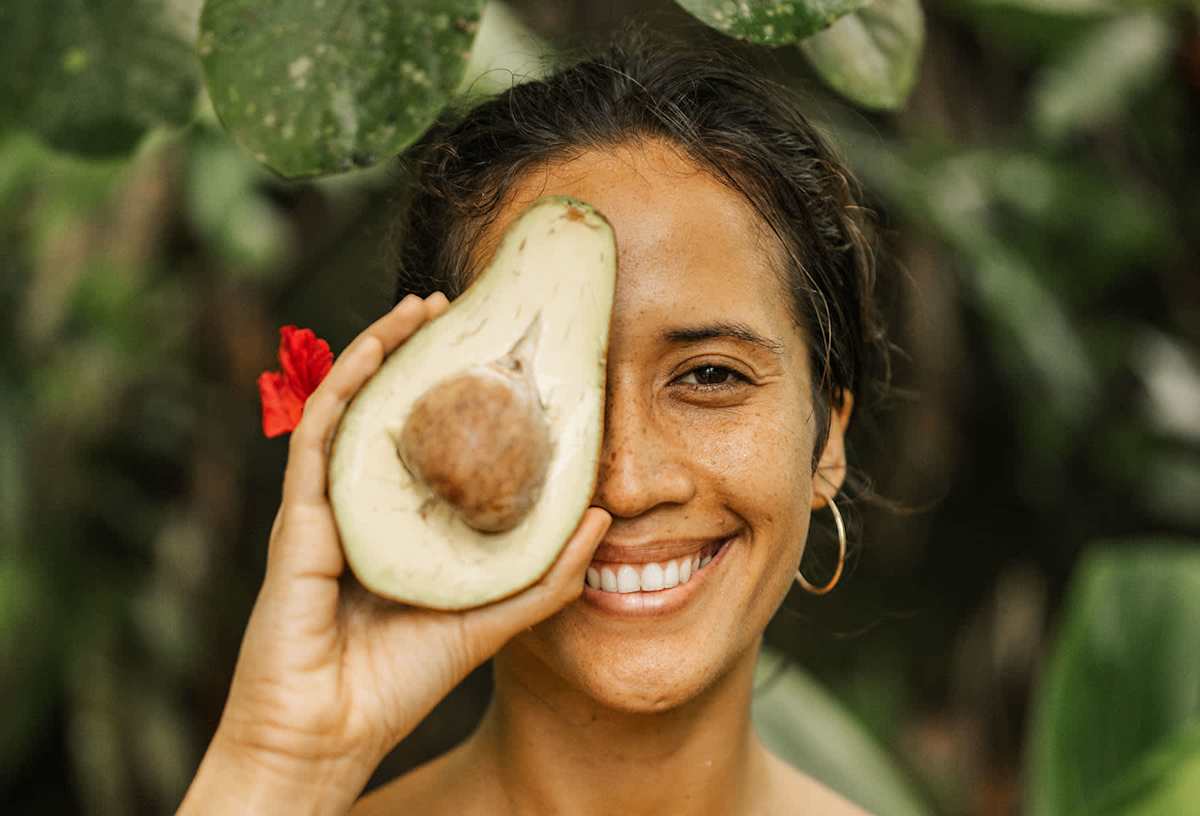
Eva Bourgeois, co-founder of NIU Shack, harvests avocados in her garden on Raiatea.
Sadry Ghacir
It’s barely 10 a.m., but the sun is already high — and hot, baking the pavement of a sleepy parking lot on the island of Moorea, 10 nautical miles from Tahiti in French Polynesia. The salty breeze from Moorea’s reef-rimmed lagoon doesn’t quite reach this roadside plaza, where a no-frills canteen called Golden Lake is already serving a steady line of locals. Inside the glass display case are trays of glossy stir-fried noodles, crisp spring rolls and French and Chinese pastries. After a few minutes, Heimata Hall, my guide, appears with warm baguettes split length-wise and stuffed with wok-fried noodles, slivers of chicken and sautéed vegetables. It’s comfort food in its own chaotic way — crunchy stir-fried noodles slick with soy and oil tucked inside the airy chew of a warm baguette. With every bite, the textures clash and then harmonize: crisp edges, soft bread, salty chicken, just enough grease. This is casse-croûte chow mein, a local snack that captures something essential about French Polynesia — a place shaped by migration, colonization and cultural exchange. The noodles trace back to Chinese laborers brought to the islands in the 19th century under exploitative contracts to farm cotton. The bread is a holdover of French rule and became so beloved that rural roads are lined with baguette-shaped mailboxes (though bread deliveries no longer take place).
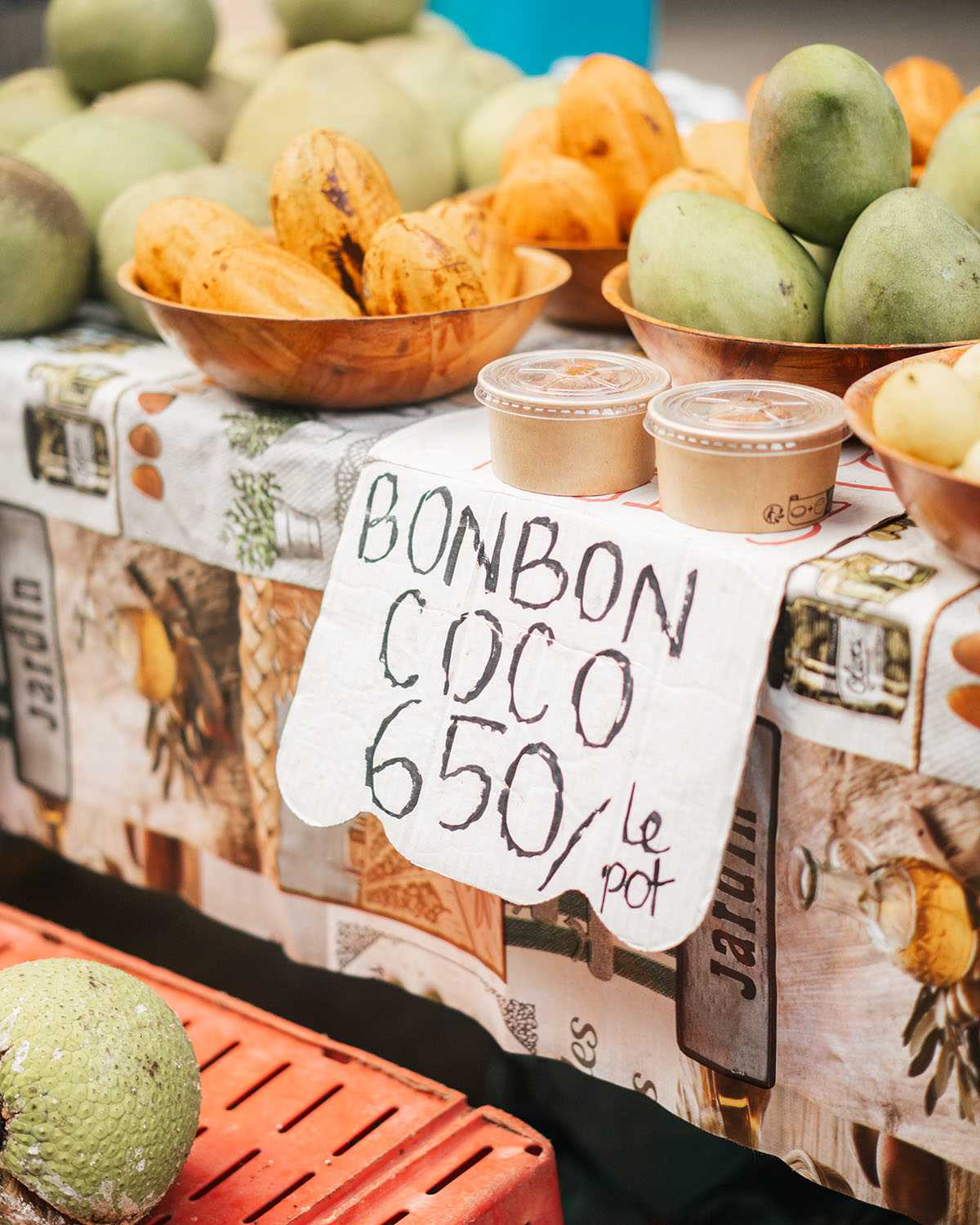
A blend of grated coconut, brown sugar, vanilla and rum, bonbon coco is a popular treat at Papeete’s market.
Sadry Ghacir
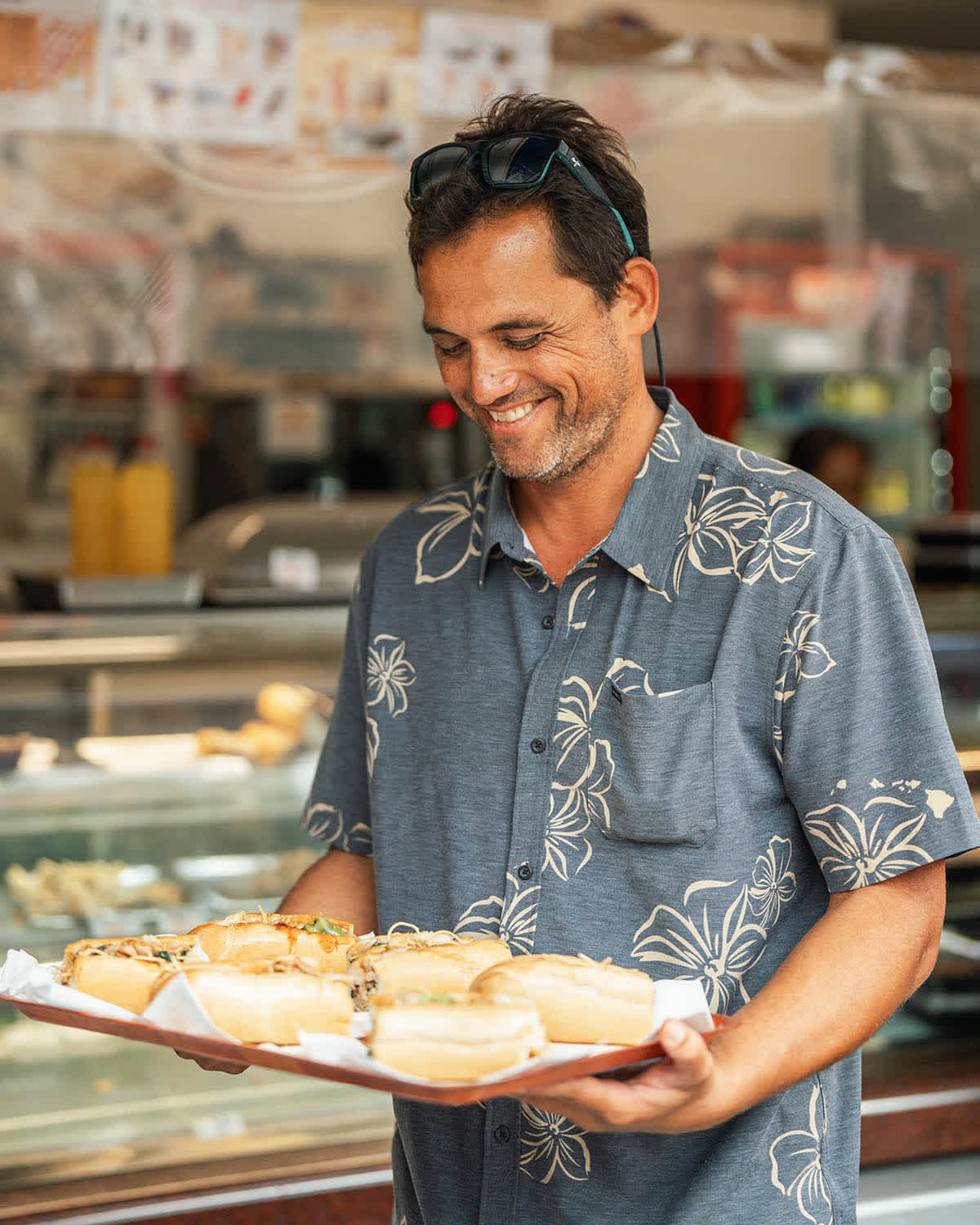
Chef and guide Heimata Hall.
Sadry Ghacir
Plan your culinary adventure.
“This is where our food has been for a long time,” says Hall. “But it’s not where it’s going.” Hall is part of a growing movement to reshape French Polynesia’s culinary identity — not by importing outside trends, but by rediscovering what was here all along. Born and raised in Moorea, Hall spent four years in Honolulu working under Ed Kenney and Dave Caldiero at Town restaurant, acclaimed for its commitment to Hawaii’s farm-to-table movement. When he returned home in 2019, he had a similar mission: to put local ingredients and traditions first. French Polynesia may conjure images of overwater villas with thatched roofs and honeymooners basking in the turquoise glow of Bora Bora. But there’s more: The 118 islands of this French overseas territory are scattered across five archipelagos, and Tahiti is the largest island of them. Moorea, just a short plane or ferry hop away, offers a slower pace and a deeper glimpse into everyday island life. This island is also home for Hall, who guides visitors through the flavors and the stories of Moorea and Tahiti with his company, Tahiti Food Tours. While the chow mein sandwich reflects the colonial past, Hall believes the future of French Polynesia’s food lies in returning to its roots. “Due to colonization, there’s been a huge lack of confidence in ourselves and our culture,” Hall says. “But there’s a big drive now — people want to reconnect with Polynesian culture, to find confidence in it and to express ourselves through it.” In recent years, Hall says, there’s been a quiet but growing shift: a return to the island’s edible inheritance. Ingredients like taro, coconut, breadfruit and fe‘i — a starchy orange banana once reserved for chiefs — are being embraced again, not just as nostalgic staples, but as centerpieces of a revitalized food culture. So are traditional techniques. At community events and on restaurant menus, diners are once again seeing ahima‘a: entire meals slow-cooked in underground ovens. Even fafaru, a pungent fermented fish stew, is being served more often at cultural gatherings and traditional snack spots. Meanwhile, small-scale growers are reviving ancestral agriculture — rotating root crops, layering fruit trees beneath a leafy canopy and timing planting cycles with the moon, drawing on generations of Polynesian horticultural knowledge. “Before colonization,” Hall explains, “our ancestors lived in harmony with the seasons. We lost so much of that knowledge, but now we’re reclaiming it.”
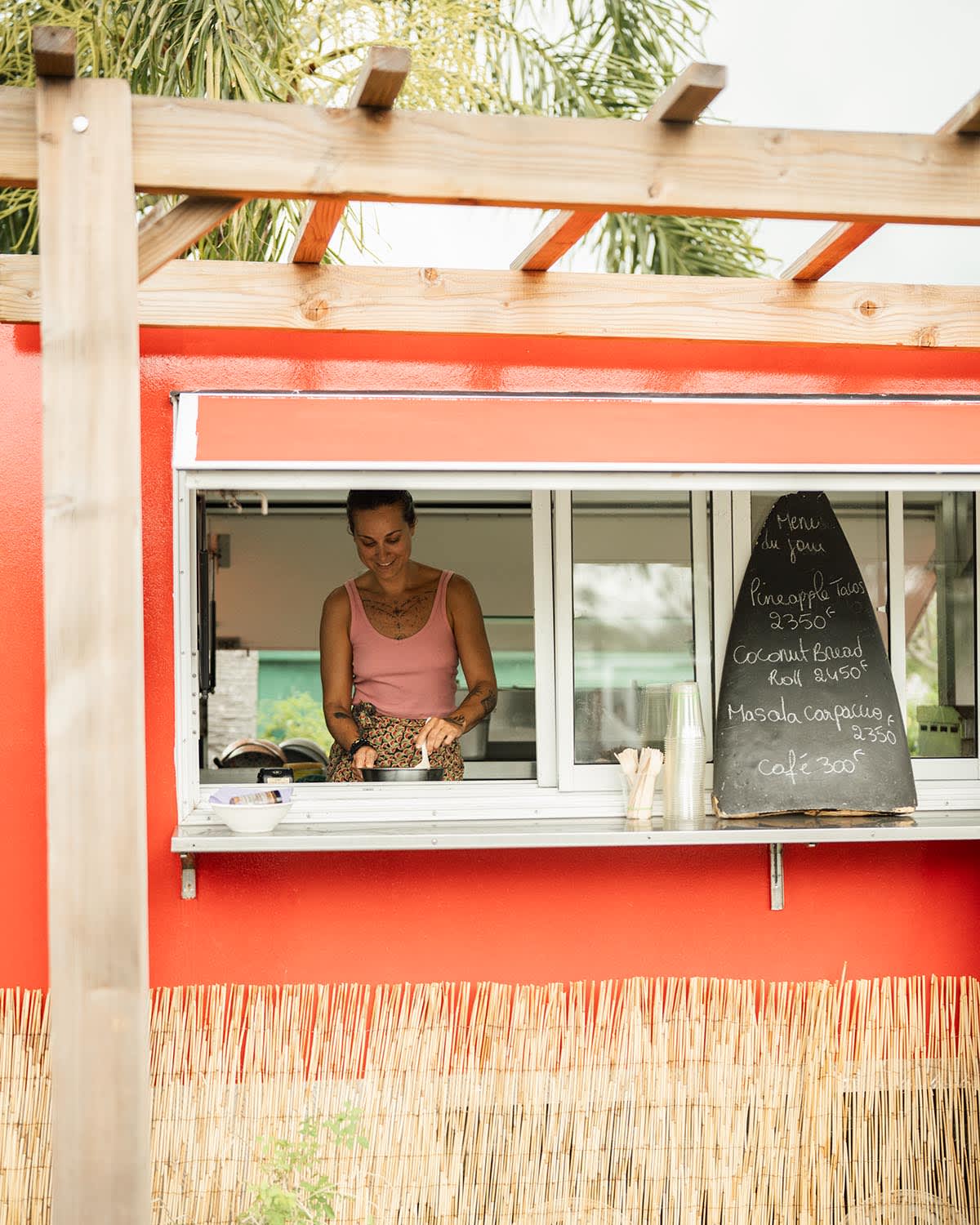
Chef Nahema Charles preps a dish in her Pura Vida roulotte.
Sadry Ghacir
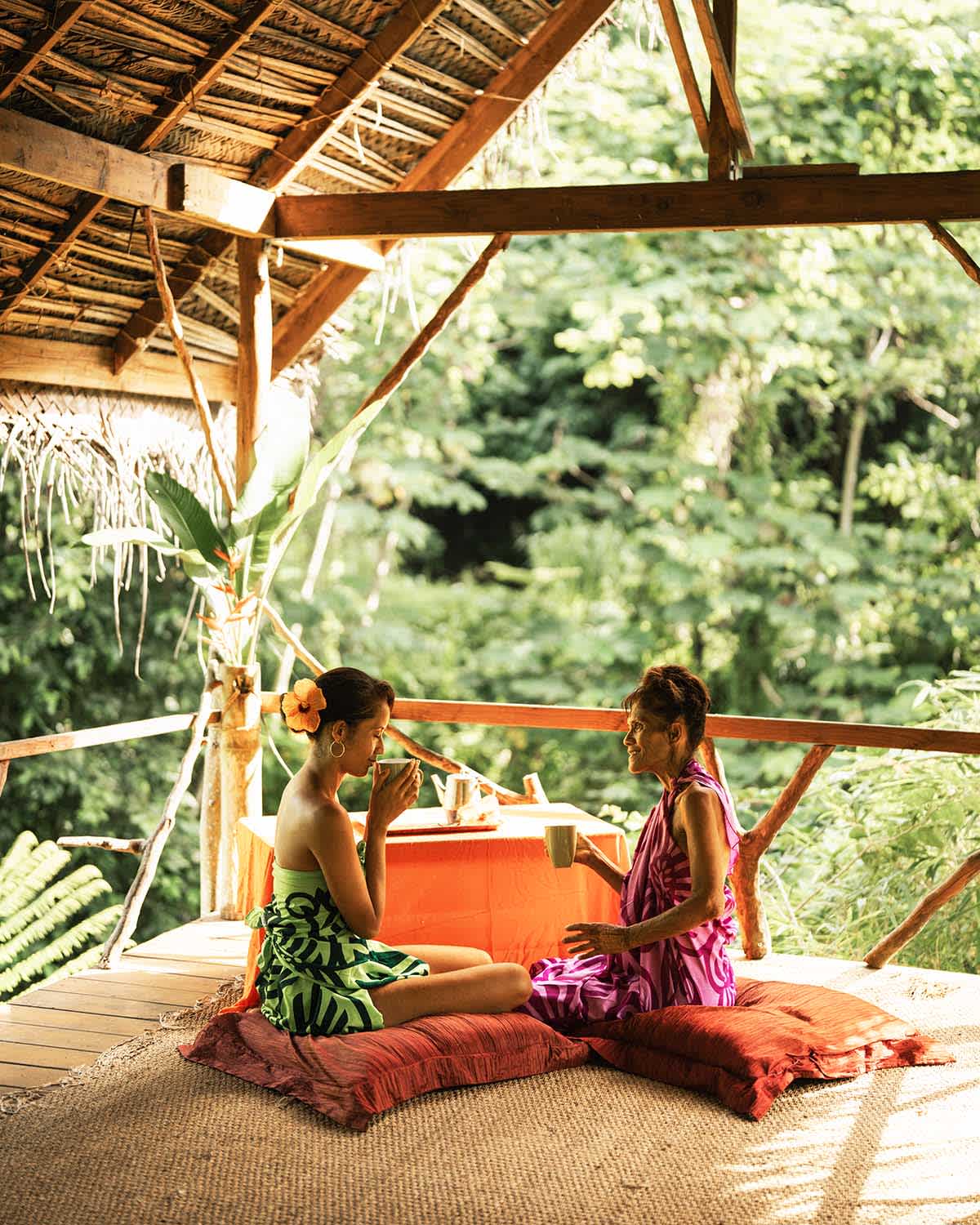
Mother-daughter team Victorine Tihopu (right) and Eva Bourgeois (left) share a moment in the tranquil surroundings.
Sadry Ghacir
A short drive brings us to another parking lot in the village of Pao Pao, on Moorea’s north shore, facing Cook’s Bay and some steep green mountains rising in the distance. Parked in the corner is Pura Vida, a cherry-red roulotte, another of the roadside food trucks central to Tahitian street-food culture. Banana plants and potted herbs flank folding tables out front, with the day’s specials listed on a surfboard-shaped chalkboard. Chef Nahema Charles works out of the compact kitchen, crafting a menu that changes with the seasons, using ingredients pulled from her home garden or gathered from nearby growers and fishers. On this day, Charles is serving tortillas made from fe‘i filled with seared white tuna, and a chilled hibiscus drink garnished with starfruit. The tortillas are sweet, the toppings brightly flavored and the fish hot off the grill. Inspired by her travels to places like Thailand and Costa Rica, Charles reimagines local ingredients through a global lens — without losing sight of where they come from. The floral tang of her hibiscus tea lingers all afternoon. A few days later on the island of Raiatea, I make my way to NIU Shack, a forest retreat run by Eva Bourgeois and her mother, Victorine Tihopu. NIU Shack blends seamlessly into its lush Tepuhapa Valley surroundings. The kitchen is little more than a tin roof held up by beams, open to the elements and surrounded by towering foliage. Aside from the gas stove, the materials are all natural: bamboo-paneled walls, linen-covered floors, wooden counters. The family property extends past a garden, down to a quiet brook. The kitchen opens onto a shaded porch where a long wooden table is set for lunch. There’s no printed menu here, no substitutions and no rush. One by one, platters arrive — each more artfully arranged than the last. There’s a delicate pumpkin “carpaccio” layered with pineapple and basil, patties made from chickpeas and split peas, and a vegan quiche with a coconut crust filled with taro and mushrooms. The garden isn’t a backdrop, it’s the source. I can taste the land in every bite: taro harvested that morning, herbs clipped minutes before they hit the plate. The pace, the ingredients, the setting of the meal all speak to a larger shift: This meal embodies everything Hall has been talking about — it’s local, modern, inventive and highly photogenic.
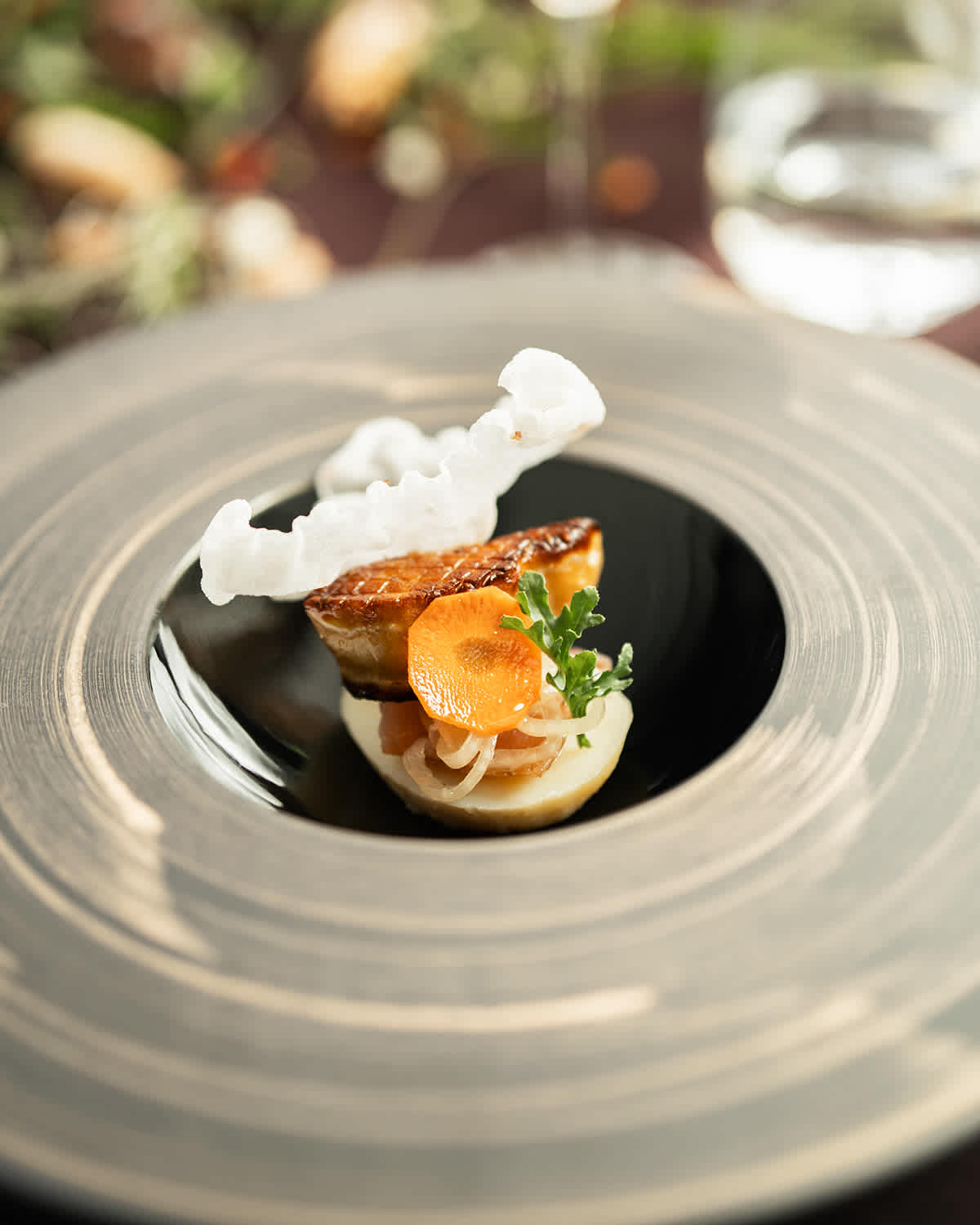
Warm potato, smoked swordfish and foie gras served with crunchy condiments — one of the creations chef Tereva Galopin serves at his restaurant, Le Sully.
Sadry Ghacir
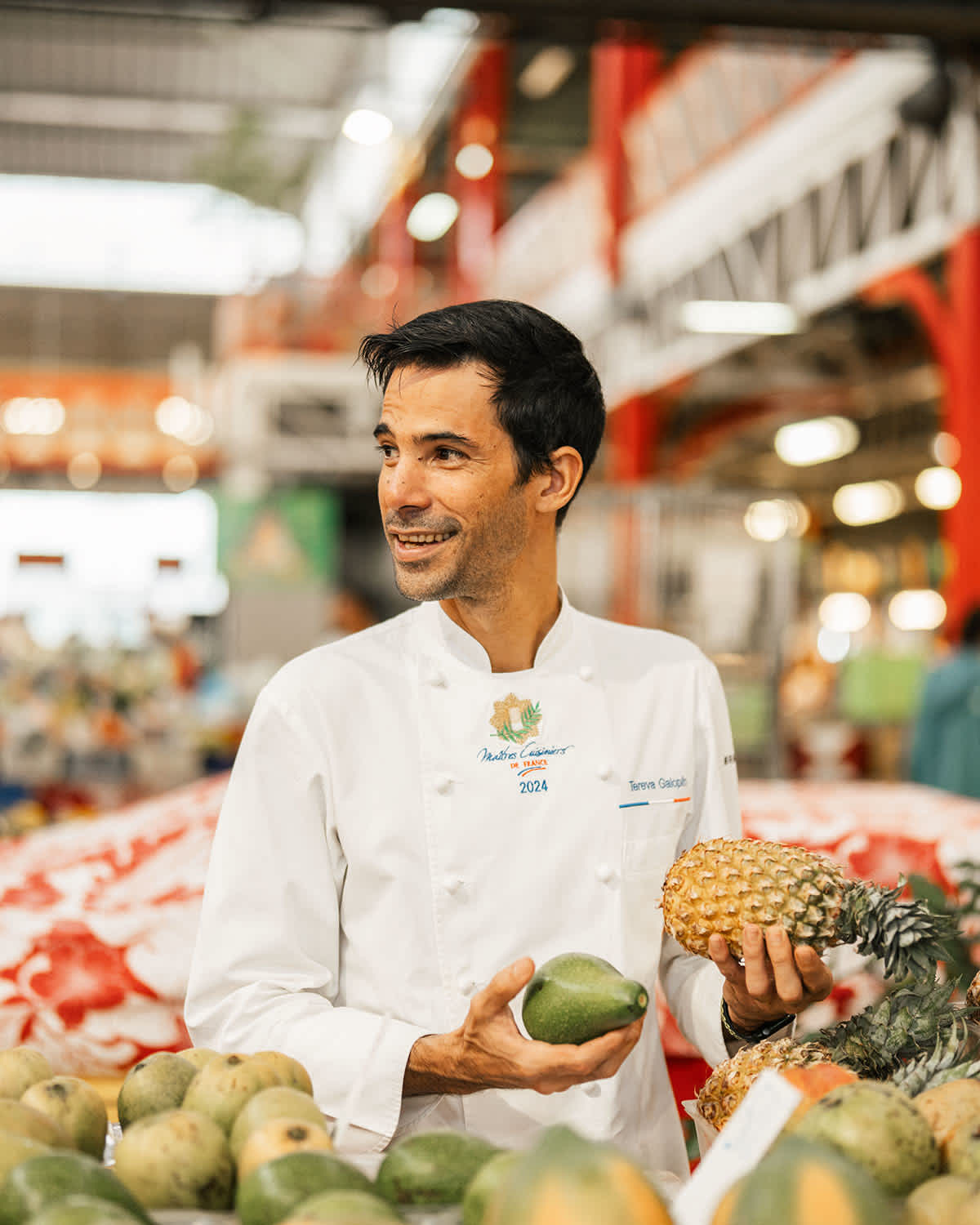
Chef Galopin shops at Papeete’s municipal market, just down the street from Le Sully.
Sadry Ghacir
After the deep-green quiet of Raiatea, Papeete is a jolt. The capital of French Polynesia feels more like a compact suburb than a tropical escape — all low-rise buildings, traffic circles and strip malls. But as I walk through its central market with chef Tereva Galopin, the connection between place and food resurfaces. At Papeete’s market, vendors pile freshly caught lagoon fish on beds of crushed ice, stack fragrant hei (flower necklaces woven from tiare, frangipani and hibiscus) on folding tables and scoop the flesh of ripe mangoes and papayas into containers. Born in Tahiti to a French father (a Maître Cuisinier de France) and a Polynesian mother, chef Galopin grew up in a restaurant, surrounded by pots and pans: His parents ran the fine-dining restaurant Auberge du Pacifique in downtown Papeete. After honing his classical technique with Michelin-starred chef Christian Constant in Paris, Galopin returned to his reverence for the flavors of home. Today, he’s shopping for our lunch. As we move through the market, Galopin picks out burgo, a reef-dwelling grouper from the Marquesas Islands; pahua, giant clams with soft, briny flesh; a selection of local root vegetables — taro, uru (breadfruit), cassava; and slightly sweet autera‘a nuts. Back at his restaurant, Le Sully, Galopin turns our haul into a meal that’s elegant in technique but anchored in the flavors of home. We start with a playful salade tahitiçoise, his island take on the French classic niçoise but with seared local tuna, crisp vegetablesand roasted autera‘a nuts in place of olives. Next comes burgo carpaccio, sliced thin, followed by a creamy taro risotto. The meal ends with a garlicky serving of pahua bourguignon: giant clams prepared with butter, parsley and white wine. Like so many meals I’ve had here, this one’s made from island ingredients and shaped by the hands of those reclaiming how they’re used. These islands’ true flavors are coming to the surface as cooks across French Polynesia return to the tools and techniques of their ancestors — not to replicate the past, but to shape the future. It’s a cuisine rooted in tradition, informed by history and proud of its place in the world. And that, you can taste.
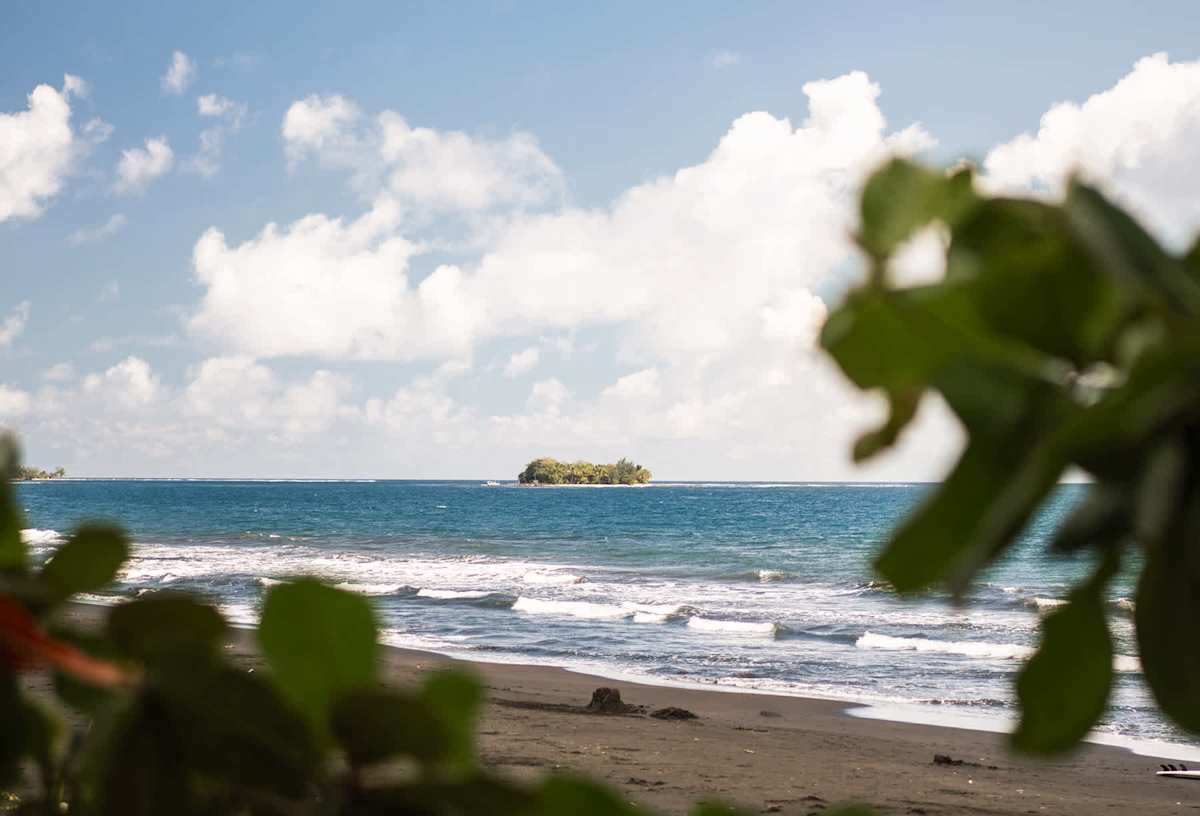
Tahiti’s Ahonu Beach is a beginner surf spot with a view of Motu ’Au islet.
Sadry Ghacir
Where to Eat
Maru Maru, Papeete Tucked down a quiet side street in Papeete, this unassuming spot with a variable menu offers some of the city’s most inventive cooking in a cozy, wood-accented dining room. Dishes like grilled lobster with vanilla butter, swordfish in white wine and garlic, and guava pie make thoughtful use of homegrown ingredients. Snack Rotui, Moorea A Moorea institution since 1973, this no-frills snack bar overlooks the turquoise waters of Cook’s Bay. The menu is a snapshot of the islands’ culinary past: Egg rolls, dumplings and ma‘a tinito (“Chinese food” in Tahitian — braised pork and beans) share space with poisson cru, the national dish made with raw fish, lime and coconut milk. Food Trucks at Aorai Tini Hau Park, Pirae By 6:30 p.m., dozens of roulottes transform this park near Papeete into a lively, alfresco food hall and diners descend to enjoy a laid-back meal under the stars. These mobile kitchens, which once served laborers on worksites, are an island institution. Expect to find old standbys (Chinese stir-fries and French crêpes) along with local ingredients in dishes like grilled lagoon fish or taro fries. ✦
Explore More
A Taste of Quebec, with a Side of Stars: Amid the glow of new Michelin stars, the province’s deep culinary roots shine through. Inside Bangkok’s Evolving Food Scene: In the heart of the capital, a new wave of restaurants is redefining haute cuisine — uniting modern sensibilities and deep-rooted traditions on the plate. The World’s Tastiest Hotels: From Portuguese wine retreats to foraging adventures in Rwanda, these gourmet getaways are a must-visit for any foodie. Follow Range on Instagram, Facebook and Pinterest. Sign up for the Range newsletter to receive expert advice, award-winning stories and the latest travel trends in your inbox.