From ancient temples to spectacular hikes, Pompeii offers a journey through time like no other. Here’s how to make the most of your visit.
A Local’s Guide to Visiting the Pompeii Ruins
By Meredith Poirier | September 17, 2025
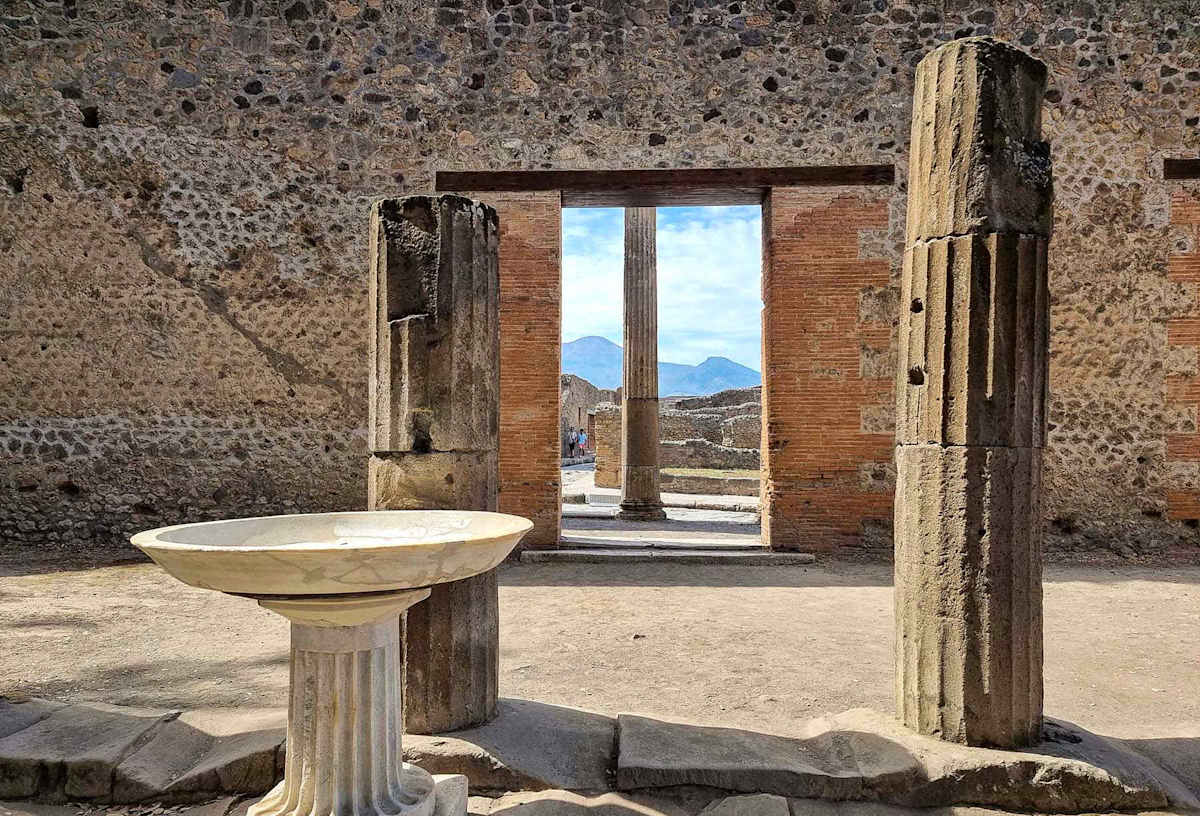
The Pompeii ruins were buried for more than 1,500 years before being rediscovered in 1748.
Jonne Mäkikyrö/Unsplash
Walking through the ruins of Pompeii feels like stepping into a time capsule. Frozen in ash by the eruption of Mount Vesuvius in 79 CE, this UNESCO World Heritage Site remains one of the best-preserved ancient Roman cities in the world. With enough to explore for three full days, it can feel overwhelming — so veteran tour guide Enrica Guida shares her top tips to help you visit Pompeii like a pro.
When to Visit Pompeii
Aside from three annual closures — Christmas, New Year’s Day and May 1, Italy’s Labor Day — Pompeii welcomes visitors year-round. Still, timing matters. Guida recommends visiting Pompeii between March and October, when there is a greater amount of available daylight. Expect average daily highs of 82°F (28°C) in the summer and 62°F (17°C) during the cool season. While July and August can often be sweltering in the Campania region, “the breeze coming from the sea helps tremendously,” says Guida.
Book Your Tickets in Advance
With over four million visitors in 2024, Pompeii remains one of Italy’s most visited archaeological sites. But here’s the catch: it isn’t a walk-in experience. Unlike other historical attractions, Pompeii requires advance ticket booking, ideally through the official TicketOne website. Purchasing ahead not only secures your entry but also helps you skip the long lines at the entrance.
Plan your dream trip.
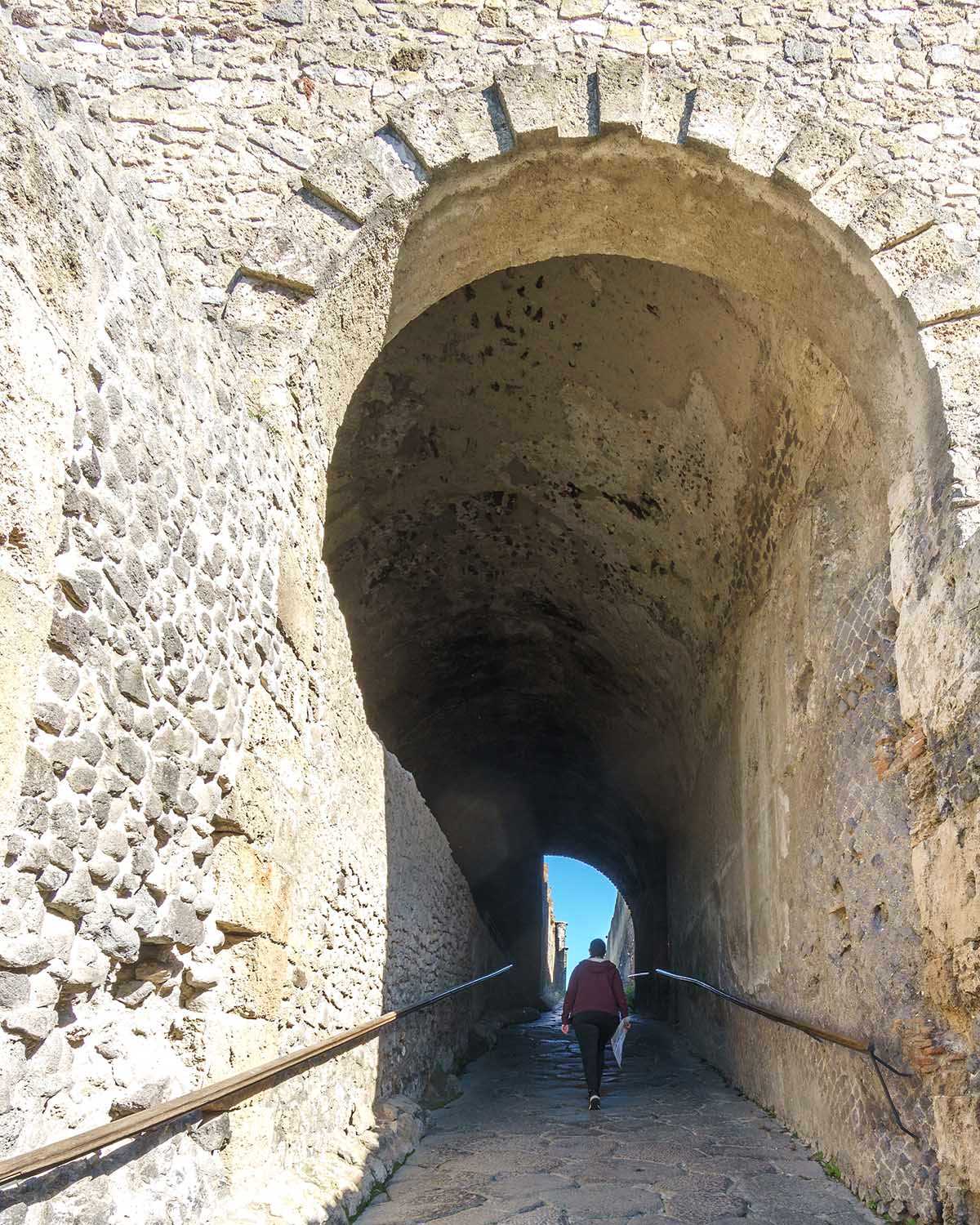
There are three main entrances to Pompeii, including the popular Porta Marina.
Sebastian Sonnen/Getty Images
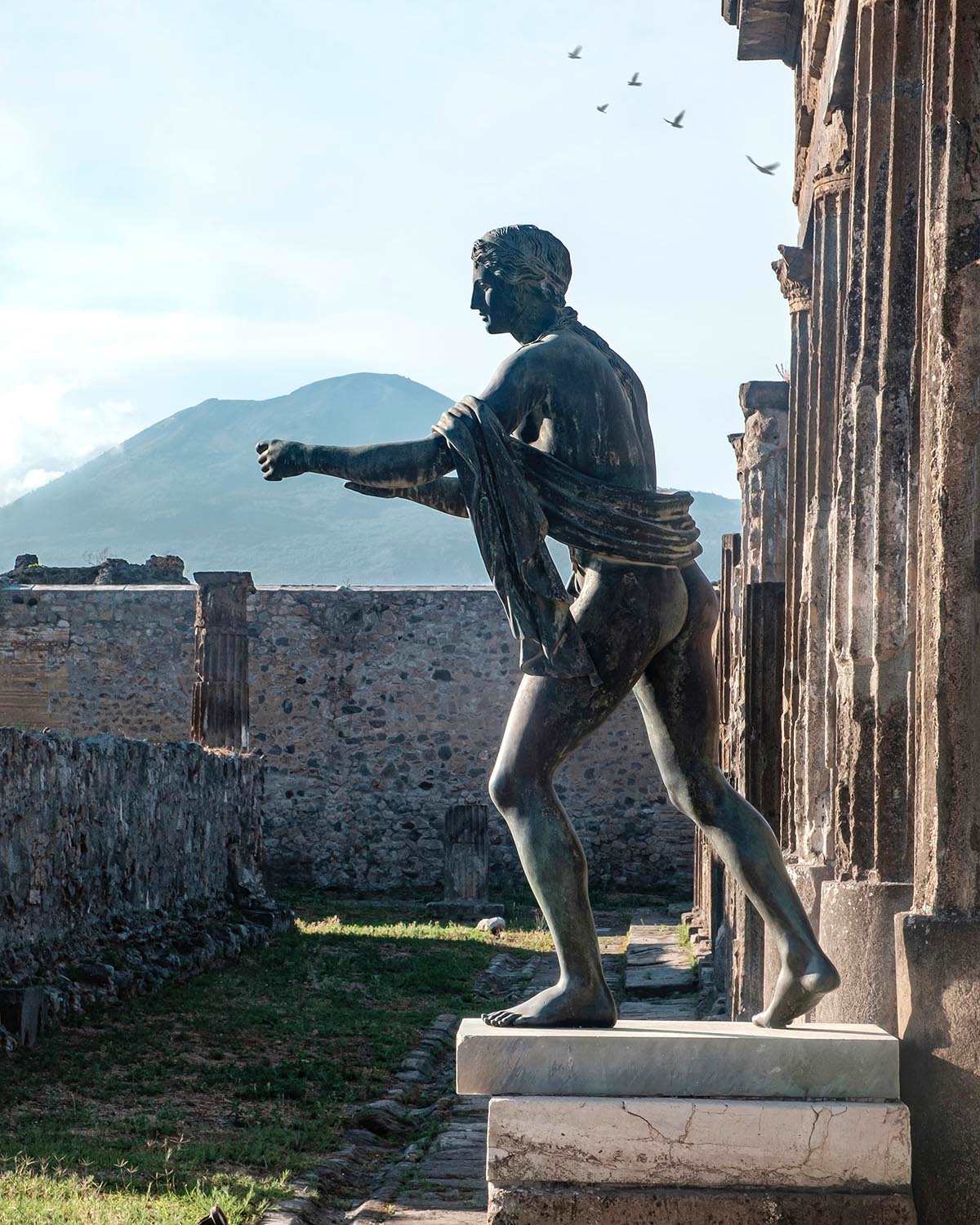
Construction of the Temple of Apollo began in the 6th century BCE.
Grapix/Getty Images
Getting to Pompeii
Whether you’re visiting Pompeii by train or car, getting there is surprisingly easy. Guida recommends taking the Campania Express, a seasonal tourist train from Naples that stops at both Herculaneum and Pompeii. For a more budget-friendly alternative, the Circumvesuviana line also connects Naples to Pompeii, with frequent departures. If you’re driving to Pompeii, you can get close to the main entrances, but parking may be tricky. Guida suggests arranging a drop-off if possible.
Choose Your Gate Wisely
Your access point can determine the rest of your journey. Pompeii has three main entrances: Porta Marina, Piazza Esedra and Porto Anfiteatro. Of the three, Guida recommends Porta Marina. “You begin in the heart of the city, and from there you move outward,” she says. There are benefits, however, to the two other gates. Porta Anfiteatro, located near the modern town of Pompeii, offers practical amenities like ATMs and public washrooms. Piazza Esedra, adjacent to Porta Marina, is often used for group tours and tends to be less crowded.
Pack Light
A day trip to a site as vast as Pompeii might tempt you to pack for every possible scenario, but be warned: backpacks are not allowed. “Visitors should instead pack a small bag with a hat, water, sunscreen and a snack, and wear comfy shoes,” says Guida. Bags must not exceed 11.8 x 11.8 x 5.9 inches, in line with the park’s security policy. Fortunately, water fountains are available throughout the site, so you can refill as needed. And situated behind the Temple of Jupiter is Chora Café, a cafeteria-style snack bar serving pizza and sandwiches.
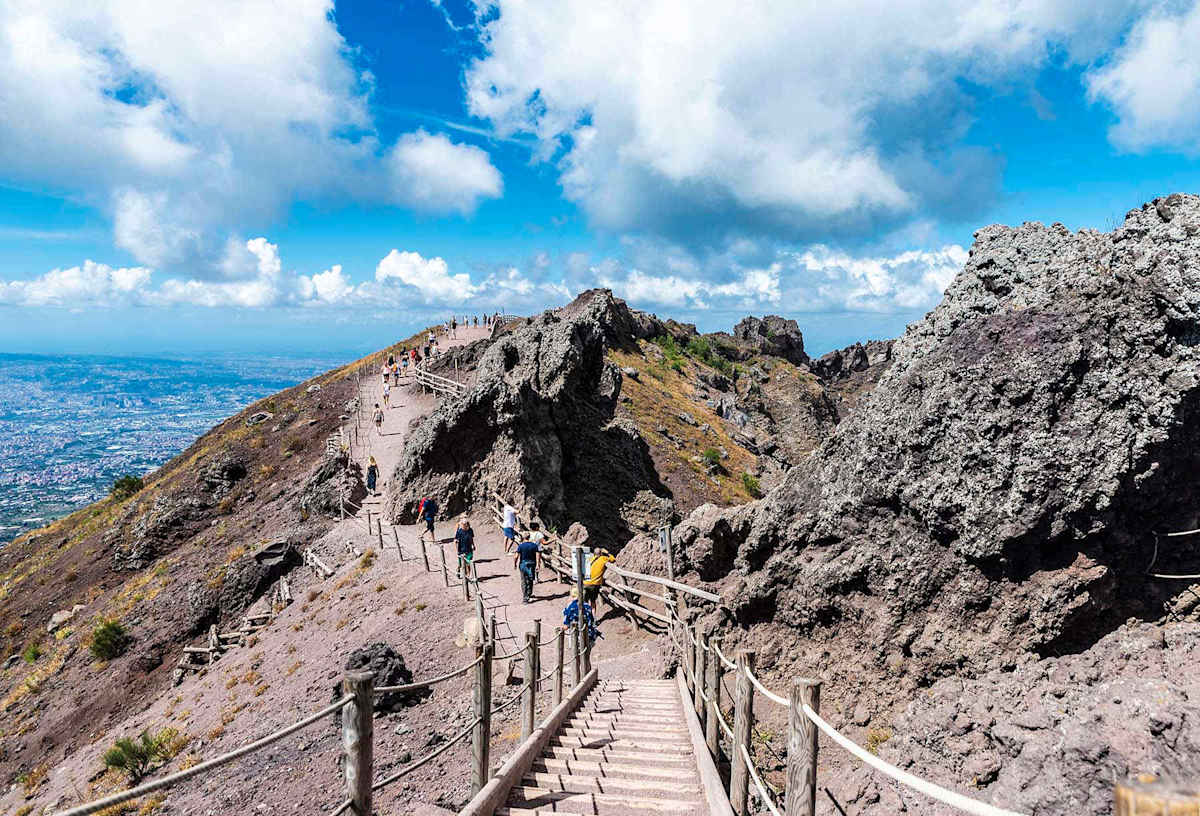
Hiking to the crater of Mount Vesuvius takes just 45 minutes along the main trail.
J2R/Getty Images
Explore the Temples
Of the many temples still standing in Pompeii, Guida’s favorite is dedicated to the god of music, poetry, medicine and archery. “The Temple of Apollo is the best-known and most photographed, and it’s always open to the public,” she says. “Inside, you can see the altar, a sundial, a labrum (a ceremonial basin) and replicas of the statues of Diana and Apollo — with Mount Vesuvius in the background. In short, it is quite complete.” Also worth a visit is the Temple of Isis, a well-preserved tribute to the Egyptian goddess, featuring elements of Hellenistic architecture.
Discover the Ancient Bathhouses
Curious to see how Romans bathed, relaxed and socialized? Pompeii’s ruins include five public bath complexes, each offering a look into daily rituals. “These baths were a central part of Roman life,” says Guida. “They weren’t just for getting clean — they were hubs for networking.” Guida says there’s no need to stress over which one to explore — each bathhouse offers a clear glimpse into Pompeii’s intricate social structure.
Hike Mount Vesuvius
The eruption of Mount Vesuvius in 79 CE — one of deadliest in history — rained ash and pumice on Pompeii, preserving the city and casting its citizens in haunting detail for millennia. Today, you can stand at the edge of the crater — ground zero of one of history’s most catastrophic eruptions. At 4,200 feet, the hike to the rim is easier than it looks. “Starting from the pedestrian area, you’ll only need 45 minutes to reach the top,” says Guida. “Once there, take your time: look into the crater, enjoy the view and take lots of photos.” Even in summer, temperatures at the summit can be surprisingly cool, so if you're sensitive to cold, be sure to bring layers. ✦
Explore More
Why Sicily Is Perfect for a Multigenerational Vacation: Between its unspoiled nature reserves and sun-dappled coastlines, Sicily proved the perfect escape for this photographer’s family. Europe’s Most Beautiful Lakes: From a Scottish loch surrounded by verdant hills to an Alpine oasis in Germany, these five freshwater shores are worth planning a trip around. Natural Wonders You Can Do in a Day: These seven awe-inspiring sites — each easily accessible from a cruise port — showcase nature at its most dramatic. Follow Range on Instagram, Facebook and Pinterest. Sign up for the Range newsletter to receive expert advice, award-winning stories and the latest travel trends in your inbox.