On the easternmost of Spain’s Canary Islands, the name César Manrique is synonymous with sustainable tourism. While the artist and activist is less known off the island, his legacy stretches far beyond its shores.
On the easternmost of Spain’s Canary Islands, the name César Manrique is synonymous with sustainable tourism. While the artist and activist is less known off the island, his legacy stretches far beyond its shores.
By Katie Sehl | May 22, 2025
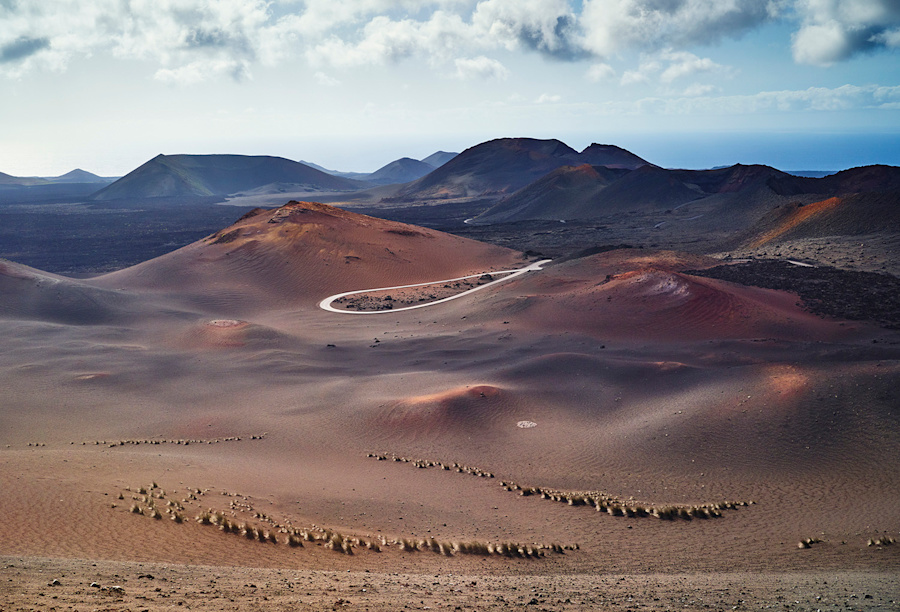
The telluric pull of the island reached César Manrique across the Atlantic in Manhattan. Among some 200 photographs of communities mounted on hollow walls for the 1964 exhibition Architecture Without Architects at the Museum of Modern Art, the then-45-year-old artist found himself transfixed by the pure forms of La Geria, a village built on the black volcanic ash of his homeland, Lanzarote. A short time later, feeling “an imperative need to go back to the soil,” as he wrote to a friend, he packed up the Lower East Side studio loaned to him gratis by Nelson Rockefeller, bid adios to the art crowd — Andy Warhol, Mark Rothko, et al. — and returned to the most easterly of the Canary Islands for good. It’s easy to picture what Lanzarote would look like today had its “most famous son” never come home: paved paradise lined with Big Mac billboards, electricity cables scribbled across the horizon and high-rises hoarding the sky. Instead, the island’s barren landscapes — weathered by coarse sirocco winds from the Sahara and molded by lava flows from a series of eruptions between 1730 and 1736, and again in 1824 — are among the most protected in the world. More than 40 percent of the territory (an area nearly six times the size of Manhattan) is guarded by multiple designations, from Timanfaya National Park, where some fissures in the Montañas del Fuego emit enough heat to fry eggs, to the lunar-like basalt fields, a UNESCO Global Geopark, where the European Space Agency trains for missions. In 1993, UNESCO granted the island Biosphere Reserve status, and in 2015 it became the first place to receive the Biosphere Responsible Tourism certification.
Most conejeros and conejeras, as locals of Lanzarote are known, regard Manrique as the driving force behind these measures. “His work was fundamental for the island to be declared a Biosphere Reserve,” says Violeta Izquierdo Expósito, professor at the Complutense University of Madrid and author of César Manrique: Arte Total. On his return in 1966, he found the island mostly as he had left it: “like an unframed, unmounted work of art,” he famously stated. Sensing an impending avalanche of tourists and the business interests that follow — poised to spill over from La Palma and Tenerife — the artist made it his mission to do the framing and mounting. With the support of his childhood friend turned president of Lanzarote, José Ramirez Cerdá, he enlisted a playwright, poet and architect, among others, to canvass the island and compile an architectonic style guide, leaving no grain of oxidized sand unexamined. Traces of their expedition touch every crook and crevice on the island. Following their guidelines, asphalt roads unroll like carpets, curving along natural contours so as “not to cut the landscape in two.” Roadside ads remain outlawed, cables run underground and high-rises — for a time forbidden — remain few. As local legend has it, the height of a palm tree informed Manrique’s view that buildings should not exceed three storeys. White cubic houses still stand in contrast to the burnt earth, with inland-facing shutters painted forest green and those facing the sea marine blue, per tradition. “I believe that the special characteristics of every place on this planet must be preserved by all means,” he told an interviewer in 1971, “otherwise we will soon be living in a boring standard culture without any creative imagination.”
Plan your dream trip.
Our Ensemble travel advisors will design a one-of-a-kind vacation - just for you.
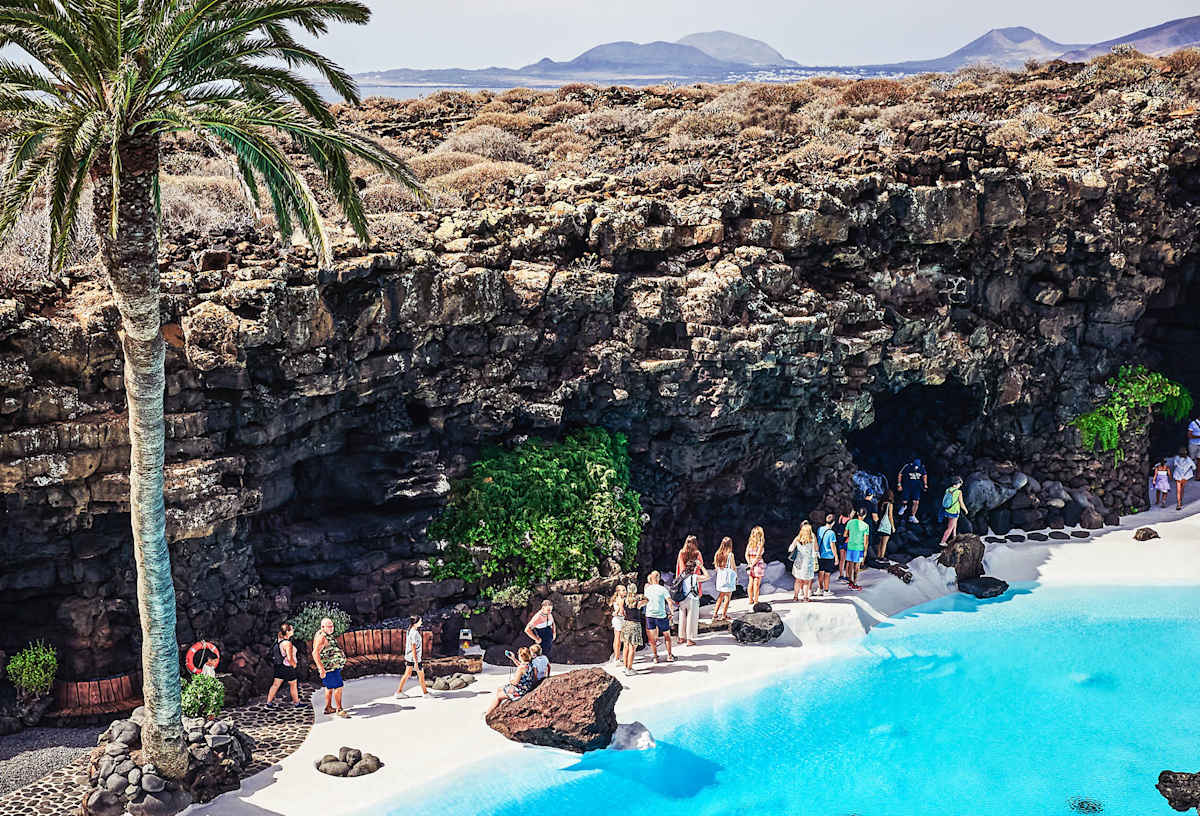
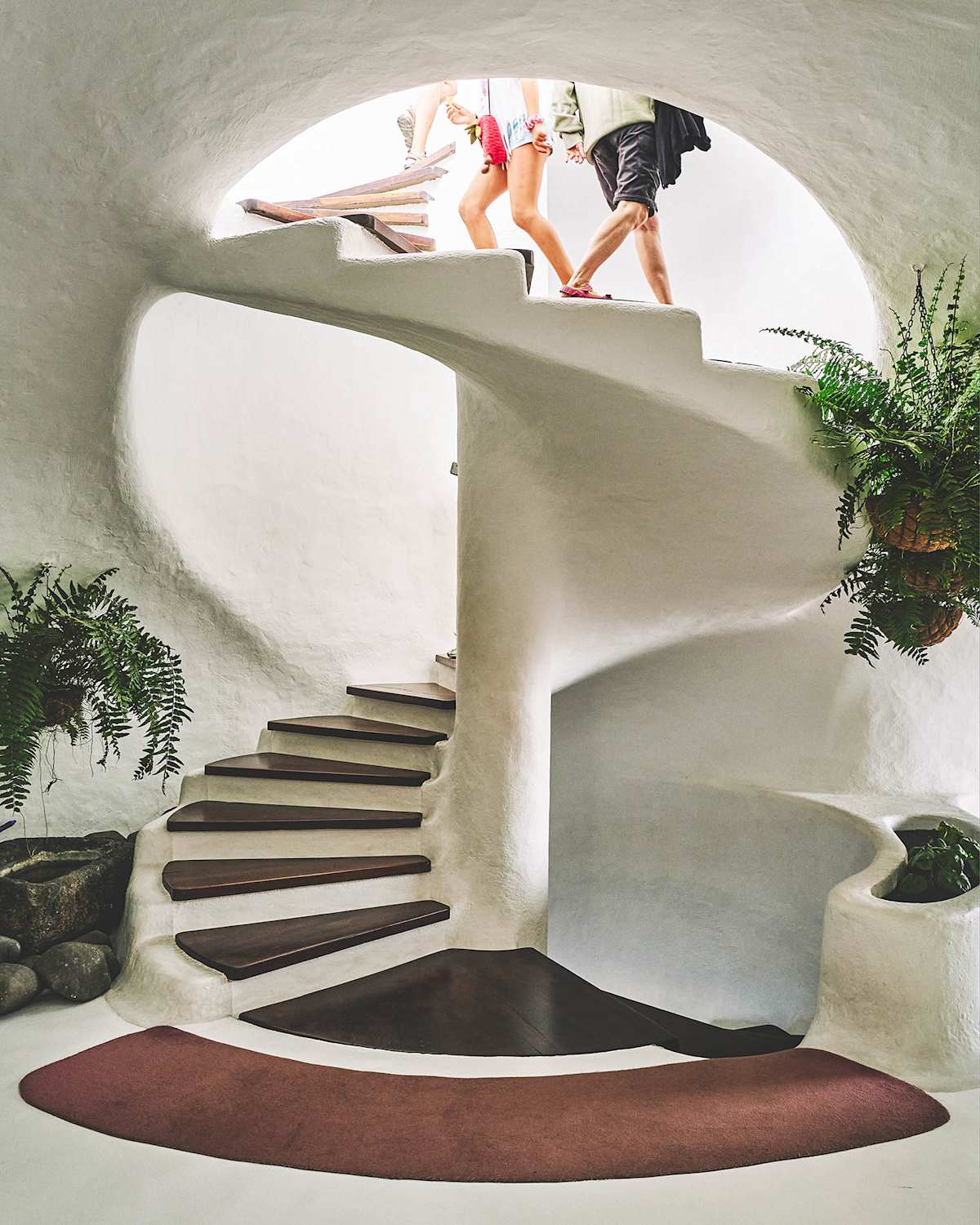
Manrique’s imagination found its expression through six Centers of Art, Culture and Tourism (CACT). His first, Jameos del Agua, evolved from the rehabilitation of a collapsed 3,000-year-old lava tube, formed by the eruption of Monte Corona. A winding staircase leads visitors to a subterranean restaurant where grilled octopus with mojo verde and slow-roasted rabbit in salmorejo are served in view of a lagoon inhabited by a ghostly consortium of blind albino crabs. Connected to the sea by a volcanic tube, the underground cove’s tides ebb and flow with the moon. Past the swimming pool and dance floor, the nearly four-mile-long tunnel opens into the cave auditorium, a 550-seat venue that has hosted, among other events, the premiere of Pedro Almodóvar’s 2009 film Broken Embraces. “Jameos del Agua is the best example of Manrique’s art-nature philosophy,” says Izquierdo Expósito. As both an ecological and cultural sanctuary, the site “demonstrates his vision of creating a place where nature and art coexist in harmony,” she says. Through these centers, known collectively as CACT Lanzarote, Manrique set out to encourage “quality tourism” over quantity, or what many think of today as sustainable tourism. “Manrique valued tourists who respect the environment, who enjoy nature’s beauty without exploiting it and who contribute positively to the local economy,” says Izquierdo Expósito.
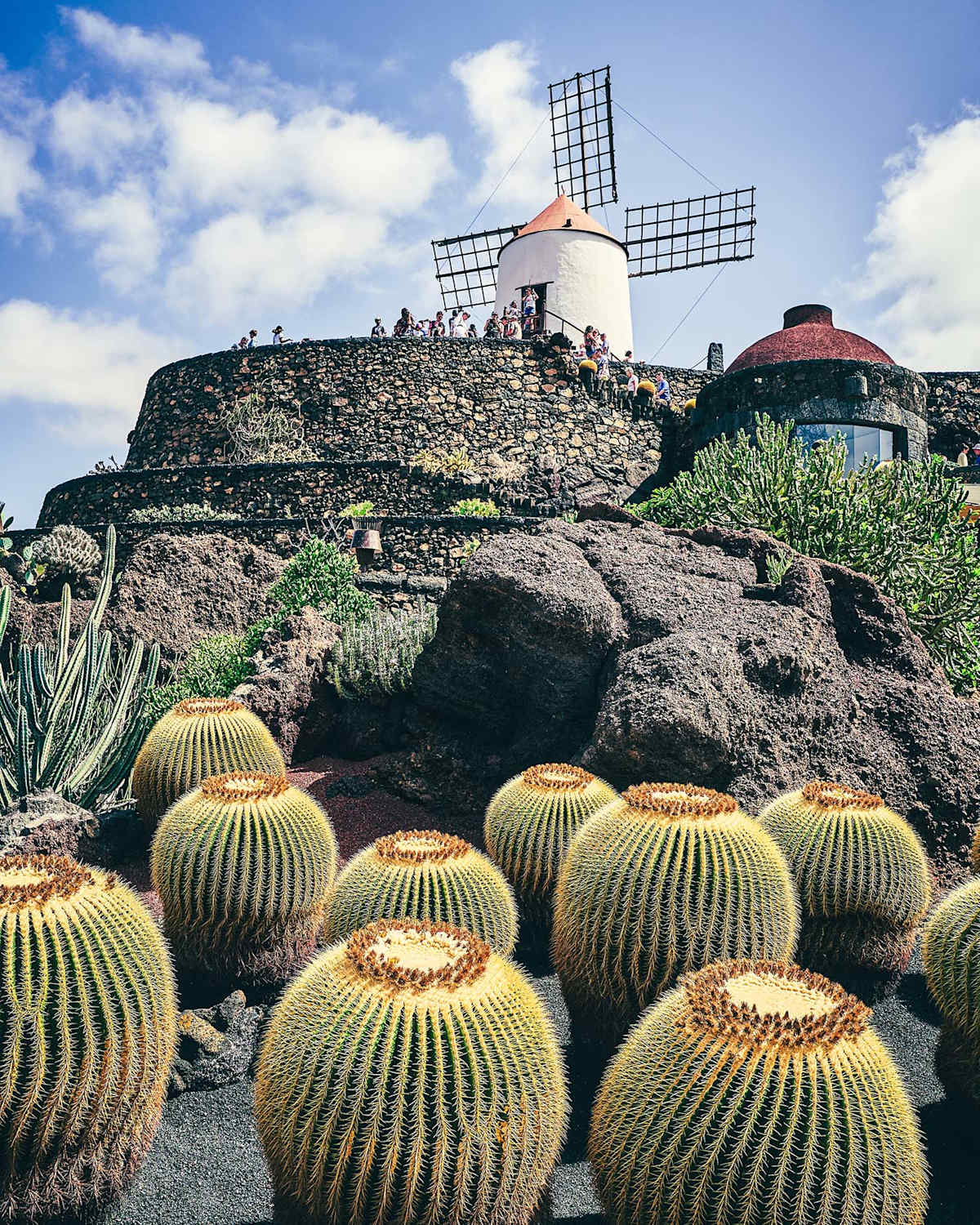
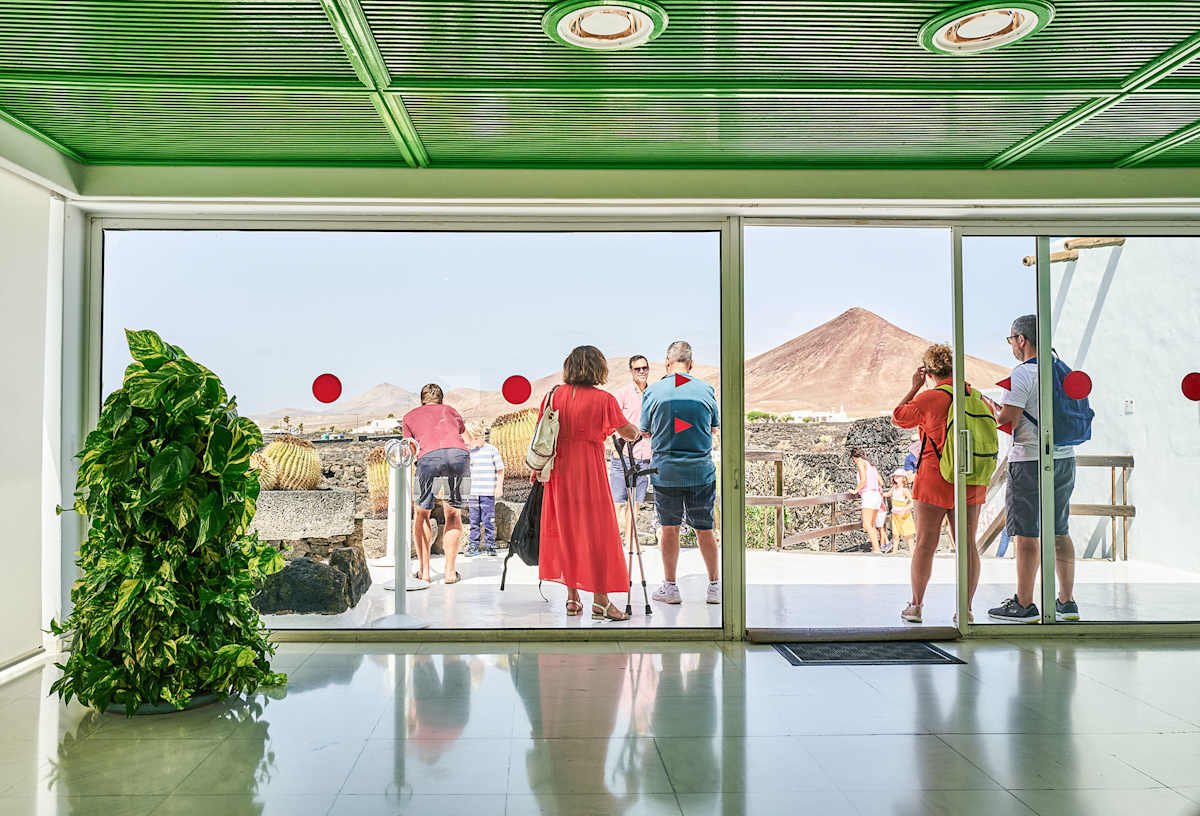
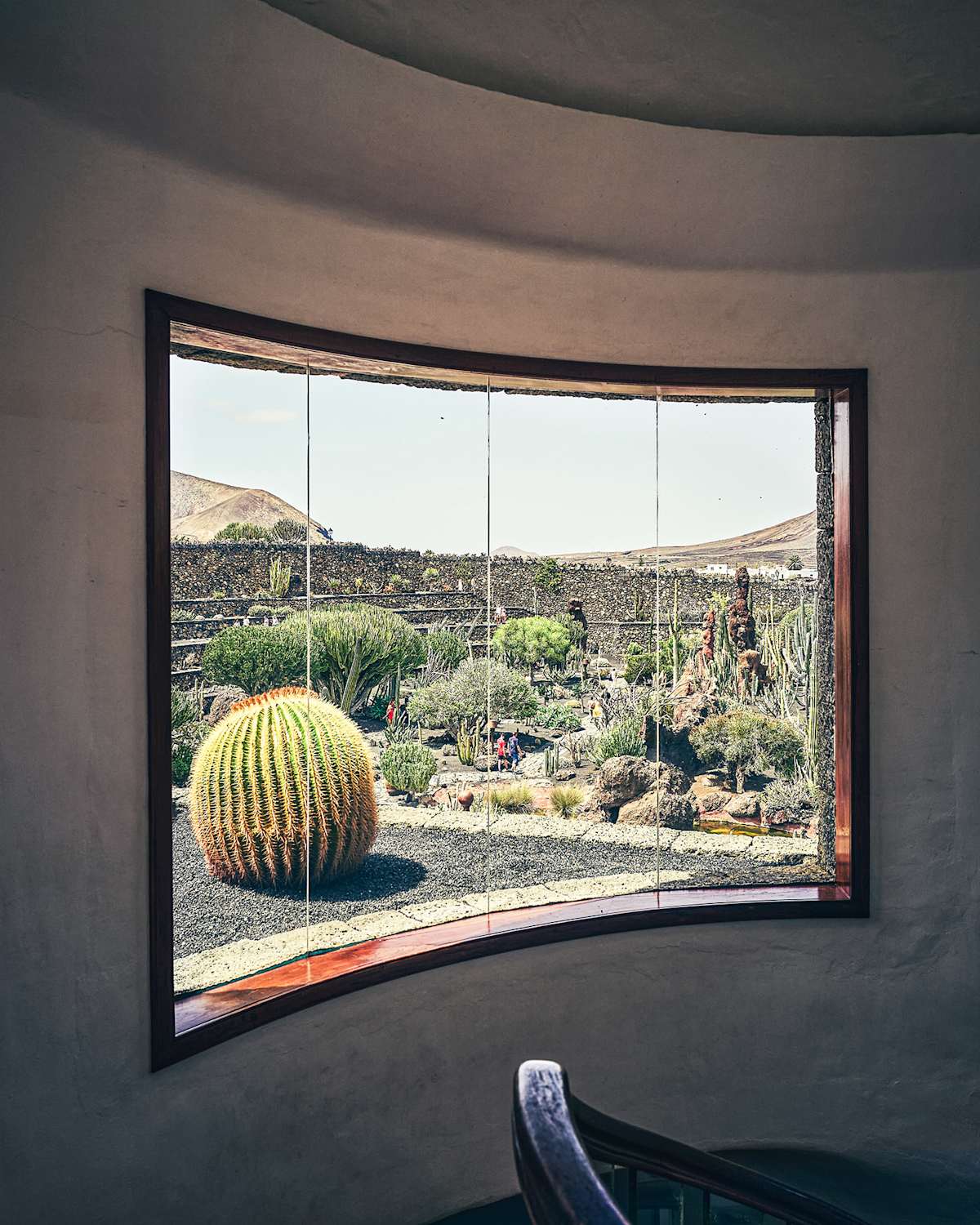
Like other sites selected for centers — the cliffside Mirador del Río restaurant and viewpoint repurposes the ruins of a 19th-century military base — Manrique’s final completed project, Jardín de Cactus, performs what Alejandro Scarpa, author of César Manrique and Lanzarote, calls “territorial acupuncture.” Planted in a sunken volcanic cone that had become a makeshift landfill, the terraced garden bristles with around 4,500 specimens of spiky succulents, including the 23-foot-tall Euphorbia candelabrum placed by Manrique more than 35 years ago, and prickly pear cacti, introduced from the Americas in the 15th century and grown to cultivate cochineal insects for their red dye carmine (once Lanzarote’s most valuable crop). At the top of the garden, the blades of a restored windmill — one of the last of its kind on the island — spin in the production of gofio, a toasted maize flour. César Manrique’s works draw close to 3.5 million visitors a year, a figure surpassing the MoMA in Manhattan, the Guggenheim in Bilbao and probably even his intentions. “His legacy continues to be a source of inspiration for artists and conservationists around the world,” says Izquierdo Expósito. Before his death by car accident in 1992, he recognized that the fate of his influence, like art and nature, hangs in the future’s balance. “Attaining utopia is tantamount to achieving the impossible,” he argued in one of his last manifestos, but we should leap for it anyway.
In northern Lanzarote, the cliffs of the Famara massif slope into the rust-gold sands of the three-mile-long Playa de Famara, where strong alisios winds make for ideal surfing conditions. Home to the largest number of endemic botanical species per square foot in Europe, the Famara was one of César Manrique’s favorite places to holiday on the island.
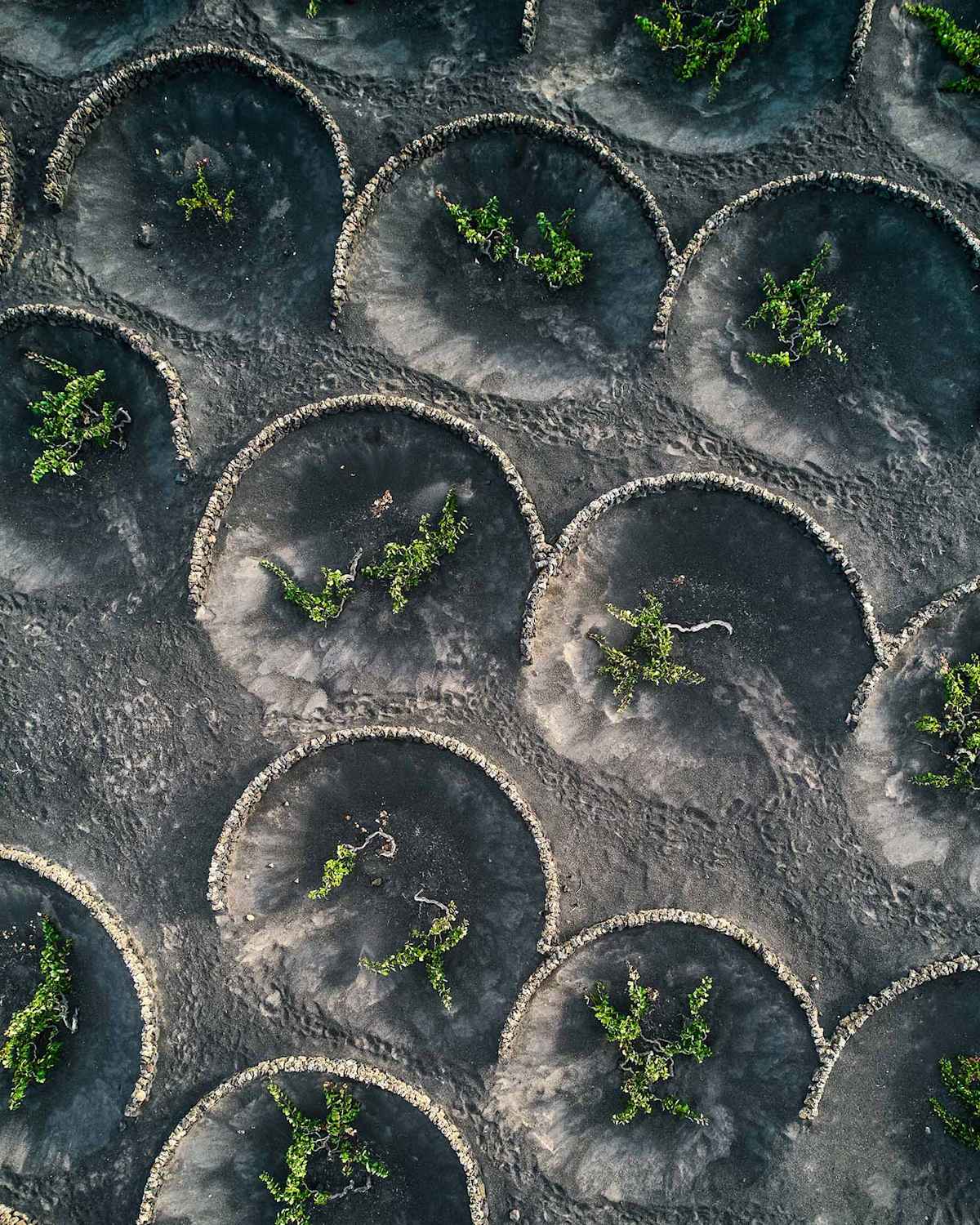
La Geria’s dark ash valleys provide the unlikely, undulating terrain for wine production through a system of semicircular rock walls and holes, known as hoyos, furrowed to protect the harvest from merciless winds. Within the last 10 years, the number of Designation of Origin wineries on the island has nearly tripled to 27, offering local varieties like the floral and citrusy malvasía volcánica.
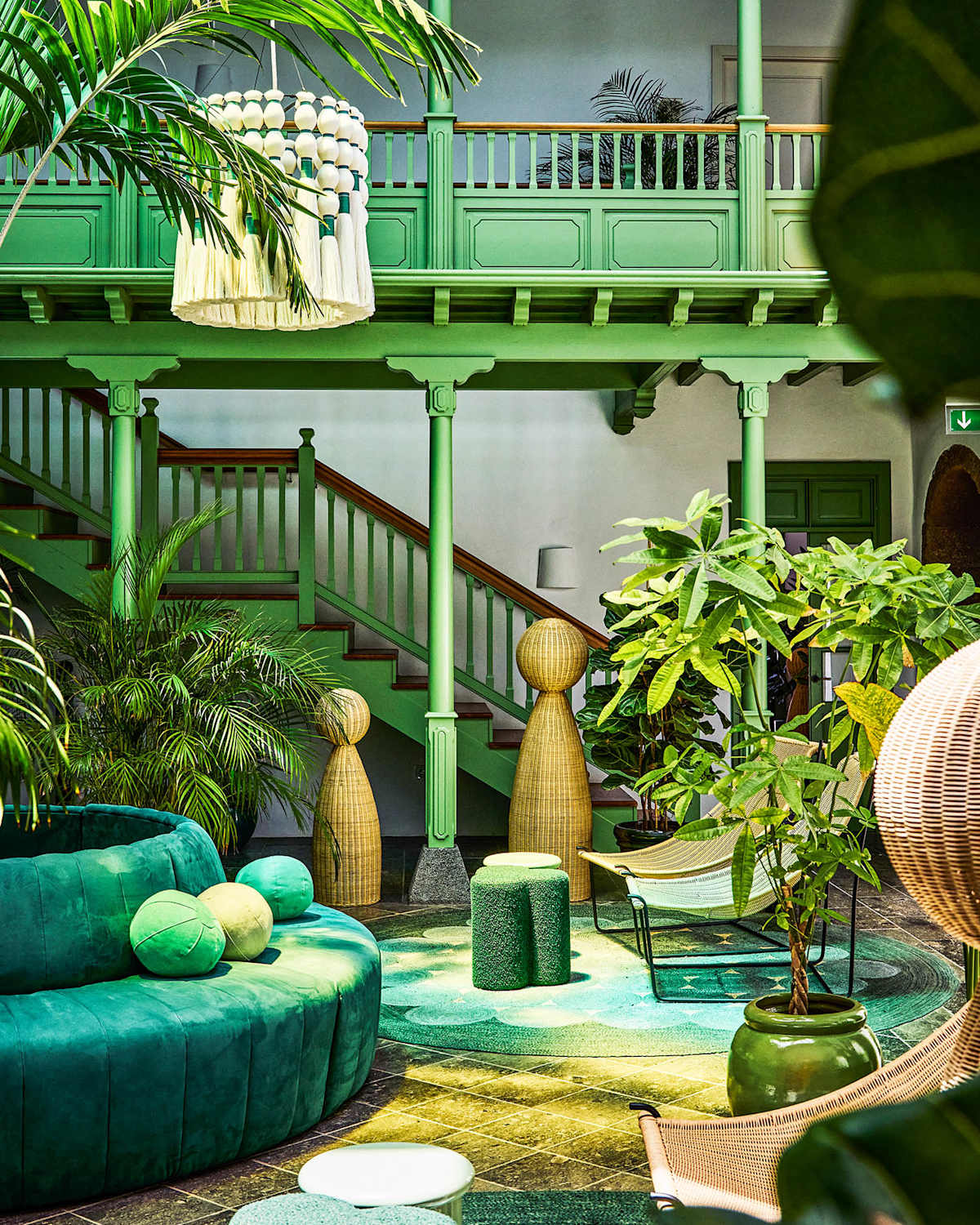
The former estate of Manrique’s father thrives anew as César Lanzarote Hotel, a hillside property near La Asomada village with 20 rooms providing views of volcanic vineyards and the ocean. Here, “green” is more than just a color scheme: Solar panels generate energy, guests can use the hotel’s electric bikes, and on-site olive, banana and pineapple trees supply the kitchen. ✦