Jeju Island’s bucolic walking paths meander past waterfalls, volcanic cones and countless farmers’ fields, encouraging all who wander them to slow down and smell the buckwheat.
A Leisurely Walk Around South Korea’s Largest Island
By Lisa Kadane | March 11, 2025
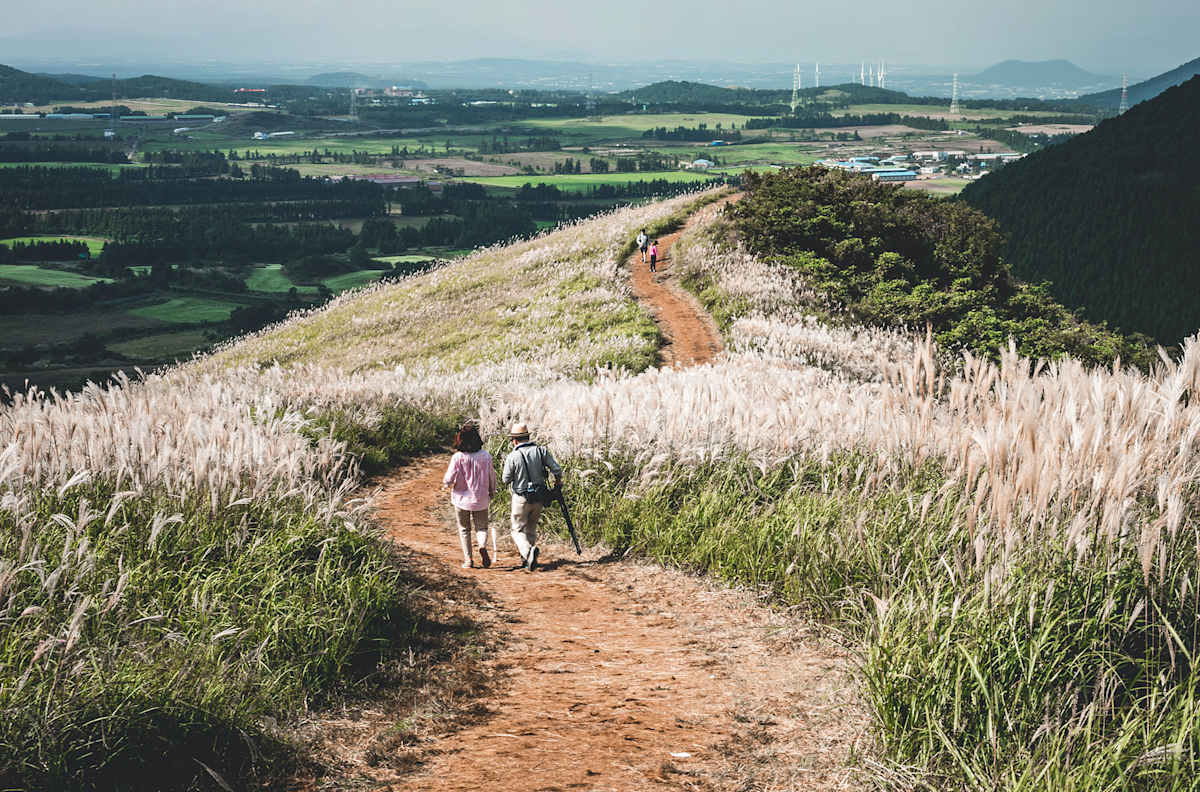
Many Jeju Olle Trail routes run from oreum (volcanic cones) to badang (the sea).
TTLSC/Shutterstock
Along the Jongdal-ri Seaside Walk on Jeju Island, squid hang drying side by side from ropes, a line of translucent cephalopods that seems to stretch the length of the mile-long pathway. From our seat across the street, my husband and I begin to count them — our very own squid game that keeps us entertained as we tear tender pieces of ojingeo gui (grilled dried squid) and dip them into a sauce of mayonnaise and gochujang, South Korea’s ubiquitous fermented red chili paste. We stop counting at 450 squid, give or take. The popular snack is grilled to order at rest areas like this one along Jeju Island’s coastal roads. If we’d been driving, we would have zipped right past. Today, though, we’re walking part of the Jeju Olle Trail, a 271-mile pathway that circles the island in a series of interconnected hiking routes.
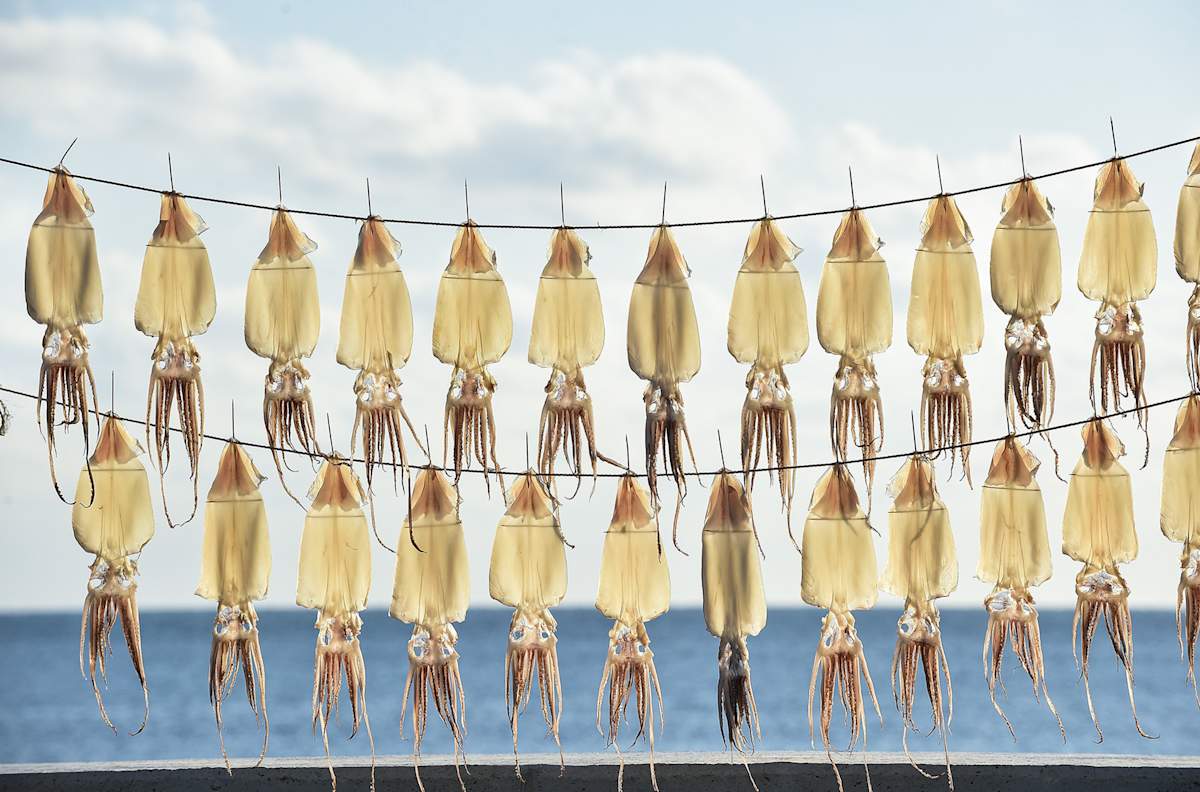
Scores of squid dry in the sunshine along Jeju’s coastline.
Yeongsik Im/Adobe Stock
We’re the only hikers taking a break at Mokhwa Rest Area, the halfway point on the Jeju Olle Trail’s Route 1, on the island’s east coast — surprising, given that hiking is a national pastime in South Korea, where two-thirds of the population own hiking boots and trekkers pack the trails on weekends and holidays, kitted out in technical gear.
Plan your dream trip.
South Koreans are equally passionate about Jeju, a volcanic island about 50 miles from the mainland in the Korea Strait: More than 12 million South Koreans (about a quarter of the population) visited Jeju in 2023, along with about 710,000 international tourists. That’s a lot of traffic for an island roughly the size of Maui — and, like the Hawaiian island, Jeju enjoys a temperate, subtropical climate, enticing sand beaches and a volcano that dominates every backdrop. In fact, the entire island is a UNESCO Natural World Heritage Site thanks to diverse volcanic features such as underground lava tubes and Hallasan Mountain, the country’s tallest peak.
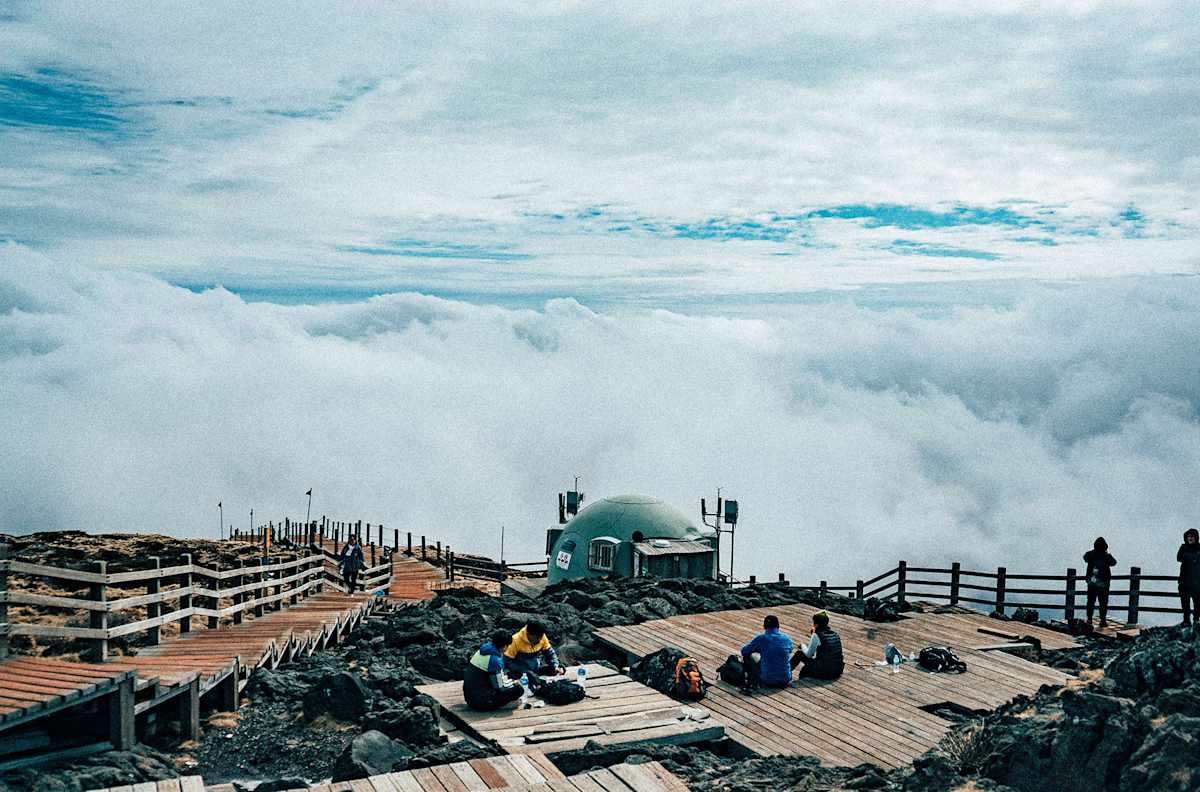
Hikers at the summit of Hallasan Mountain, South Korea’s tallest peak at 6,388 feet.
Daniel Bernard/Unsplash
Though seaside trails tramped by the island’s haenyeo (female free divers who traditionally foraged seafood to sell) and village alleyways have long existed, they weren’t a cohesive hiking network. Myung Sook Suh, a journalist who was born and raised on the island, came up with the idea to connect the narrow walking paths into the Jeju Olle Trail. In 2006, suffering career burnout, she set out on the French section of the famous Camino de Santiago walking route that spans parts of France and Spain, seeking reflection and renewal. As she trekked for days halfway around the world, Suh longed for the coastal landscapes of her childhood, and a dream took root. “I began to imagine a trail that would encompass all of Jeju’s wonders — its mountains, seas, forests and villages — woven into something extraordinary,” says Suh. She returned to Jeju and set to work.
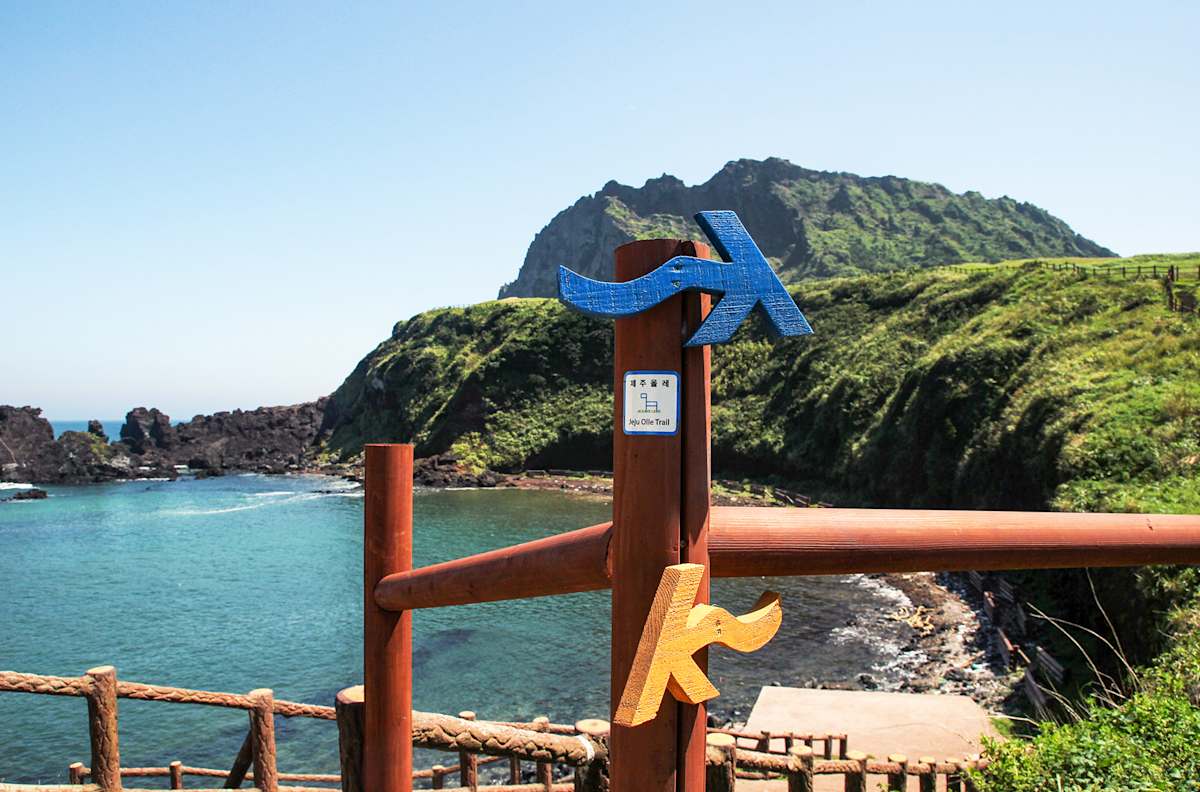
Blue and yellow markers direct walkers to a seaside pathway (left) or to the trail up Seongsan Ilchulbong crater (right).
Chuns/Shutterstock
Jeju Olle Trail Route 1 opened in 2007, with subsequent routes following every few months. The paths vary in length and difficulty, and the final one, Route 21, was completed five years later, in 2012. Visitors once concentrated around Jeju City, the commercial center packed with restaurants, clubs and museums, and a few prominent attractions such as Seongsan Ilchulbong, a volcanic crater whose steep, scenic trail to the rim is a tourist magnet. These days, they spread out and explore more of the island, limiting overcrowding and supporting sustainability, says Eun-joo Ahn, CEO of the nonprofit Jeju Olle Foundation, which develops and maintains the trail network. Some 90 percent of Jeju’s top stops are found along or near trail segments, says Ahn, so it’s easy to walk entire routes while sightseeing. Since my husband and I love to explore on foot, these routes are the perfect antidote to the crush of people at sites like Seongsan Ilchulbong. Route 1 ends at the foot of this popular spot, in a quiet cove where haenyeo demonstrate their skills, often surfacing with abalone, conch, octopus and urchins. The adjacent Haenyeo Divers Resting Lounge serves up their catch in steaming bowls of abalone porridge and, this time, we eat elbow-to-elbow with others.
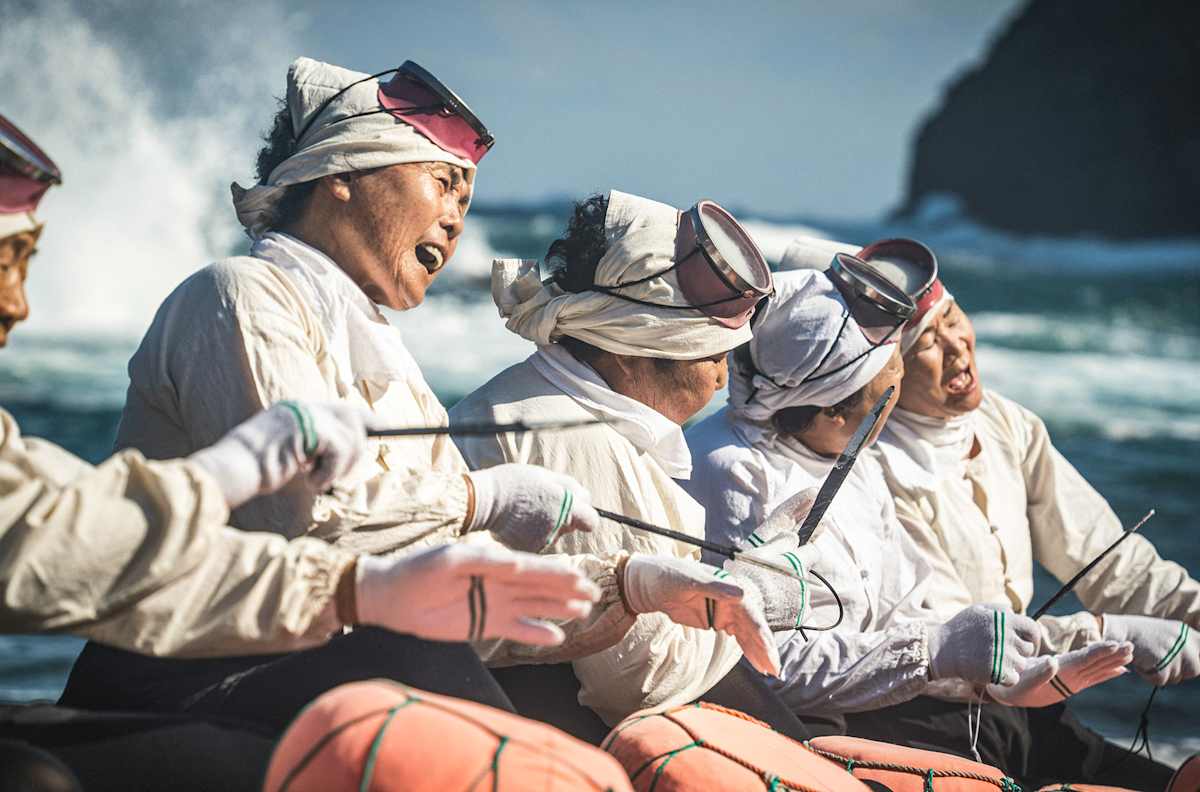
Free-diving haenyeo work with only a mask and a knife, plunging as deep as 30 feet to forage for fresh seafood.
John Ko/Unsplash
On the south coast we walk parts of three Olle Trail routes near Seogwipo, the island’s second-largest city. We mist-bathe at Jeongbang Falls, Asia’s only waterfall that plummets directly into the sea. We admire Jusangjeollidae, a cliff of hexagonal basalt columns pummeled by frothy waves. And we queue to have our picture taken in front of Oedolgae, an offshore volcanic sea stack that was a filming location for a popular K-drama. The sights themselves are busy, but the olles leading to and from remain quiet. The peripheral pathways lead us to gems like Jaguri Park on Route 6 in Seogwipo, with whimsical public art installations — such as a pair of giant mosaic crab sculptures that seem to pinch at an offshore volcanic cone. Along Route 8 we wander into Yakcheonsa Temple, a Buddhist shrine. While my husband pauses to meditate, I wander the manicured gardens, communing with the dol hareubang: These smiling, hat-wearing “stone grandfathers” carved from the island’s porous volcanic rock are believed to ward off evil spirits. Like Jeju’s haenyeo, the dol hareubang have become a symbol of the island, and visitors can encounter both along the Olle Trail.
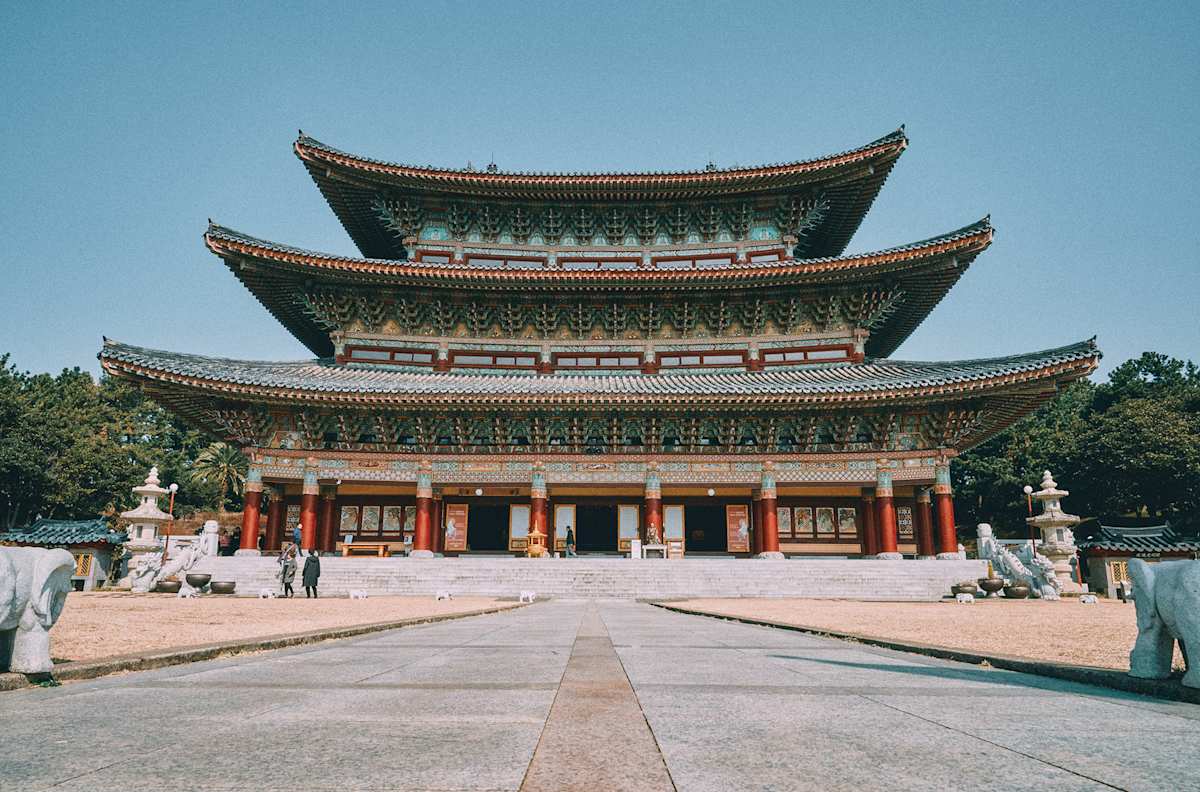
One of the largest Buddhist temples in Asia, Yakcheonsa is named for a nearby mineral spring, or yaksu.
Courtesy of Jeju Olle Foundation
Jeju’s history of agriculture and fishing is on display everywhere: a rural tapestry of fallow and fertile fields with the sea — and the promise of a freshly-caught meal — always on the horizon. “The trail,” says Ahn, “was envisioned as a journey where travelers could find solace in Jeju’s unspoiled landscapes while gaining a deeper understanding and appreciation of the island’s rich heritage.” On Route 1 we pass farms separated by low fences of basalt rock called doldam. Though we walk by tidy tangerine orchards and gardens bursting with blue and purple hydrangeas, it’s the pretty white blossoms of one of the island’s top crops, buckwheat, that perfume the air. We pause often, using an app to identify everything we encounter: barley, potatoes, honeysuckle, Japanese cedar, maidenhair fern.
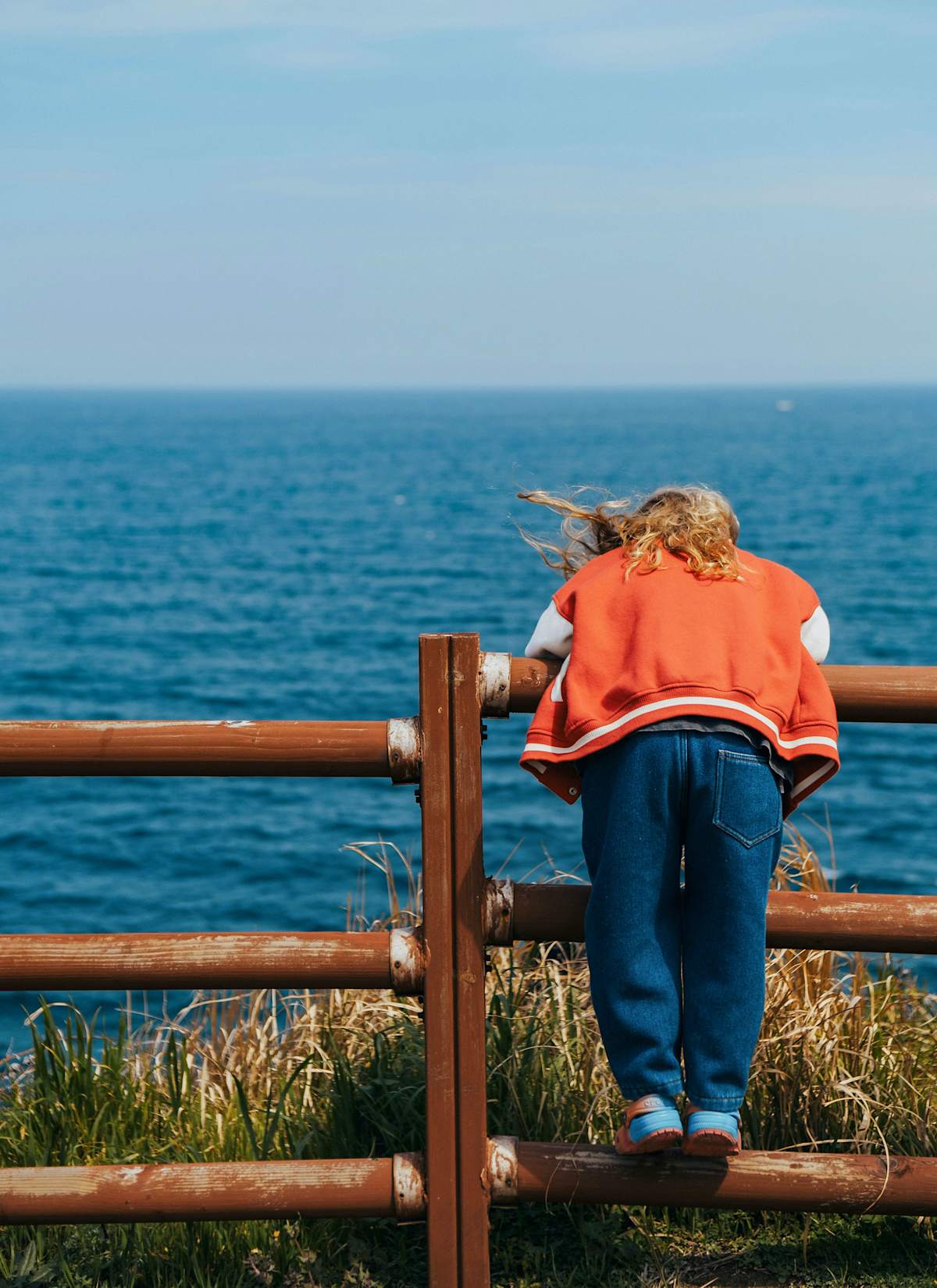
A variety of lengths and difficulties mean there’s an olle for hikers of all levels.
George Dagerotip/Unsplash
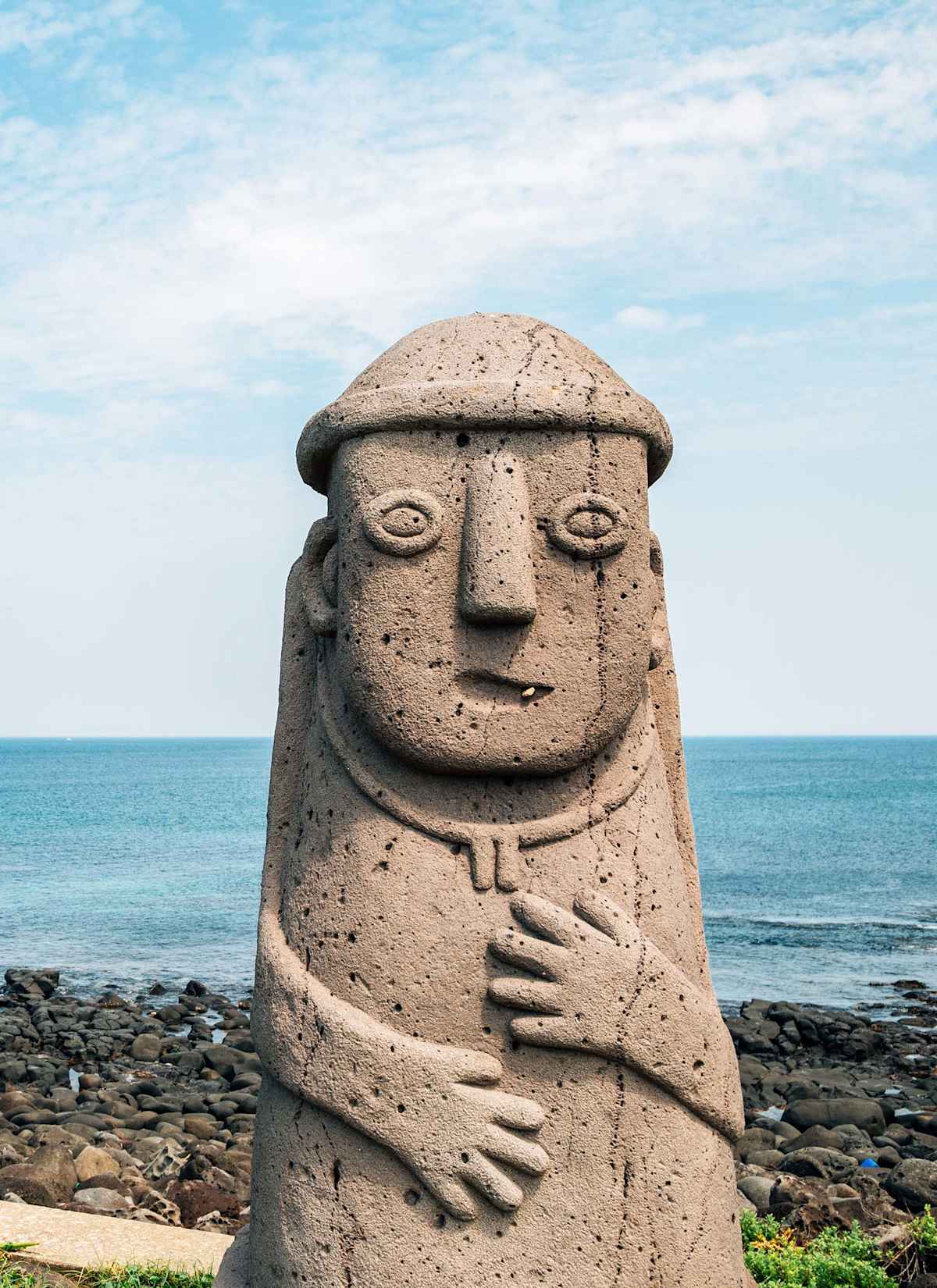
Carved from Jeju’s volcanic stone, the dol hareubang — or stone grandfathers — are said to stand guard over the island’s villages.
Sanga Park/Shutterstock
Ahn says that to truly understand Jeju, visitors must “venture beyond the surface-level checklist of tourist spots seen from a car window.” All our island highlights — the flora discoveries, the fields of buckwheat, the tasty grilled squid — come while on foot. On our final day on Jeju Island, we walk onto the sand at Woljeong Beach, which borders a seaside pathway on Route 20. We come prepared, wearing swimsuits under our clothes, and can’t resist plunging into the clear, crisp seawater. After toweling off, I watch a group of South Koreans learning to surf on the beach’s gentle break. They notice me and become self-conscious, but I start cheering each time one of them successfully stands on their board. Soon everyone’s smiling and laughing, and then we’re standing again, too, ready to tackle one last leg of the Jeju Olle Trail. ✦