Our writer travels across Kazakhstan, a former Soviet republic the size of Western Europe, where nomadic traditions and shimmering spires coexist in a wildly prosperous present.
A Journey Through Kazakhstan, Where Old and New Collide
By J.R. Patterson | May 29, 2025
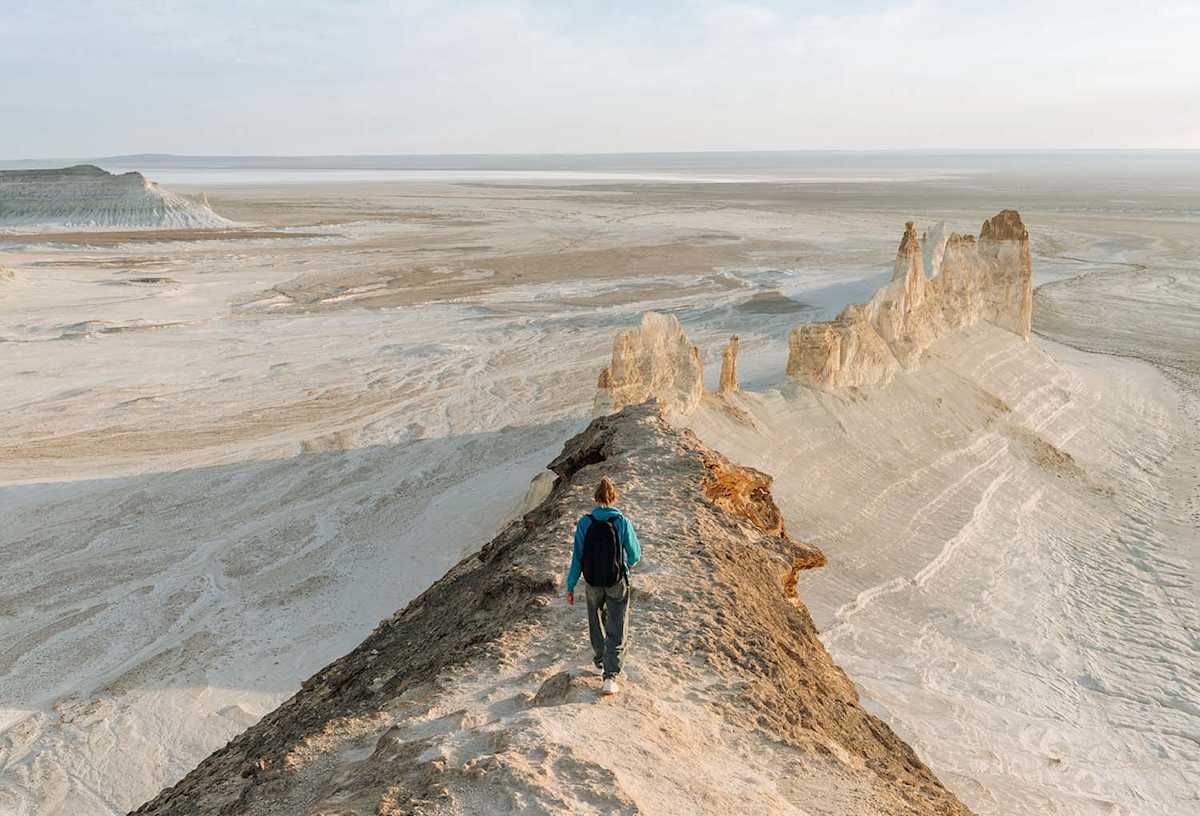
In the desert 185 miles east of Aktau, the Bozzhyra Gorge is a vast area marked by soaring cliffs, spires and other geological features, such as Dragon’s Crest.
Alexander Dubynin/Getty Images
When I learned that the horse was first domesticated in Kazakhstan, I imagined seeing my first one on the hoof rather than the dinner plate. And yet, there was no trouble with the animal being both noble companion and tasty entrée over lunch in Aktau, where my hosts put an entire stable’s worth on the table, saying, with glee, “Zhylky, zhylky!” And what a variety of zhylky there was, stewed with onions in the quyrdaq, sliced and pressed into a log of cold kazy sausage, shanks chopped and boiled with noodles in the beshbarmak. Far be it from me to offend any host. I put aside all notions of the barns of my youth, reached in — beshbarmak means “five fingers,” and that is how it’s eaten — and popped the dark meat into my mouth. It was slightly gamey, with a tang of spice, and chewy, with a rind of fat. I took another, and another. There are no small meals in Kazakhstan, only feasts; the more you eat, the more food appears. Pyramids of fried doughballs called baursak, stodgy dumplings, piles of fresh herbs, fruit leather and nuts, endless cups of zesty tea and, sometimes, bottomless vodka. Only when I was given a wooden bowl of kumys, a popular drink of fermented mare’s milk, did I falter. It was sour on the nose and fizzed on the tongue, and put me in mind of creamer mixed with lite beer. I had a tepid sip and, catching my revulsion, my hosts pressed me to drink more, all but holding the bowl to my lips. The Kazakh take on disliking something is simply that you haven’t yet had enough of it. This is konakasy, the Kazakh practice of offering guests a spread of whatever they can, the core of a big-hearted culture wherein only the smallest reason is needed to offer a meal, a drink, a gift. Once, as I was trying to pay for a taxi ride across Aktau, the driver batted away my tenge, saying, “Brother, it is my custom to respect bones.”
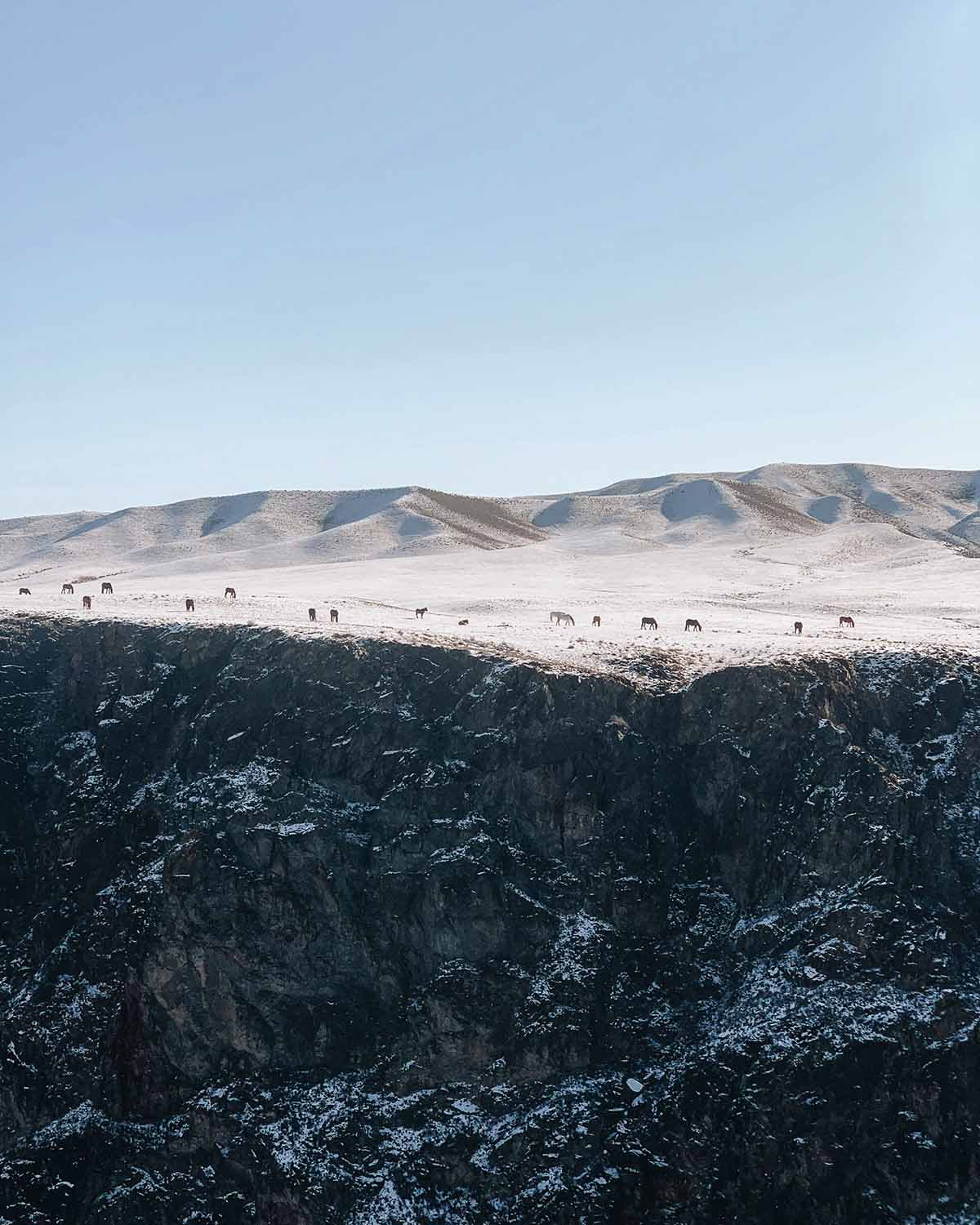
Wild horses — Kazakhstan’s most revered inhabitants — graze on the edge of Black Canyon in the far east of the country.
Kama Tulkibayeva/Unsplash
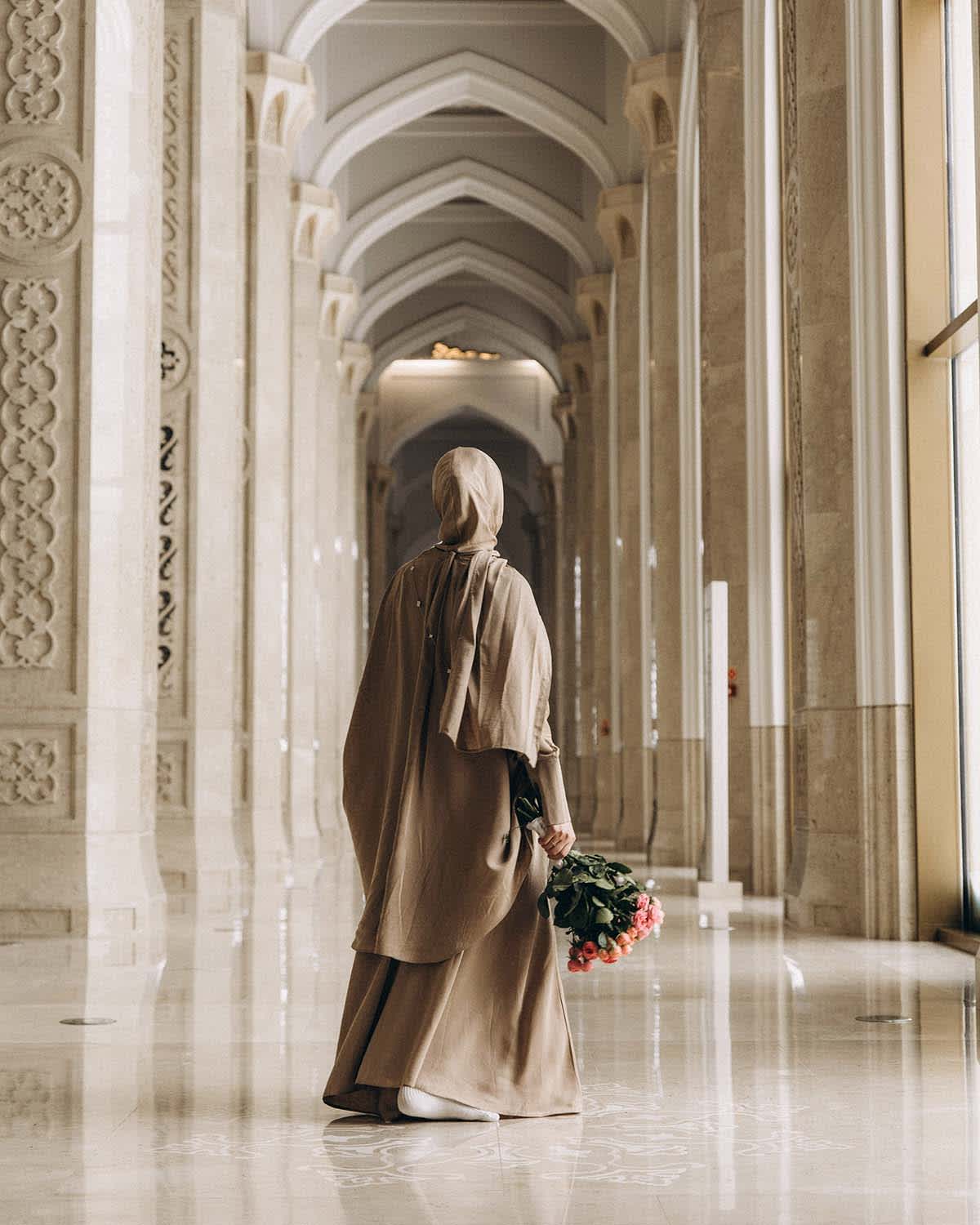
Each corridor, column and arch in the Astana Grand Mosque is adorned with intricate carved patterns.
Rysdauletov/Unsplash
I had plans to travel quickly onward from Aktau, the major port city, but I was waylaid by long meals and conversations. One evening, I walked the wide, clean coastal promenade along the Caspian Sea with a local schoolteacher. Great oil tankers moved across the horizon line as children swam in the surprisingly warm, clear water. “Kazakhstan was once the entire world,” he said, exaggerating slightly. But the sentiment, that a once powerful nation can rise again, is sincere. Freed from the decades of repression faced under Soviet Union rule, there is a sense of reaching back to nomadic traditions to revive an identity of strength and perseverance. With a focus on sciences and technology as much as horses and yurt living, the country is now the hub of Central Asia, a growing powerhouse of local influence and global economics. As a result of that growth — the Caspian region holds vast reserves of oil and natural gas — Aktau bursts at the seams, the beaches teeming with bathers in summer, the edge of the city creeping into the desert. Within the Soviet-era apartment blocks, stylish bakeries sell sourdough bread and croissants, and coffee shops serve good strong brew. There is as much taste for Georgian or Korean food as there is for Burger King (Aktau has four of them). Improved rail infrastructure and air connections are helping to develop Kazakhstan’s tourist trade. One can fly directly to Almaty and Aktau from London, and a reliable and affordable passenger rail network spans the entire country. First class on Kazakhstan Railways includes an exclusive two-bunk compartment with a private bathroom and shower, and breakfast of fried eggs and sausages for $3 in the dining car.
Plan your ultimate adventure.
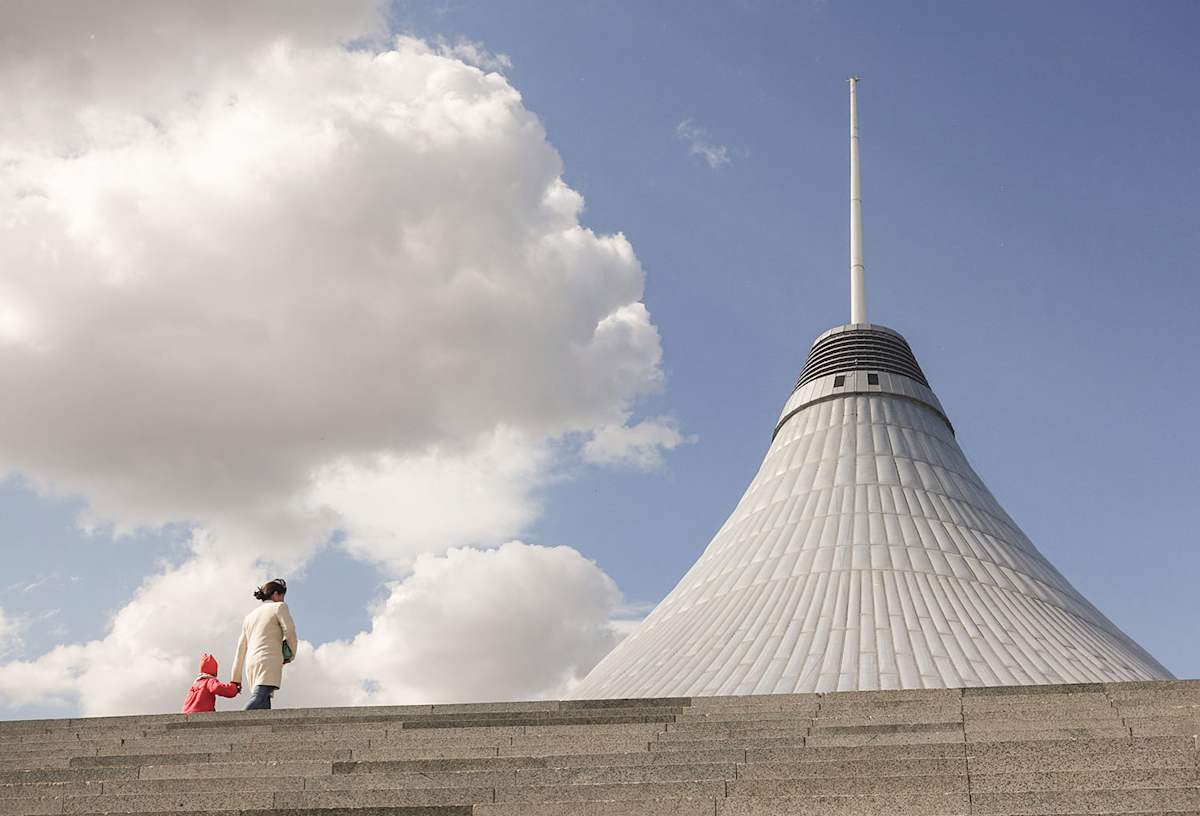
The Norman Foster-designed Khan Shatyr Entertainment Center is covered by a transparent tent — a nod to the country’s traditional nomadic housing.
Simon Sun/Unsplash
In the 47 hours it takes the train to cross the approximately 1,400 miles that separate Aktau from the capital, Astana, it becomes clear that Kazakhstan’s population of 20.8 million is concentrated in its cities. As the train ascends from the Caspian Depression onto the ironing board of the Great Steppe, villages appear in a flash and are gone, looking small and brown against the plain. It is harsh country, too: blazing hot in the summer and dropping to 40-below in the dead of winter. Astana rises from the steppe like a forest of twisting and angular neo-futuristic high-rises that, after dark, flash with light displays. Now the heart of contemporary Kazakhstan, with a ballet, opera house, river cruises and sports arenas, it was not long ago a mere hamlet of low-rise buildings on the eastern banks of the Ishim River. It became the country’s capital only in 1997, and still has that spotless, new-city smell of concrete and window cleaner. Within the egg-crowned observation tower of the Baiterek Monument is a gilded cast of Kazakhstan’s first president Nursultan Nazarbayev’s palm, upon which visitors can make a wish. Ask a question in Kazakhstan, and nine times out of 10 the answer will involve Nazarbayev, whose impact is considered akin to godlike. His legacy is well illustrated in the line of wishful thinkers curling up the steps of the monument, eager to touch the gold-leafed iron hand of their former leader. In 2008, Nazarbayev decreed that construction on the left bank of the Ishim River would begin, and there lie the most ostentatious constructions: the Baiterek Monument, the spherical Nur Alem Museum of Future Energy, the Khan Shatyr shopping mall, the Astana Grand Mosque and the yawning sand oval of the Kazanat Hippodrome.
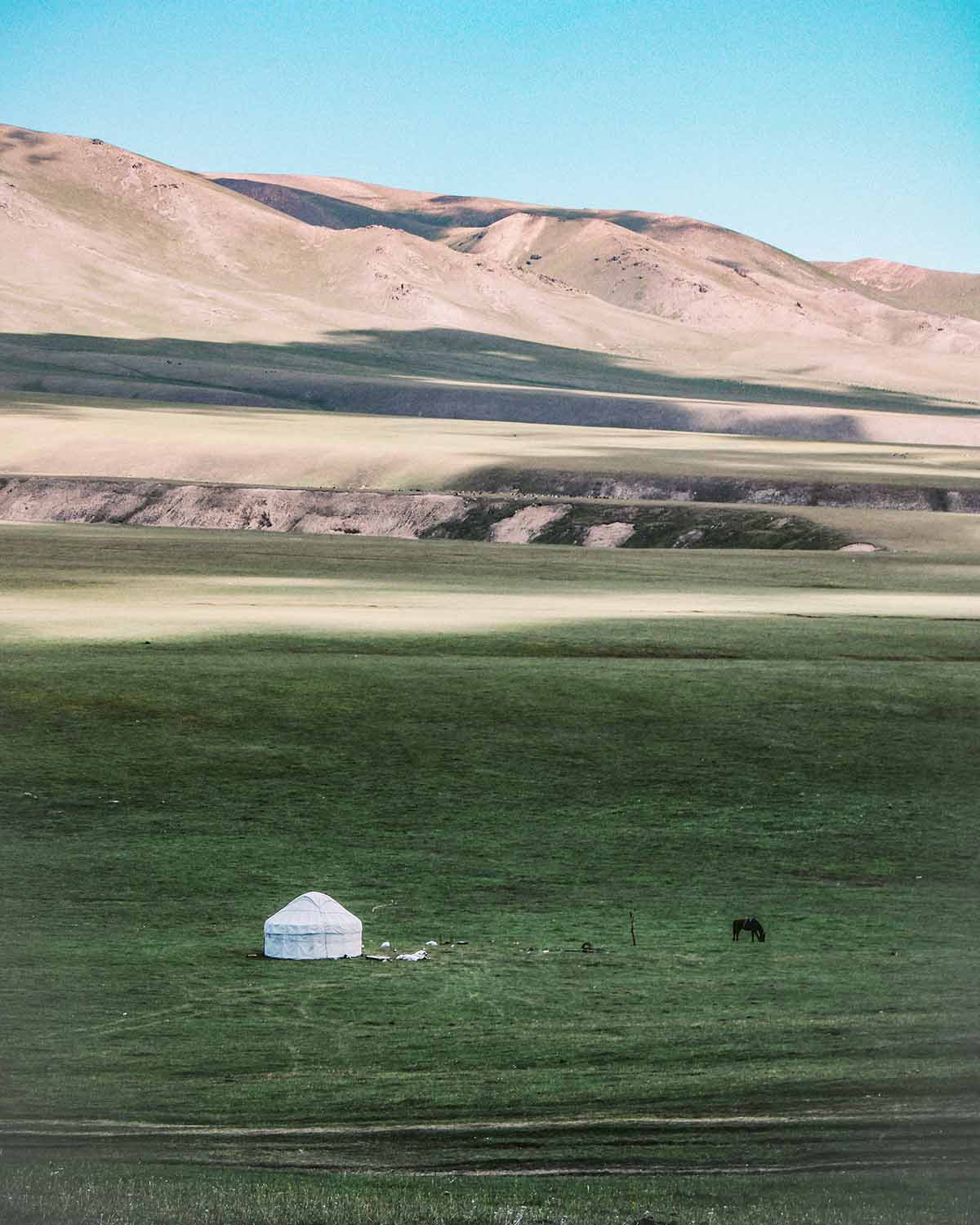
Idyllic horse-and-yurt living on the Assy Plateau in eastern Kazakhstan.
Lydia S/Unsplash
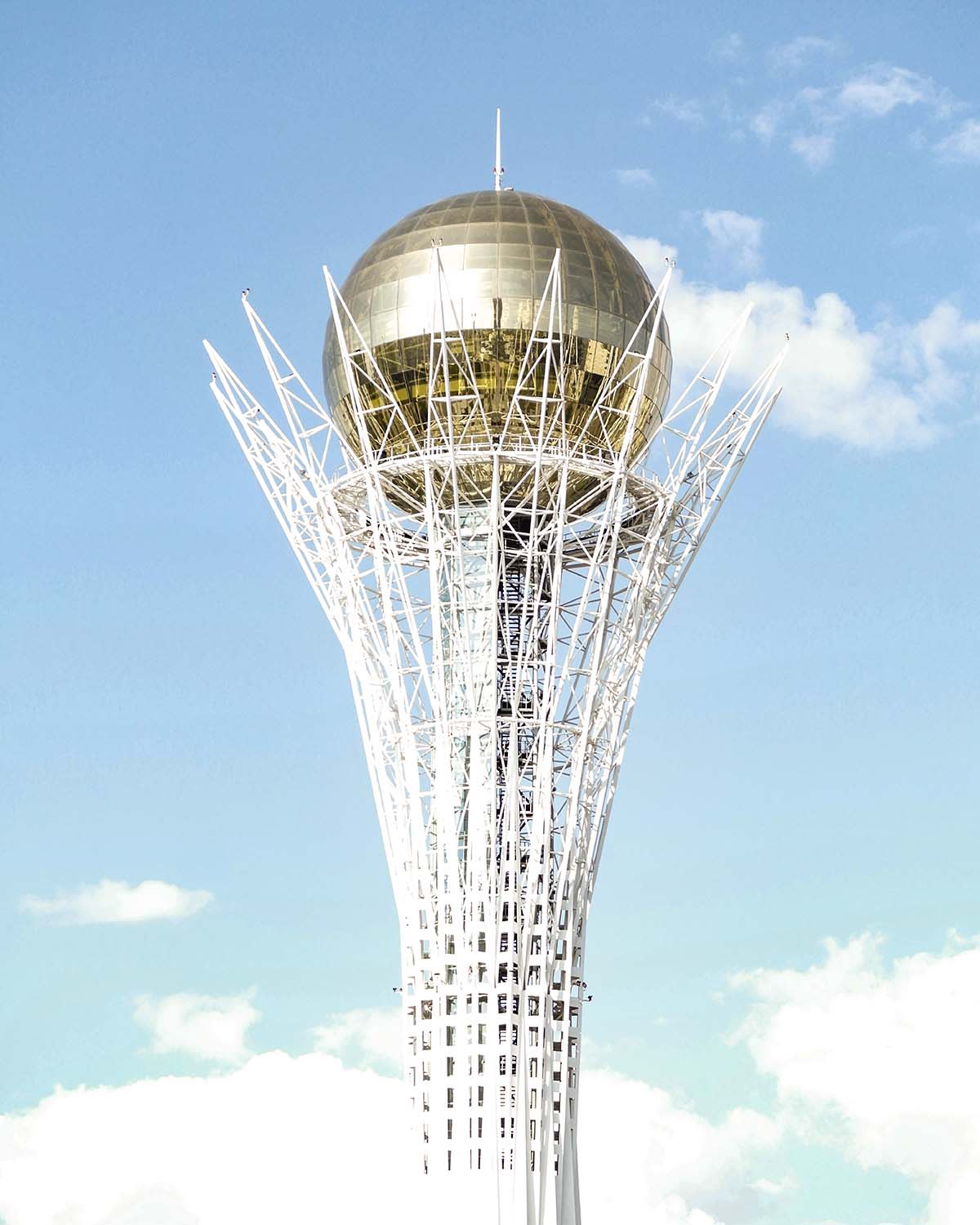
The Baiterek Monument was built to commemorate the proclamation of Astana as the capital city, the beginning of a new era in the country’s history.
Travel With/Unsplash
It is here that I finally see horses on their hooves, as the Kazakh national kokpar team trains for the upcoming World Nomad Games. Kokpar is a brutal game, closer than anything to George Orwell’s estimation of sport as “war minus the shooting.” Two teams of four horsemen scrabble to get a 50-pound headless goat carcass (a rubber dummy is used in competition) to the opposing end of the field. It is a fierce and impressive display of horsemanship, and the players move like centaurs, each sportsman’s mount an extension of their body, lathered with soapy sweat, filling the air with their musky scent. These are far from meat on legs — one competition horse can cost as much as 10.5 million tenge, around $20,000. For a moment following the spar, I speak with the team’s captain, Kurmanbek Turganbek. Atop his horse, he looks like a man out of time: broad-shouldered, his face ruddy from sunshine, his steepled kalpak hat embroidered with the koshkar-muiz, a fleur-de-lis-like symbol that signifies vitality, grace and prosperity. A kamcha, a short whip of braided leather, is tucked into his knee-high boot. “This sport would be illegal in other countries,” he says. “Here, it’s our national pride.” I ask Turganbek how he feels about his horse. “We do not ride these horses,” he says. “We are these horses. We rode them across the steppe, across the entire world. Our blood is their blood, and it is strong blood, a blood bond. We will never forget this is what made us.” Behind him, the glassy spires of Astana, like a snaggletooth jawline, catch the fading sunlight, igniting in a golden flash. I am temporarily blinded, and when I recover I see that Turganbek has trotted down the grounds, cell phone to his ear. The modern nomad, I think, lets the world come to him. ✦
Explore More
Lanzarote’s Force of Nature: From volcanic rock houses to otherworldly cactus gardens, the works of Spanish artist and activist César Manrique are deeply embedded in the landscape of his home island. Meet the Local Guides Transforming Travel in Ecuador: Up mountains, down rivers and through jungles: Three Ecuadorians lead the way on an unforgettable journey across one of the most diverse countries in the world. An Alpine Adventure in Southern New Zealand: With little more than sturdy boots and her trusty camera, photographer Melissa Renwick sets out to soak up the blissful solitude and breathtaking vistas of the Routeburn Track. Follow Range on Instagram, Facebook and Pinterest. Sign up for the Range newsletter to receive expert advice, award-winning stories and the latest travel trends in your inbox.