From whimsical soaking tubs to installations from major masters, Naoshima Island is Japan’s go-to immersive art experience. Here’s how to make the most of your visit.
A Guide to Visiting Naoshima, Japan’s Art Island
By Laura Studarus | March 28, 2026
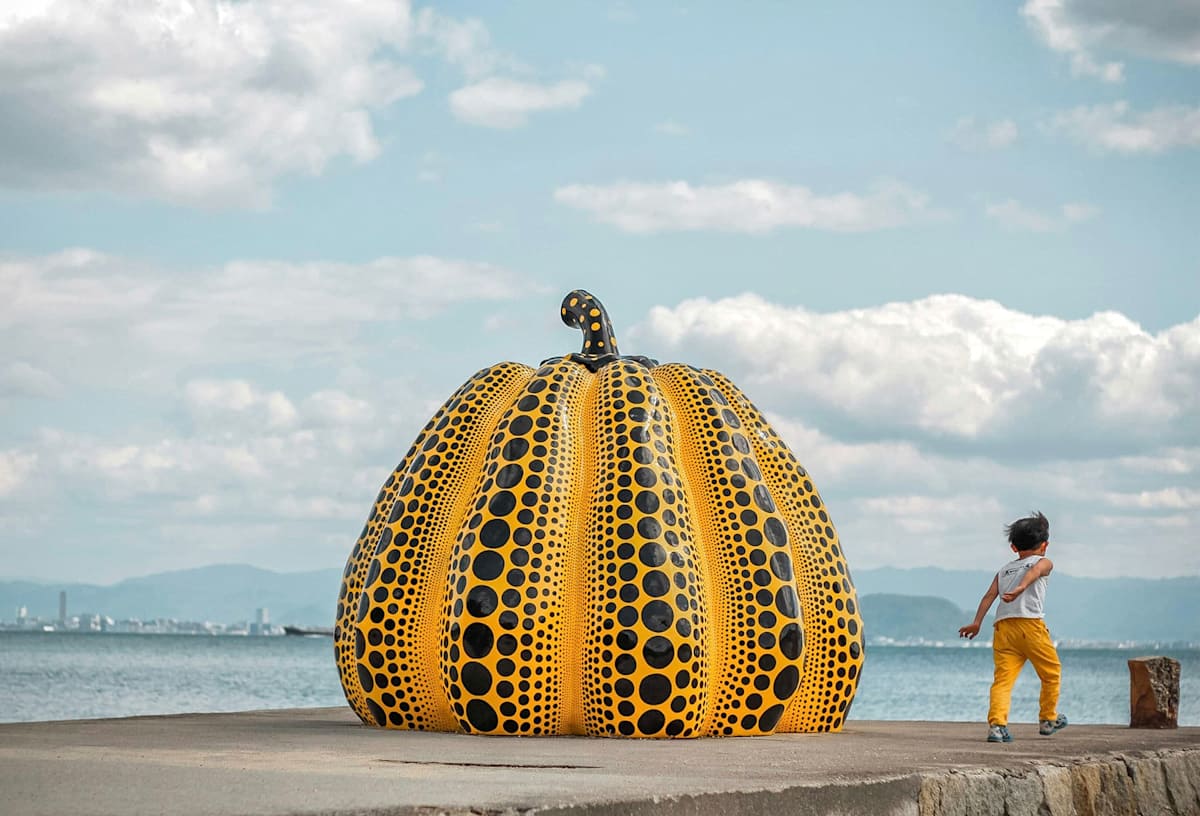
Yayoi Kusama’s “Pumpkin” overlooks the Seto Inland Sea at the edge of Naoshima.
Yue Ting Lin/Unsplash
With 15 art galleries and outdoor installations scattered across the island, Naoshima is Japan’s premier art destination. Located in the Seto Inland Sea in southern Japan and spanning just over five square miles, it offers a striking blend of nature and human creativity, with installations by artists like Yayoi Kusama and James Turrell placed far from the rush of the mainland. Like any unforgettable day trip, however, a visit to this immersive retreat takes careful planning. Read on to learn how to make the most of your time on Naoshima Island.
When to Visit
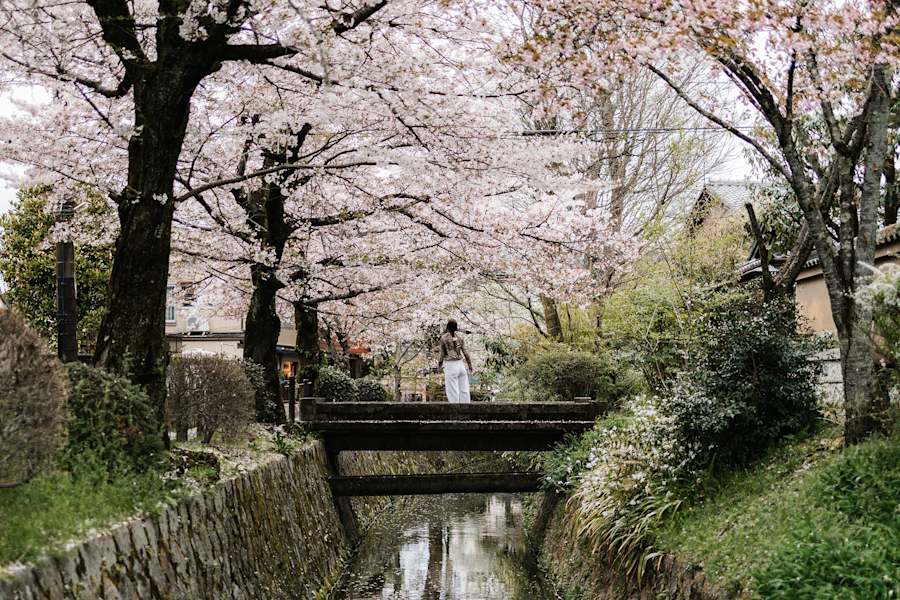
Since many of Naoshima’s attractions are outdoors, timing is key. For example, sakura season (late March to early April) is an excellent time to visit Labyrinth of Cherry Blossoms by Japanese architect Tadao Ando, to see the 130 Oshima trees in bloom. Mid-November to early December is equally appealing, thanks to comfortable temperatures — expect daily highs of 58°F (14°C) — and autumn colors. Most attractions are closed on Mondays, and while many galleries are open during the Golden Week holiday (late April to early May), peak crowds will make the island much harder to navigate. If sudden rains hit, umbrellas and ponchos can be purchased at the island’s only 7-Eleven.
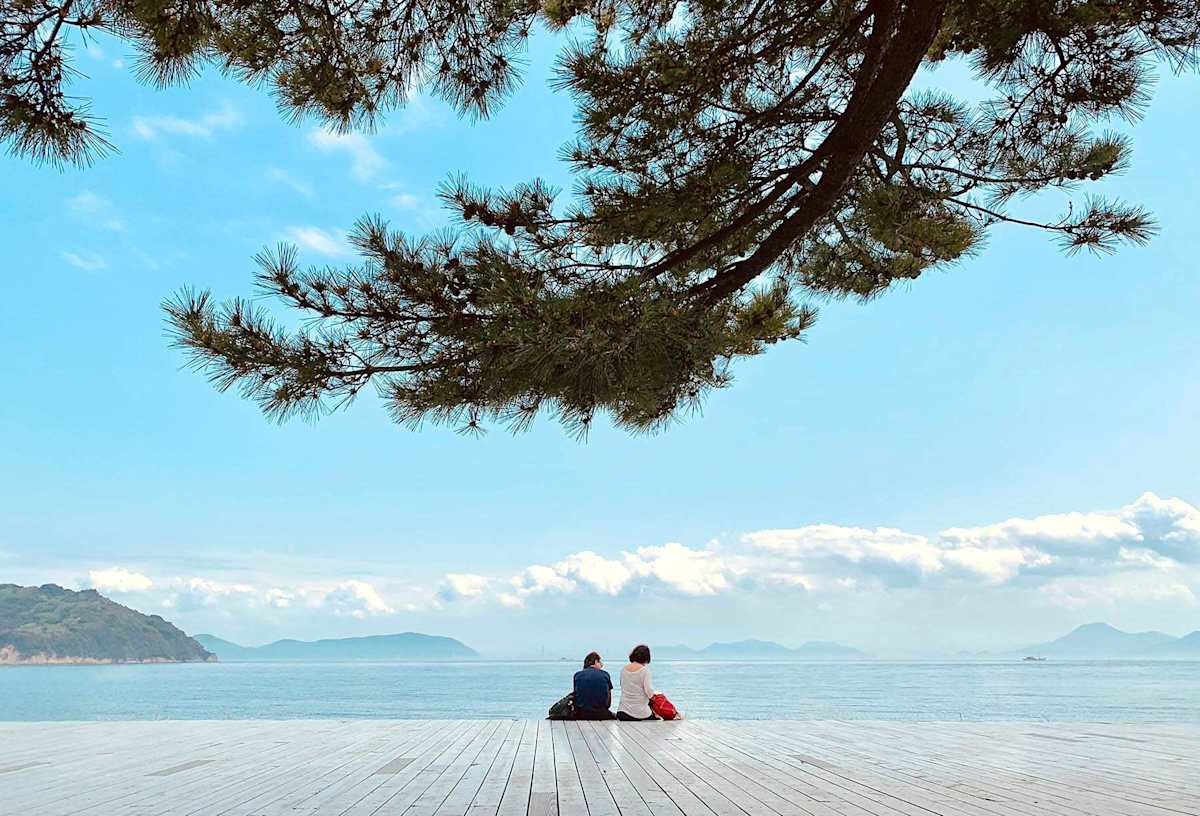
Naoshima is at its best during sakura season and in late autumn.
Kaori Chin/Unsplash
Where to Stay
During peak seasons on Naoshima, hotel demand often outstrips supply. For luxury seekers, Naoshima’s signature property, Benesse House, offers guests the exclusive privilege of viewing contemporary art after hours, with rooms typically ranging from US$450 to $900 per night. Those interested in a traditional experience will appreciate Naoshima Ryokan ROKA, a recently opened hotel near the Honmura district featuring private open-air baths and multi-course dining, with rates starting at US$500 per night. Alternatively, stay close to nature at Sana Mane, a glamping experience with geodesic domes, en suite bathrooms and access to a private beach, from US$350 per night.
Getting to and Around Naoshima
Start your journey in Okayama, located on the Shinkansen high-speed rail line. From there, take the Seto-Ohashi Line to Uno Station, then walk five minutes to Uno Port to catch the ferry. Ferries operate on a first-come, first-served basis but rarely fill up. Tickets go on sale 40 minutes before departure and are cash-only, costing ¥300 (US$2) per person. The 30-minute trip takes visitors directly to Miyanoura Port on Naoshima Island. Distances between galleries on the island can result in lengthy walks, so consider renting an electric bike for your stay. Conversely, the free Benesse Art Site Shuttle runs every 30 minutes between Tsutsuji-so, Benesse House Museum, Lee Ufan Museum, Valley Gallery and Chichu Art Museum. Most galleries offer à la carte pricing for entry, but the Art House Project ticket covers five of the seven galleries in the Honmura district: Kadoya, Go’o Shrine, Ishibashi, Gokaisho and Haisha.
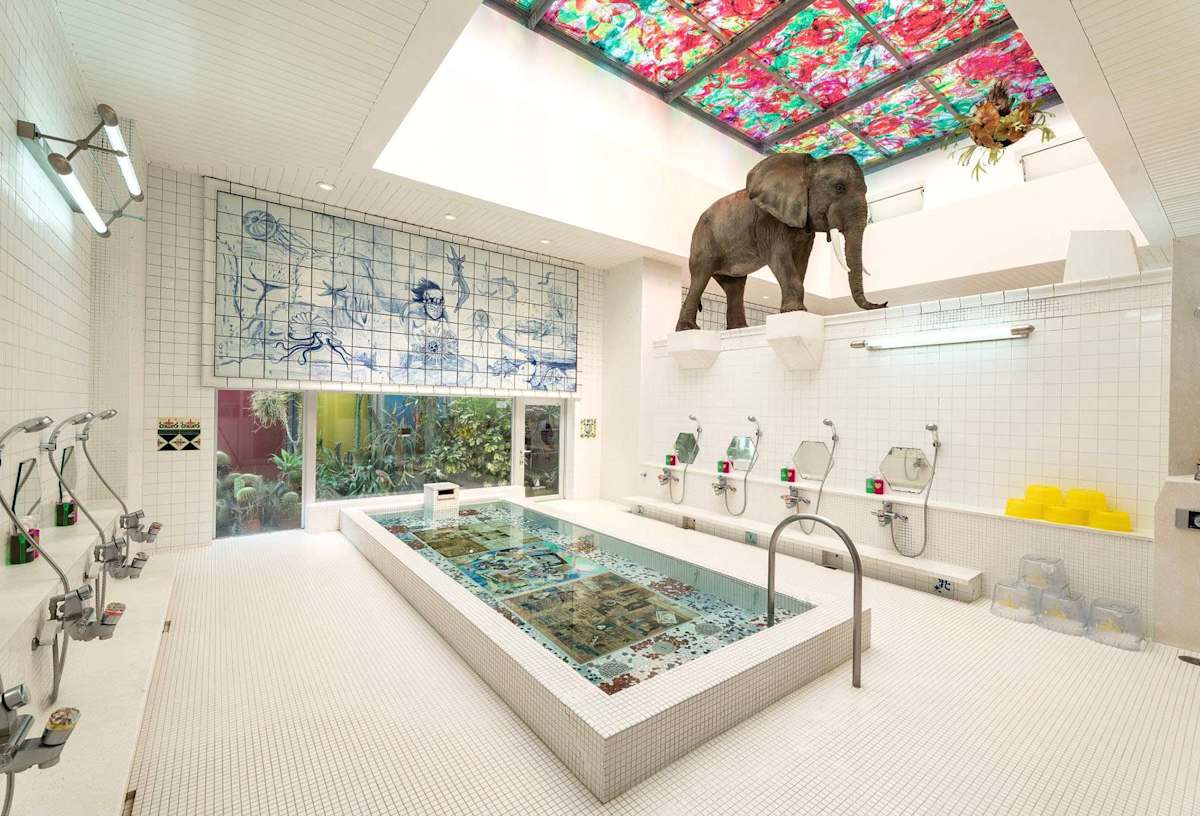
Only at “I Love Yu” can you soak naked beneath a life-sized elephant.
Courtesy of Benesse Art Site Naoshima
Soak in Surreal Art
To fully experience I Love Yu, check your modesty at the door. Yes, you’re required to bathe in the buff at this public onsen — honoring centuries of Japanese tradition — but the space (a clever bilingual pun on the word “yu,” meaning hot water) pulls double duty as a traditional sentō and innovative art gallery. Designed by artist Shinro Ohtake, it blends high-concept pop art with relaxation: intricate mosaics, buzzing neon and eclectic found objects. When was the last time you took a dip under the watchful eye of a life-sized elephant sculpture? It’s strange, vibrant and perhaps one of the few places in the world where contemporary art and communal bathing collide so effectively.
Plan your dream trip.
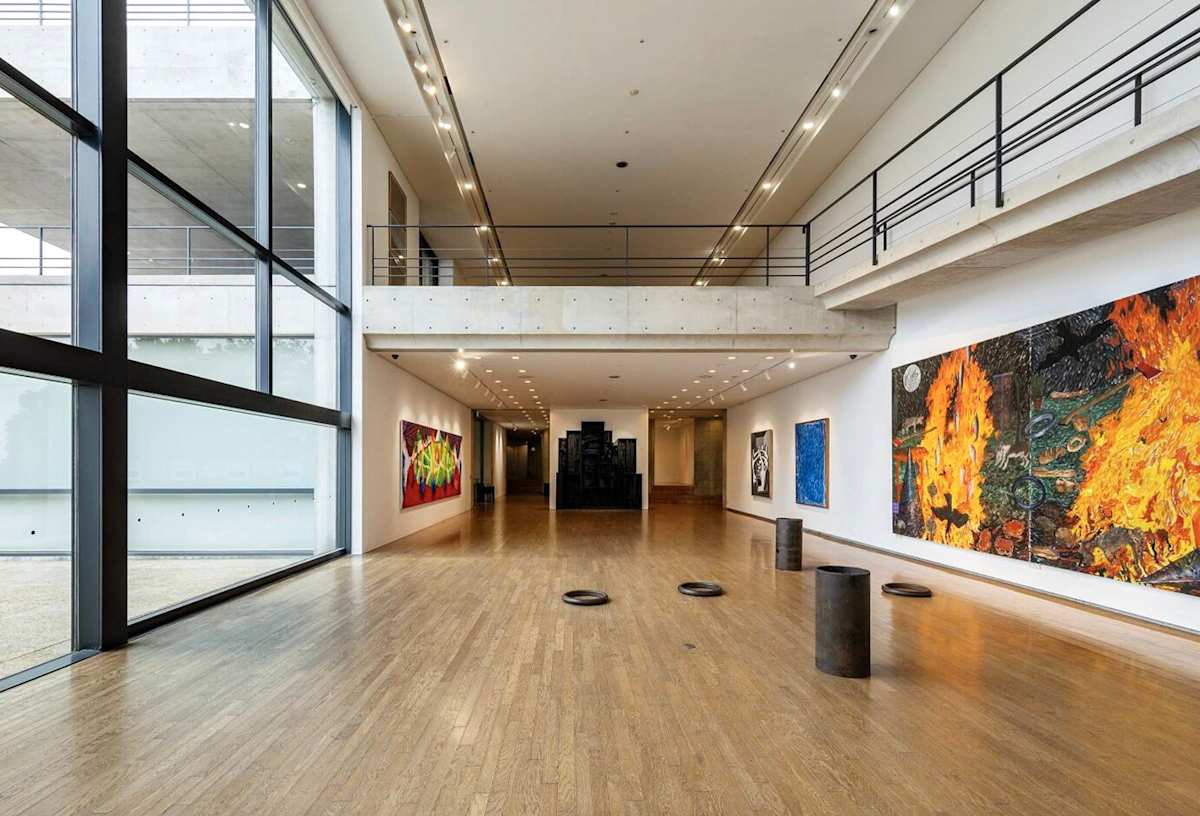
Benesse House Museum blends seaside views with world-class contemporary art.
Courtesy of Benesse Art Site Naoshima
Spend the Night with Masterpieces
If you’ve ever dreamed of spending a night at a museum, Benesse House will make that fantasy a reality. Designed by Tadao Ando, the sprawling complex features seaside-view rooms, an onsite spa and eateries ranging from high-end Japanese to casual snacks. Even if you’re not staying overnight, it’s worth visiting for its impressive art collection, which includes the chaotic neon sculpture 100 Live and Die by Bruce Nauman, several haunting prints by photographer Hiroshi Sugimoto and Blue Landscape, a site-specific work by Teresita Fernández. The grounds are free to explore, so make the most of the island’s postcard-like settings and stroll over to the nearby jetty, home to Yayoi Kusama’s whimsical sculpture, Pumpkin, a Solemn Existence on the Pier. Admission to the interior gallery also includes access to the nearby Valley Gallery.
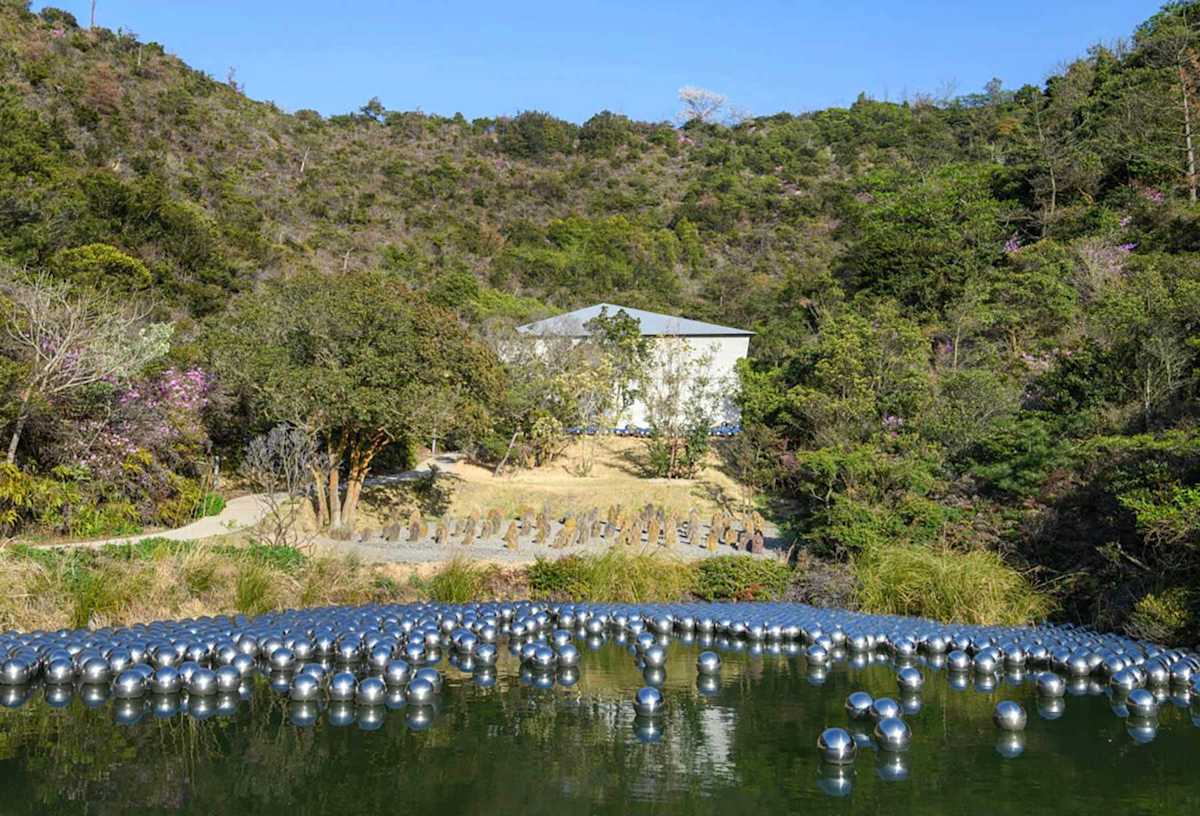
“Narcissus Garden” by Yayoi Kusama comprises hundreds of mirrored spheres.
Courtesy of Masatomo Moriyama/Benesse Art Site Naoshima
Explore Nature as Art
Valley Gallery is a small hillside space between the Benesse House Museum and the Lee Ufan Museum. It serves as the permanent home of Yayoi Kusama’s iconic Narcissus Garden, where hundreds of mirrored metallic spheres drift lazily across a pond or sit in piles within a Tadao Ando-designed concrete shell. Set outdoors, the installation is never static — passing clouds, afternoon rain and changing sunlight completely redefine the work, ensuring that no two visitors experience the same reflections.
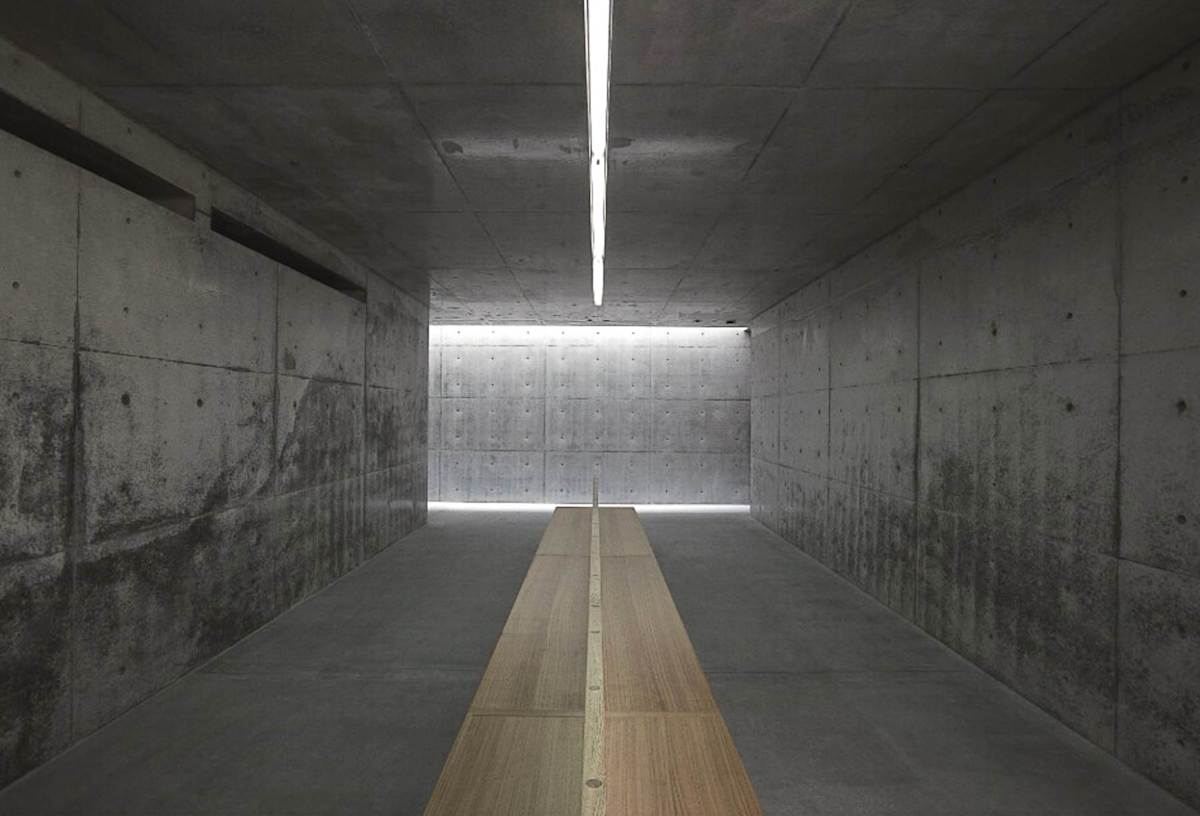
Architect Tadao Ando’s contributions to Naoshima include 10 works, including the Chichu Art Museum.
Courtesy of Benesse Art Site Naoshima
Wander an Underground Museum
Also designed by Tadao Ando, the Chichu Art Museum is mostly located underground. Natural light enters through large geometric openings in the ceiling, illuminating works by Claude Monet and Walter De Maria in an ever-changing glow shaped by the weather and time of day. The gallery sells timed tickets to preserve a peaceful atmosphere, and don’t miss the Chichu Garden near the entrance. This living installation is a nod to Monet, featuring 200 plant species originally grown by the artist in his Giverny gardens.
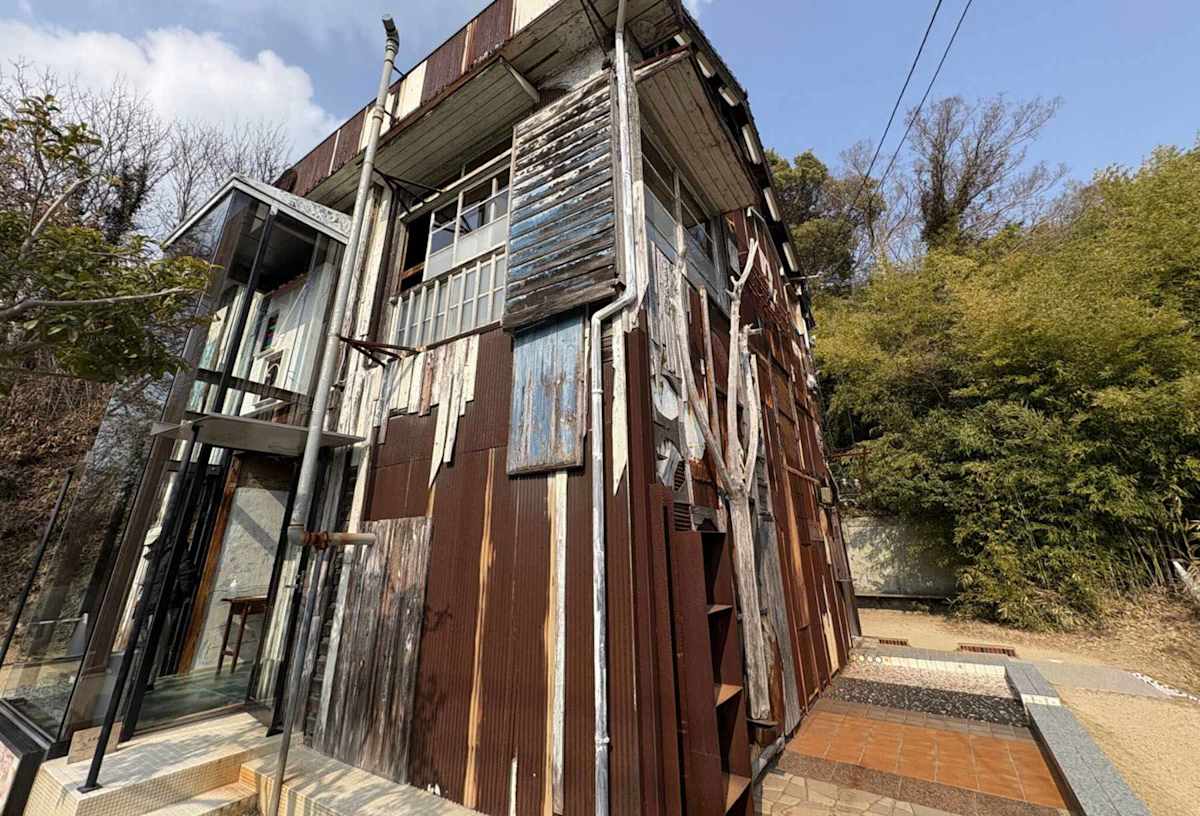
A two-storey replica of the Statue of Liberty fits inside Haisha, part of Naoshima’s Art House Project.
Courtesy of Benesse Art Site Naoshima
Step Inside Naoshima’s Traditional Homes
Located on the eastern side of the island in Honmura, the Art House Project is a series of traditional Japanese homes repurposed into tiny art galleries. Among them, Haisha (the Japanese word for “dentist”), gets top marks for its scrapbook-style approach to documenting Naoshima’s history, featuring elements like rusted metal, textured wood and neon signs. Remove your shoes to see one of the island’s most surreal pieces of art: a striking two-storey replica of the Statue of Liberty wedged into the house’s narrow frame. ✦
Explore More
Lanzarote, An Island Shaped by Wind, Fire and Art: On the easternmost of Spain’s Canary Islands, the name César Manrique is synonymous with sustainable tourism. Incredible Hotels That Immerse Guests in Local Culture: These five hotels are like an extension of the destination. These Oaxacan Artisans Are Preserving Their Culture Through Craft: Javier Reyes' studio is giving traditional artisans the space to showcase their talents, weaving history, culture, people and place into each intricately handmade piece. Follow Range on Instagram, Facebook and Pinterest. Sign up for the Range newsletter to receive expert advice, award-winning stories and the latest travel trends in your inbox.