There's much more to Puerto Rico than San Juan, sun and piña coladas. On his island road trip, photographer Michael George discovered colorful landscapes, characters and subcultures around every bend.
A Two-week Journey Into the Heart of Puerto Rico
By Michael George and Dominique Lamberton | February 5, 2025
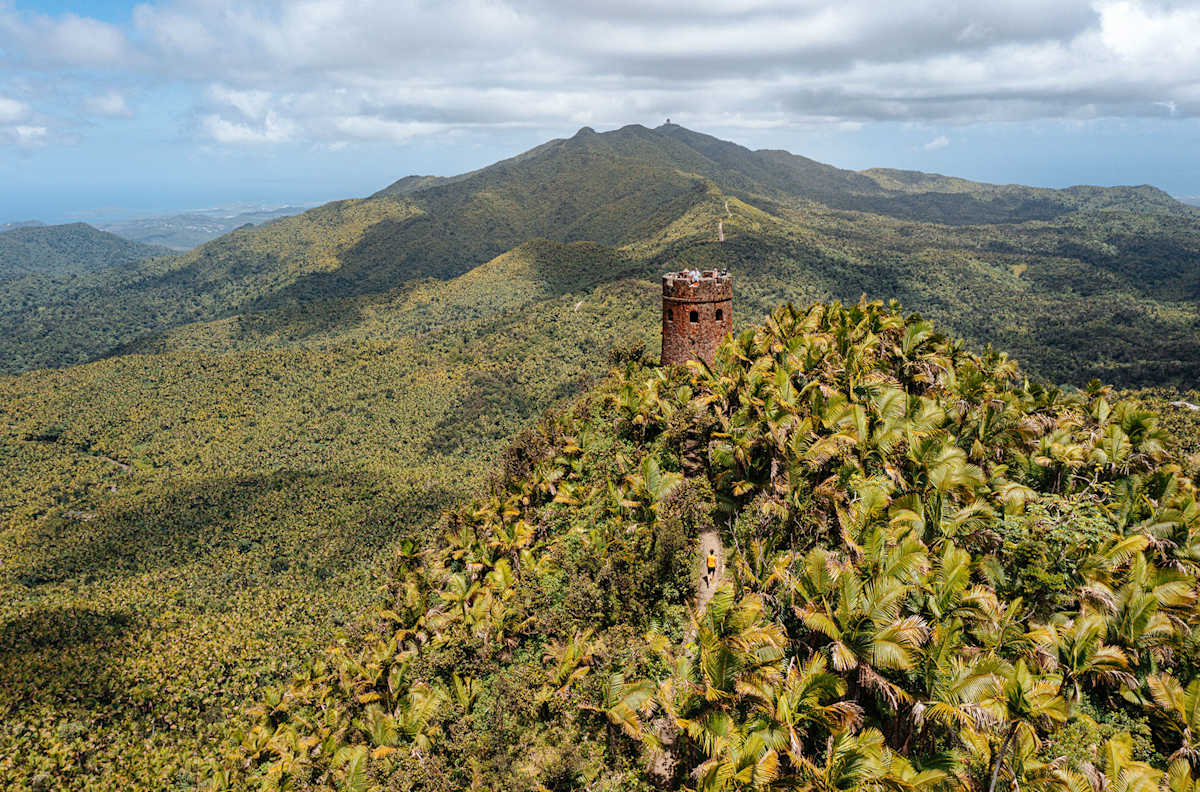
El Yunque National Forest’s Mt. Britton Trail and Tower is a great place to start your trip: “You can see across the entire island,” says photographer Michael George.
Michael George
The main island of Puerto Rico, situated in the Greater Antilles between the Atlantic Ocean and the Caribbean Sea, stretches 100 miles from east to west and 35 miles from north to south. With a footprint of just 3,425 square miles, it’s smaller than the state of Connecticut. Despite its compact size, the range of landscapes found throughout Puerto Rico is vast, from green mountains to verdant mangroves to bubblegum-pink salt flats — and it left photographer Michael George amazed. “I had no idea how different the geographic regions were,” says Michael, who spent two weeks touring the island in its entirety. “Typically, if you’re going from cloud forest to desert, you would expect that to take several hours of driving. But in Puerto Rico, you get these massive changes in biosphere and flora and fauna within an hour.”
Plan your dream trip.
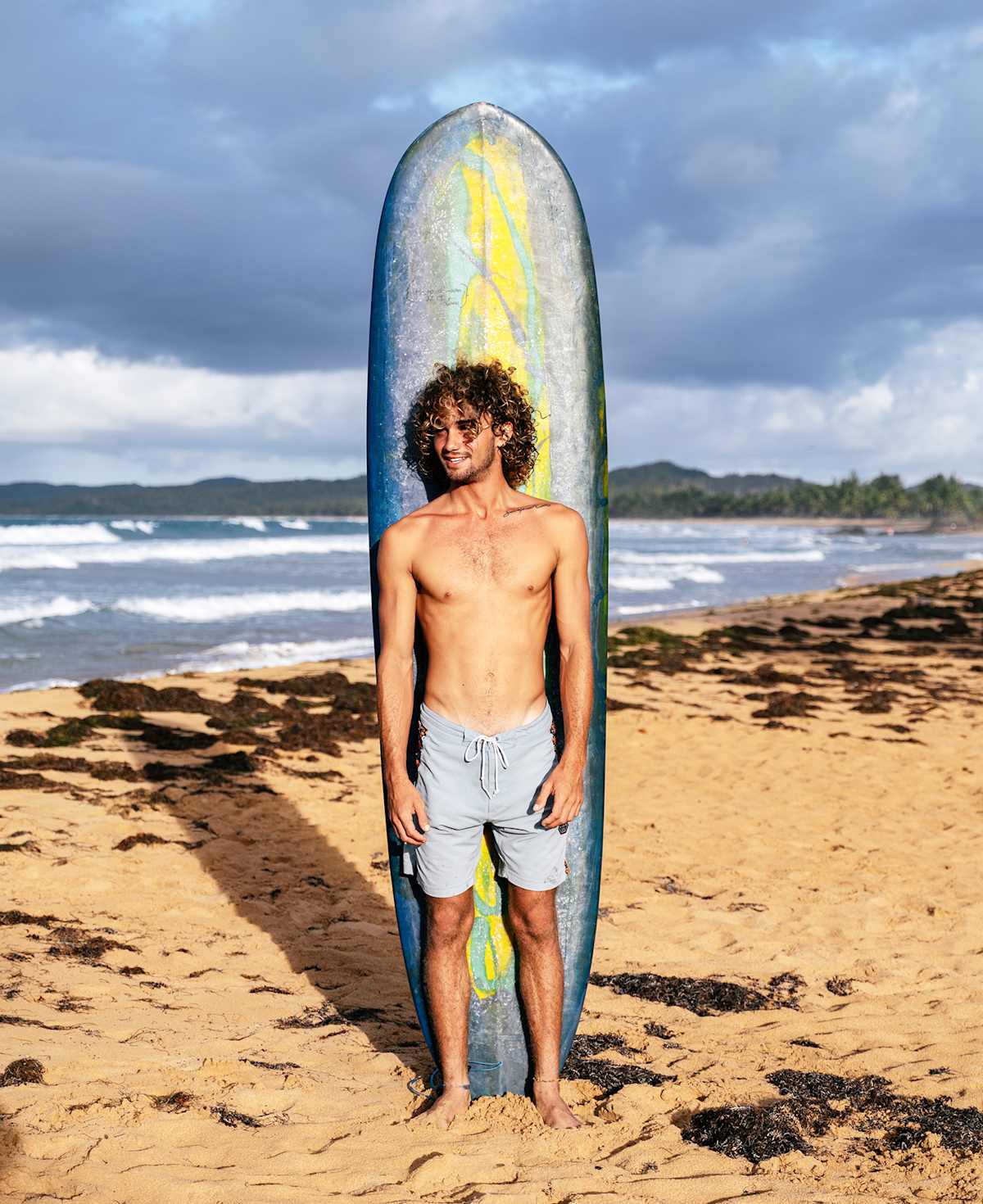
On the northeast coast, La Pared Beach is a popular spot for surfers.
Michael George
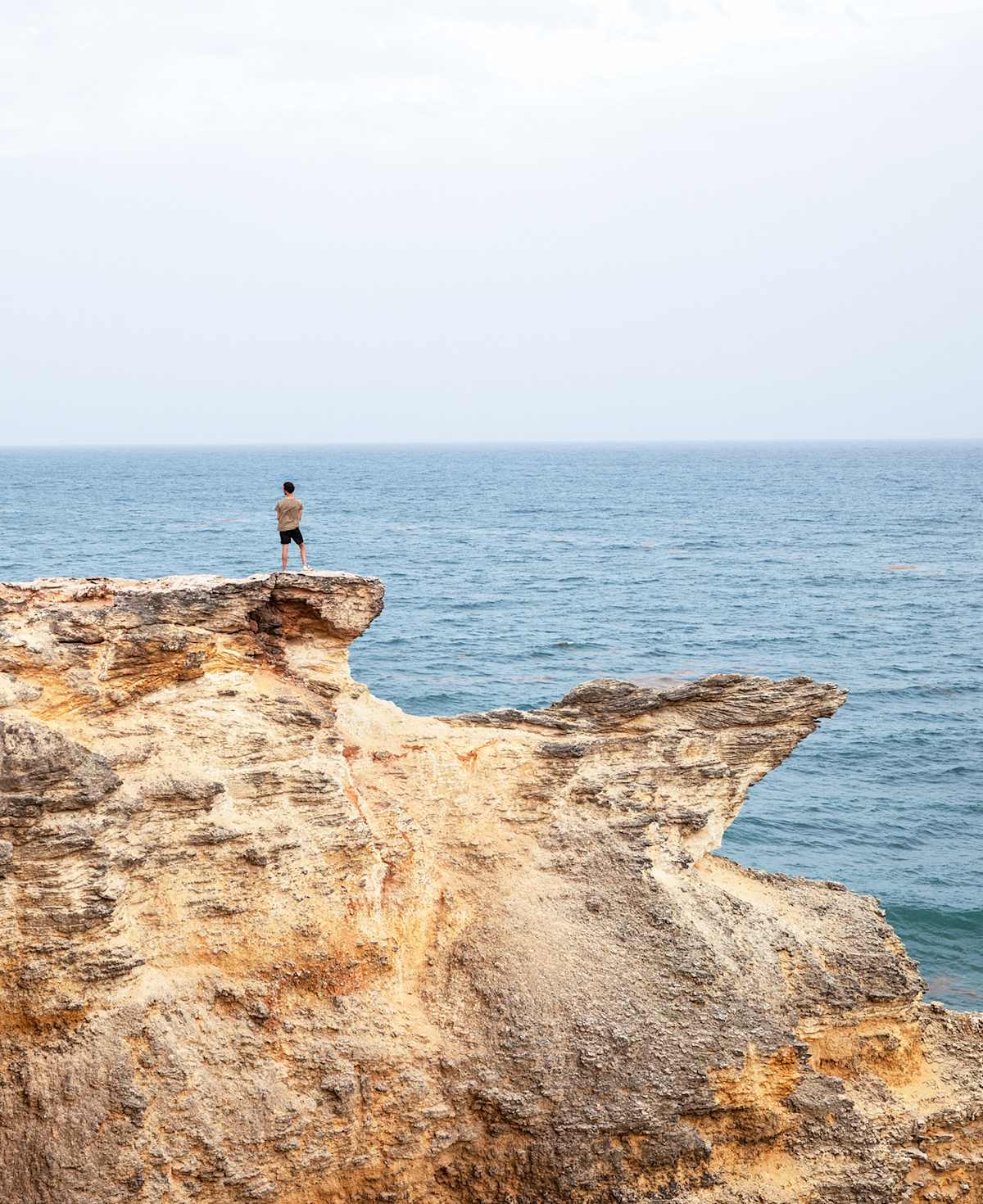
Cabo Rojo, the island’s most southwestern point, is known for its limestone cliffs.
Michael George
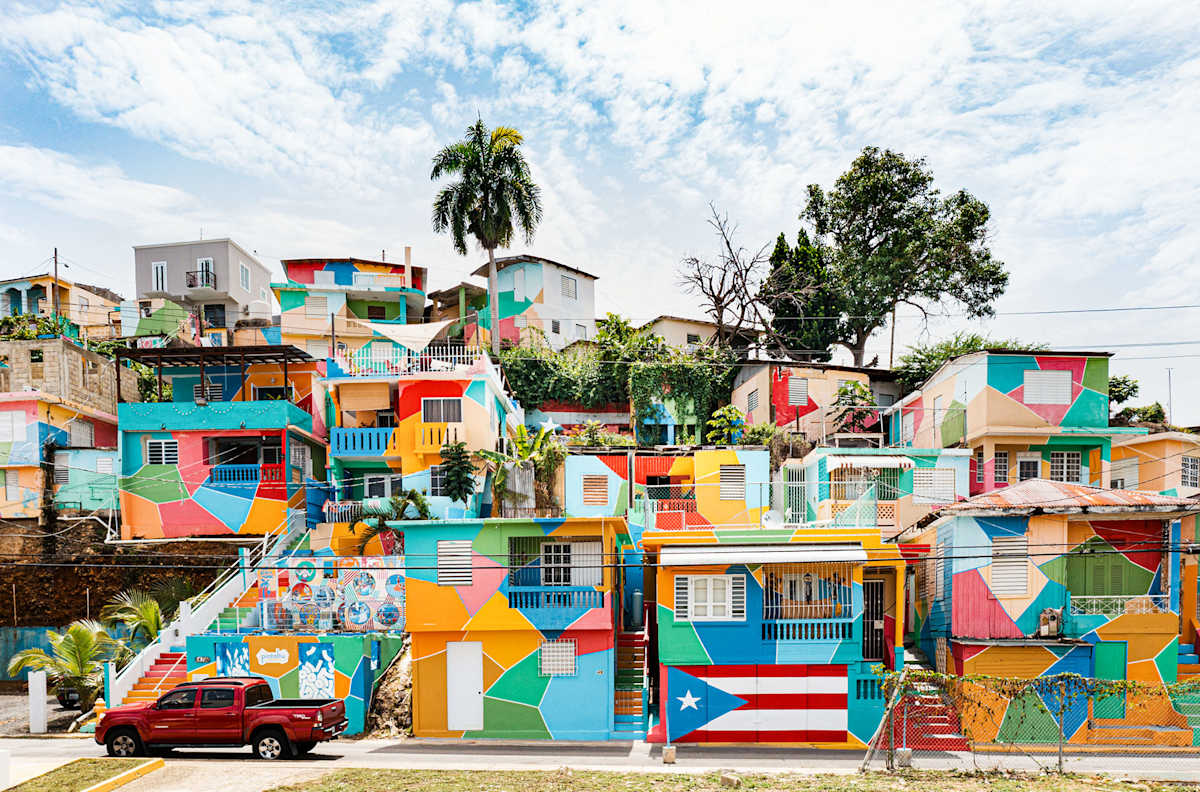
Aguadilla’s Cerro Cabrera neighborhood received a colorful makeover in 2018, courtesy of the Pintalto project, which is all about transforming communities through art.
Michael George
Puerto Rico’s 270 miles of coastline are as varied as its interior topography — and offer something for everyone. “The coast is incredibly diverse, whether you want to surf, dive or hang out on the beach,” says Michael. The island’s southwest corner features a desert-like landscape (technically, a dry coastal forest), which gives way to limestone cliffs at Cabo Rojo before breaking off into the sea — be sure to walk to Faro Los Morrillos de Cabo Rojo, a stately gray lighthouse with bright-green window shutters. Farther up the west coast, the town of Aguadilla attracts all manner of water-sports enthusiasts who come to take in one of the island’s best surf breaks. But it also has an artistic side, and is home to the Museo de Arte de Aguadilla y del Caribe’s small but significant collection of Puerto Rican art. The creativity extends to Cerro Cabrera, where houses were painted as part of artist and urban planner Samuel González Rodríguez’s macromural project, Pintalto. “You can walk into the neighborhood to see the murals and get lost wandering the tiny streets,” says Michael.
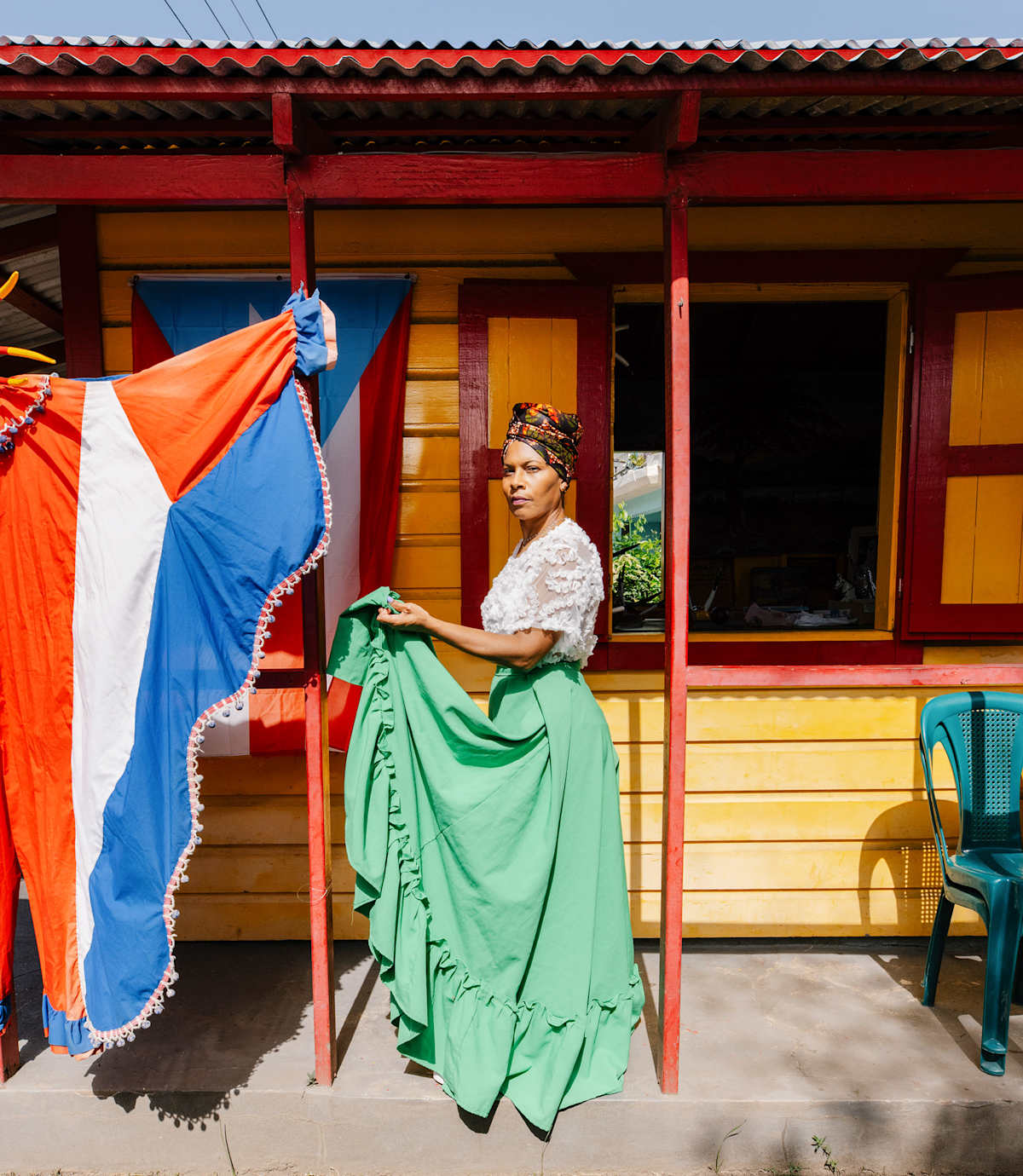
Sheila Osorio runs Taller de Bomba N’Zambi, a dance school offering beachside bomba workshops, in Loíza.
Michael George
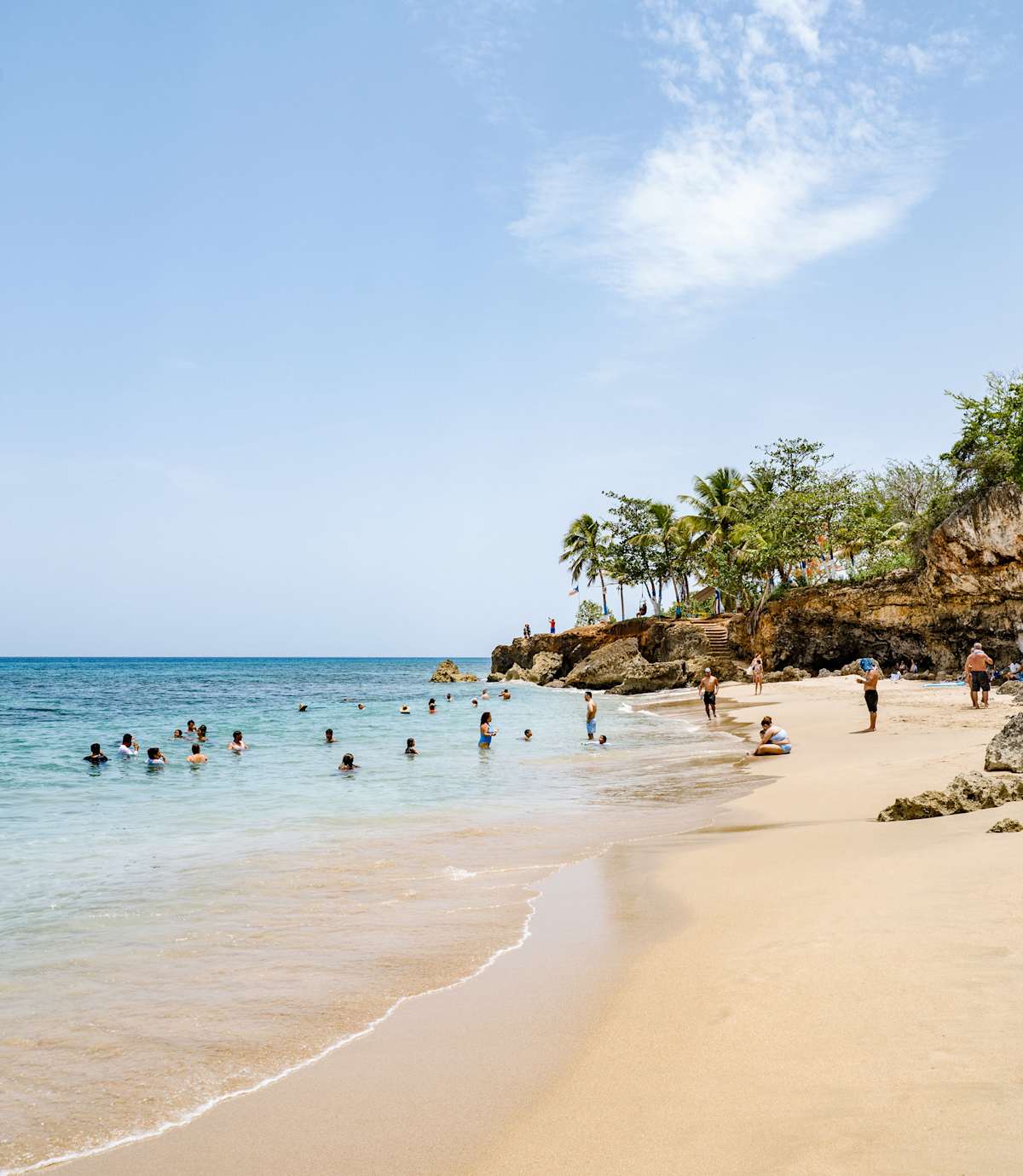
Peña Blanca beach, near Aguadilla on Puerto Rico’s west coast, is a favorite among locals thanks to its cave-like rock formations that provide shelter from the sun.
Michael George
A 30-minute drive east of San Juan is Loíza, the island’s hub for Afro-Puerto Rican culture. The town dates to the 16th century, when it was settled by members of the Yoruba tribe who were originally brought to the island as slaves. It was here that Michael met Sheila Osorio, a passionate advocate for the preservation of Puerto Rican culture, specifically the traditional music and dance genre, bomba. “It’s a fun thing to watch because it’s like improv,” says Michael. “The dancer and the percussionists play a sort of game with each other, speeding up or slowing down, and it’s all about the music and the dance interconnecting.” In Loíza, visitors can also see artisans crafting vibrant vejigante masks, worn at local festivals, and munch on frituras — fritters made from indigenous ingredients such as cassava and plantains — at roadside stands. “I loved that as I went around the island, not only did the topography change, but I was dropped into these different subcultures,” says Michael. “People don’t realize how special Puerto Rico is until they see it.” ✦