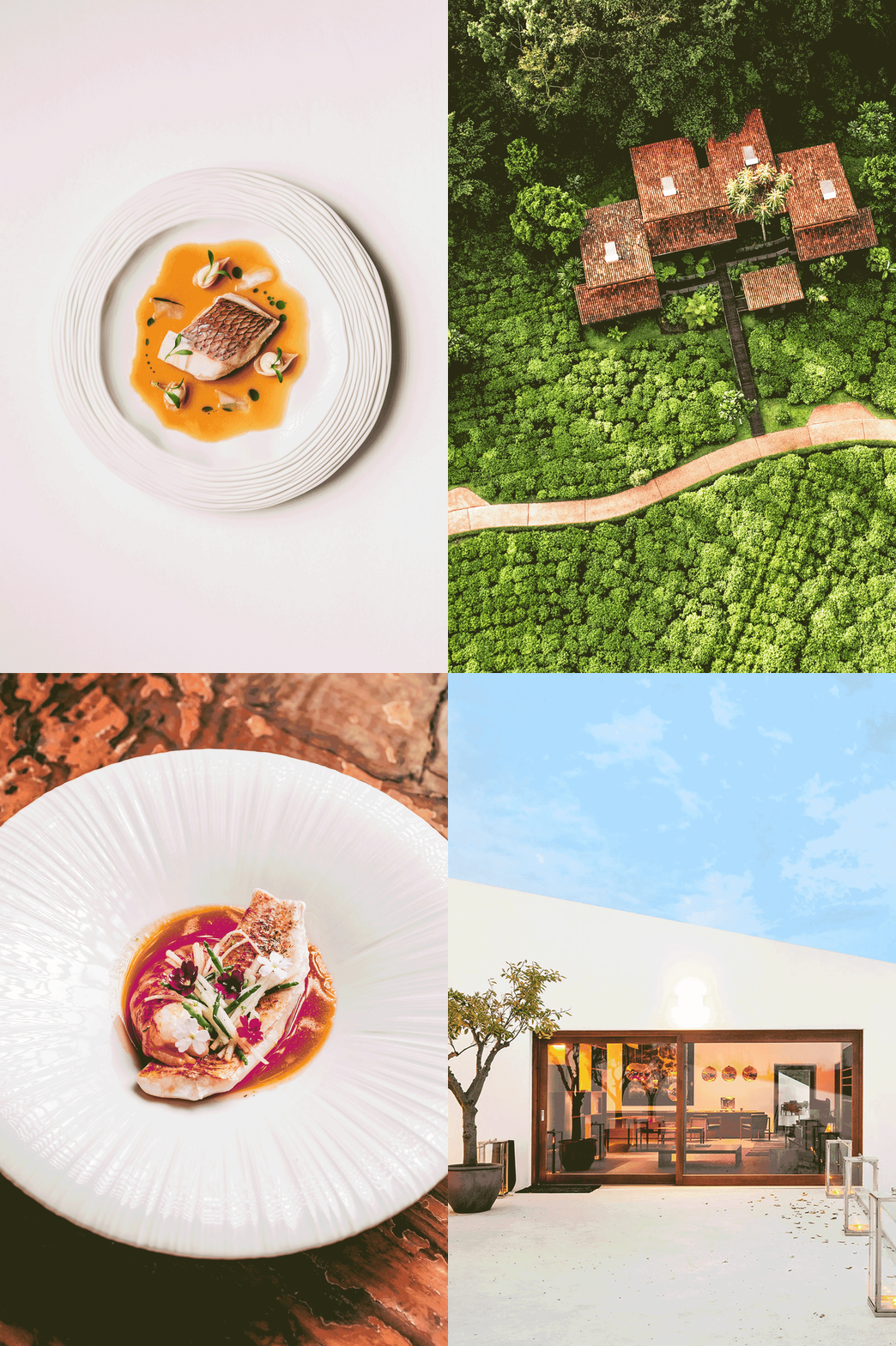
At Mil, a remote restaurant in the Sacred Valley, the revival of traditional practices is driven by preservation — and innovation.
High in Peru’s Andes, These Michelin-starred Chefs Are Making Food History
By Claire Sibonney | December 17, 2024
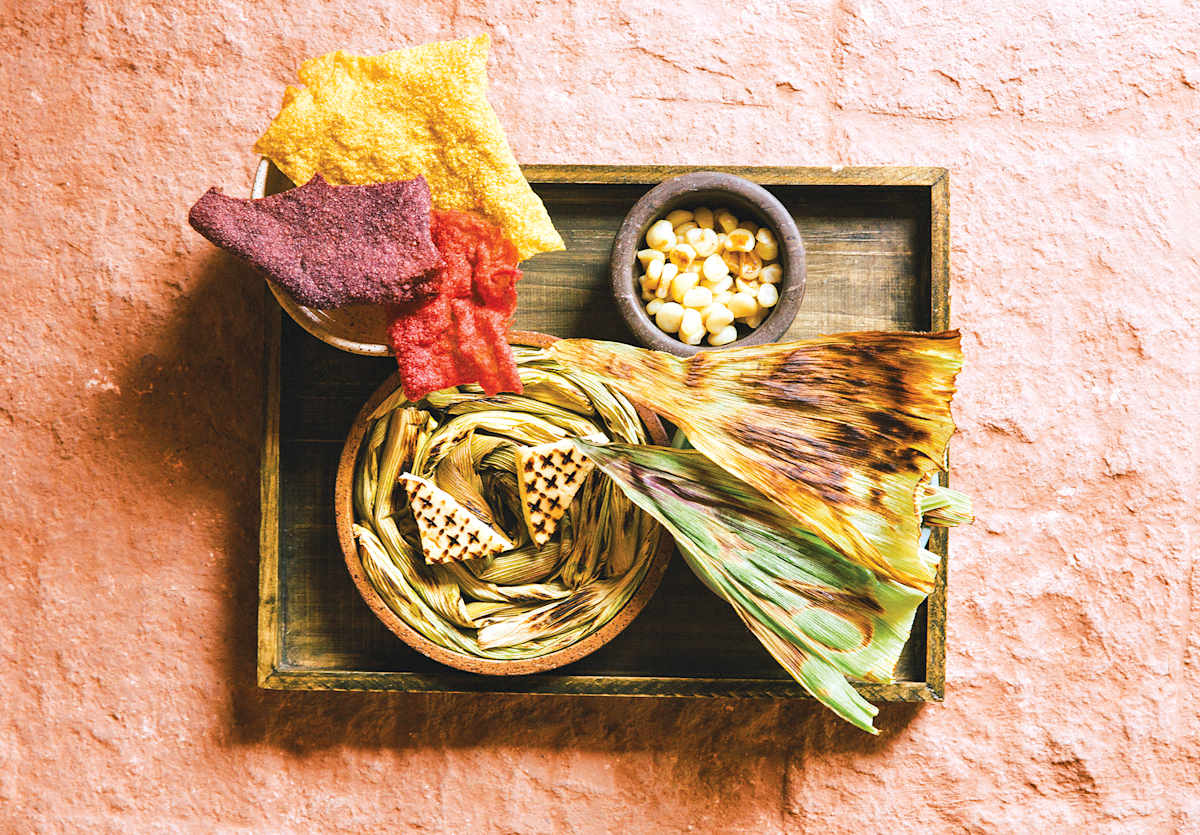
Mil’s Corn dish, featuring piscoronto, chullpi and white corn, along with queso fresco.
Ben Sklar
Moray isn’t a place you just happen to pass by. At 11,706 feet above sea level, this isolated site in the Andes took photographer Ben Sklar roughly 30 miles northwest of Cusco, on a journey through landscapes fringed by snowcapped mountains and dotted with Quechua villages. He was drawn here, to the heart of the Sacred Valley, by the centuries-old Moray ruins — circular terraces once used for farming — and by Mil, a culinary experience that bridges the gap between that relic of Incan ingenuity and the modern day. Behind Mil are culinary visionaries Virgilio Martínez and Pía León, creators of Lima’s Central, which earned top spot on the World’s 50 Best Restaurants list in 2023, and scientist Malena Martínez (Virgilio’s sister), director of Mater Iniciativa, the restaurant group’s research arm. For this team, exposing diners to the ecosystems around Mil is just as important as the eight-course tasting menu they serve. “We want people to immerse themselves in the world of the Andes, which means delving into an understanding of their surroundings, and a culture entirely linked to the environment,” says Malena.
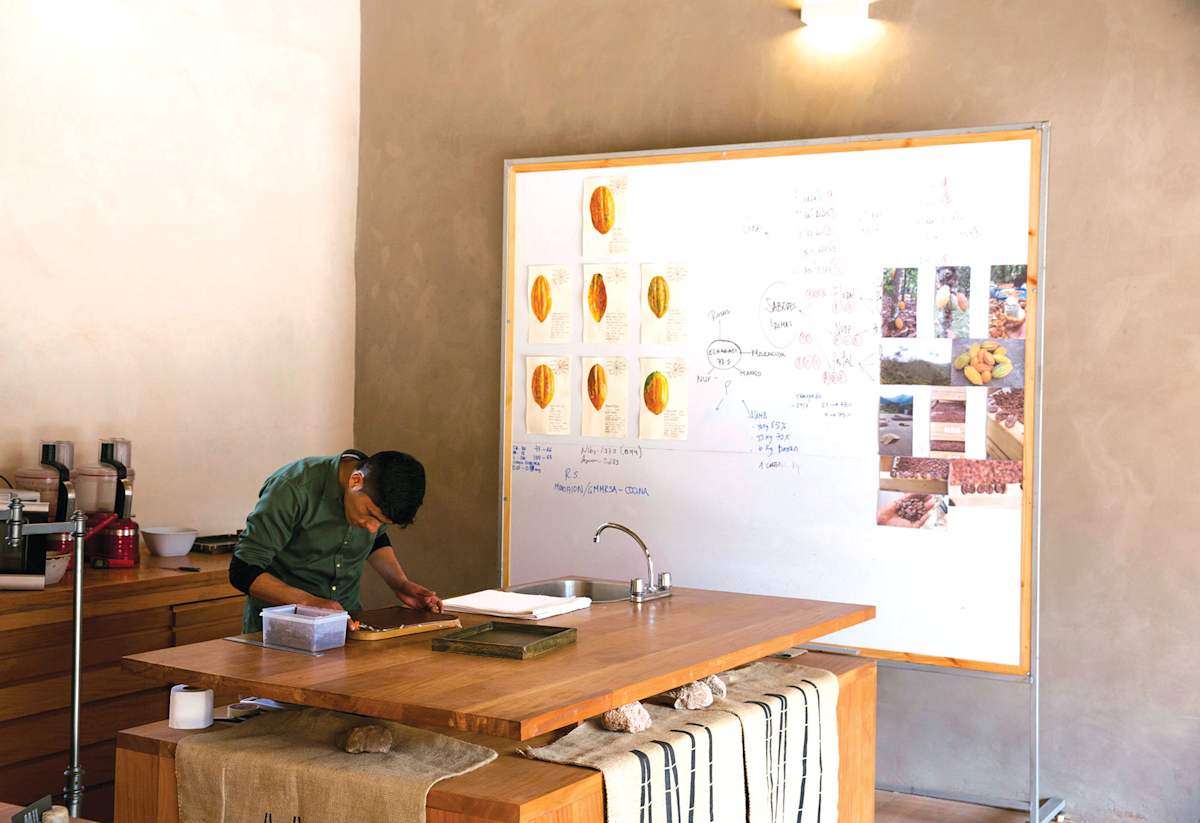
Mil’s research center, Mater Iniciativa.
Ben Sklar
At Mil’s research center, Mater Iniciativa, Malena leads projects that blend ancestral knowledge with techniques to revolutionize food sustainability and community development, including reviving ancient preservation methods. The Mater team is also finding new uses for cacao, the key ingredient in chocolate. Typically, only the seeds, which make up about 15 percent of the cacao fruit, are used, but the team is devising ways to use the membrane, mucilage, seed skins and whole pod. And, launching this spring, Mater’s Anccoto project will focus on education and nutrition for children in the nearby town of Maras. Mil works closely with neighboring communities, applying the Andean concept of ayni, which is about reciprocity — the harvest is distributed in equal parts to supply both Mil and those who work the land. “We’re moving beyond short-term aid to sustainable development,” says Malena.
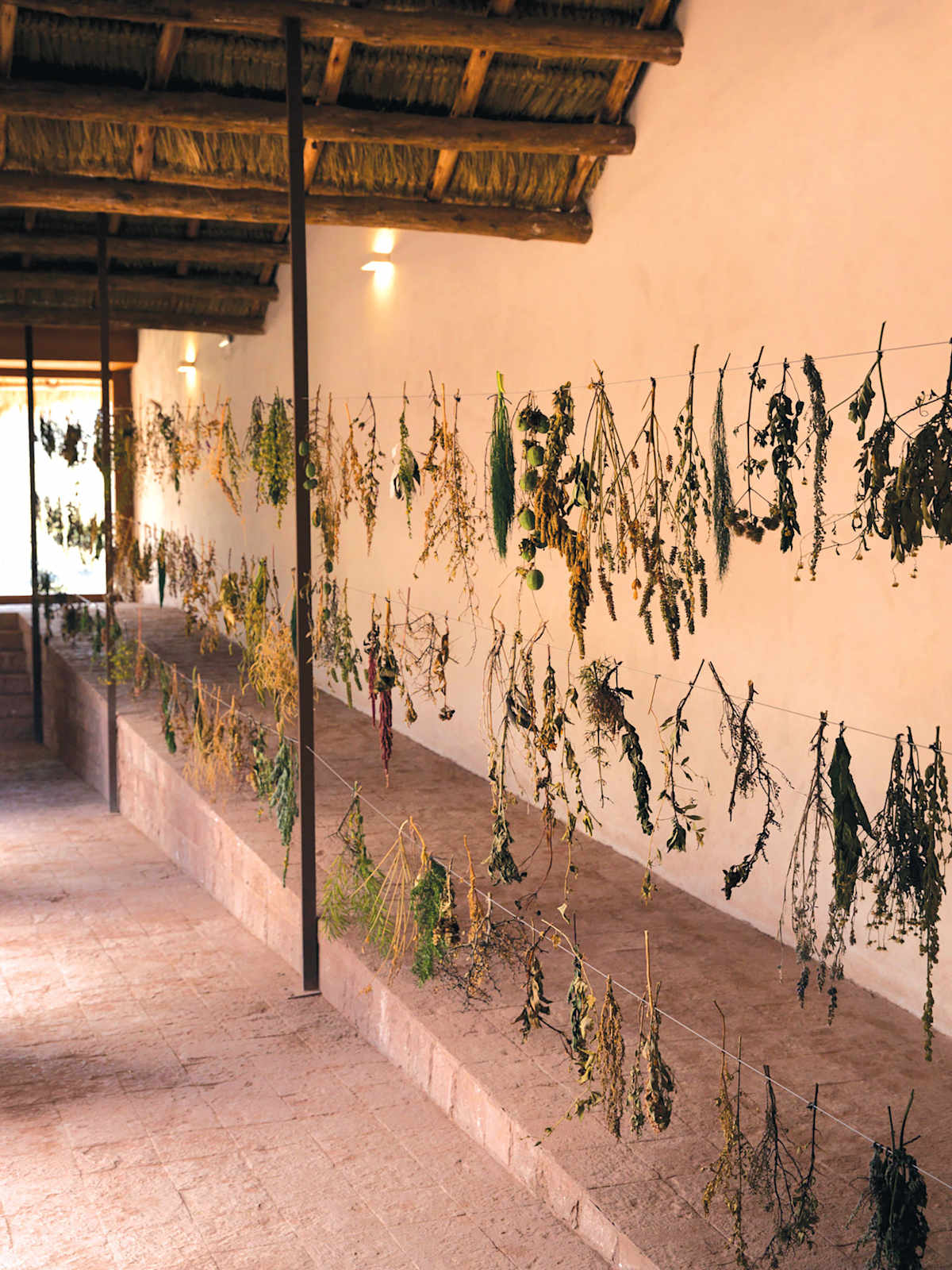
Foraged herbs hang to dry at Mater Iniciativa.
Ben Sklar
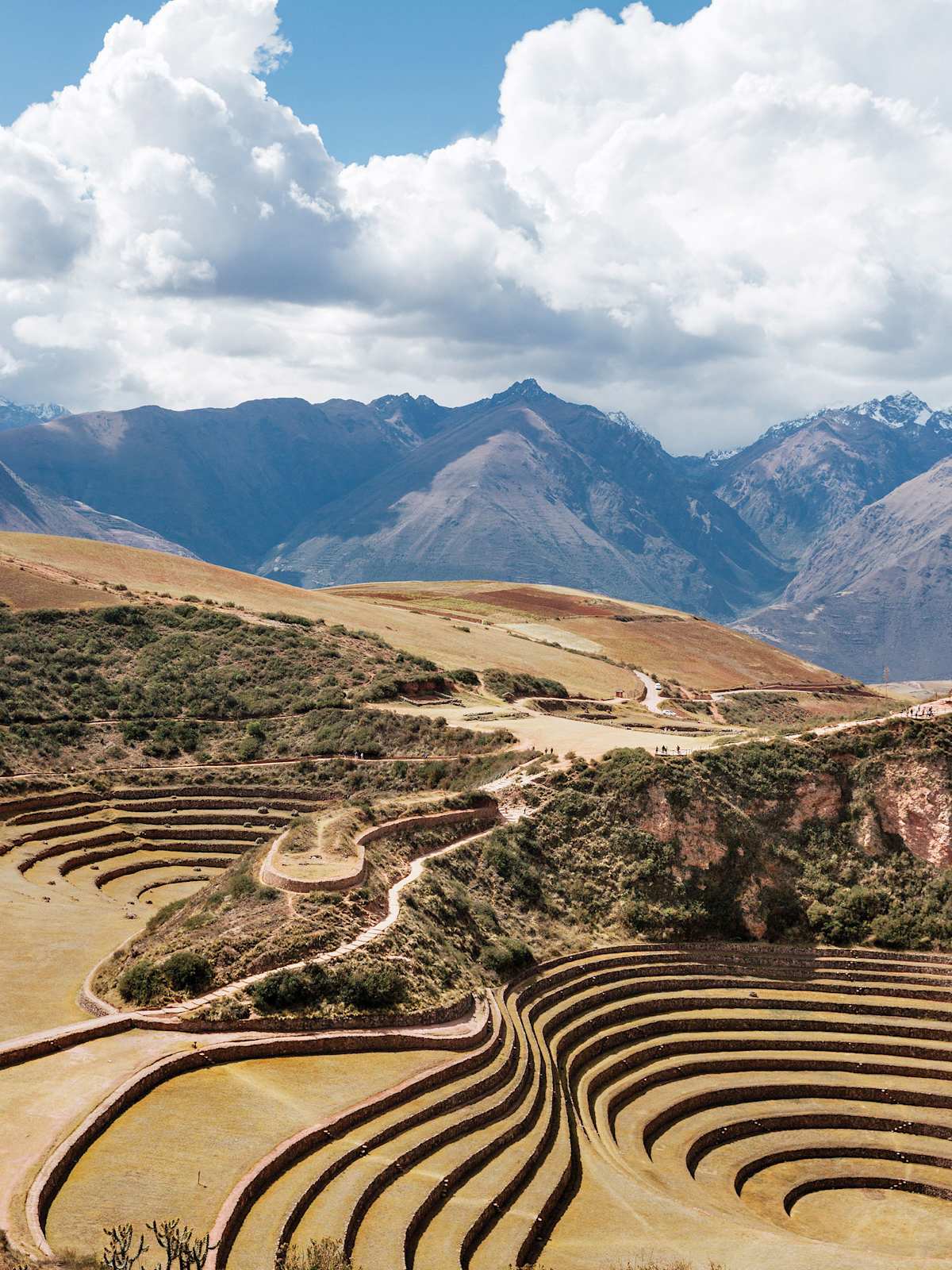
The Moray ruins are believed to have been an experimental farm system used by the Incas more than 500 years ago.
Ben Sklar
Plan your culinary adventure.
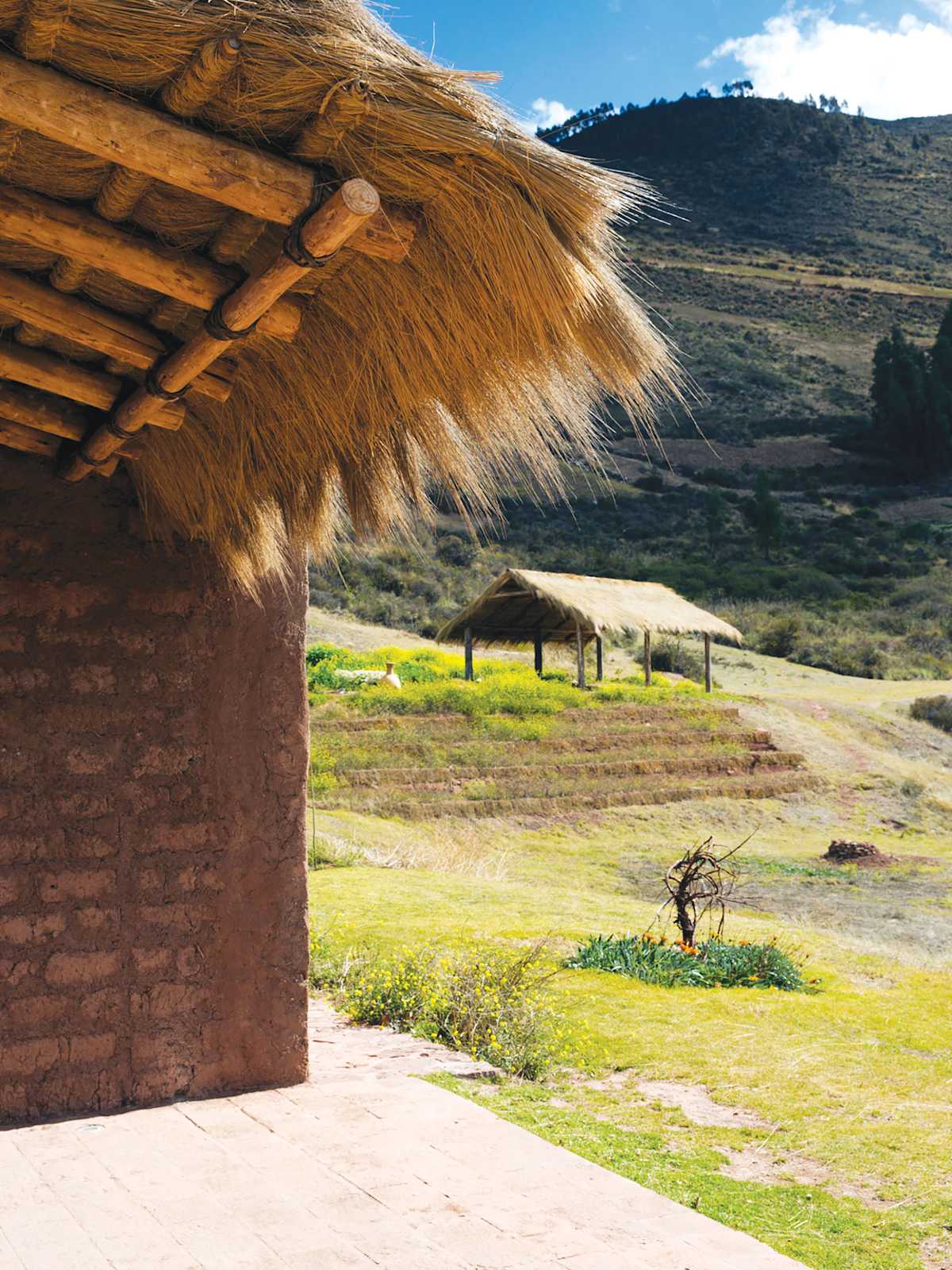
The architecture of Mil blends seamlessly with its surroundings.
Ben Sklar
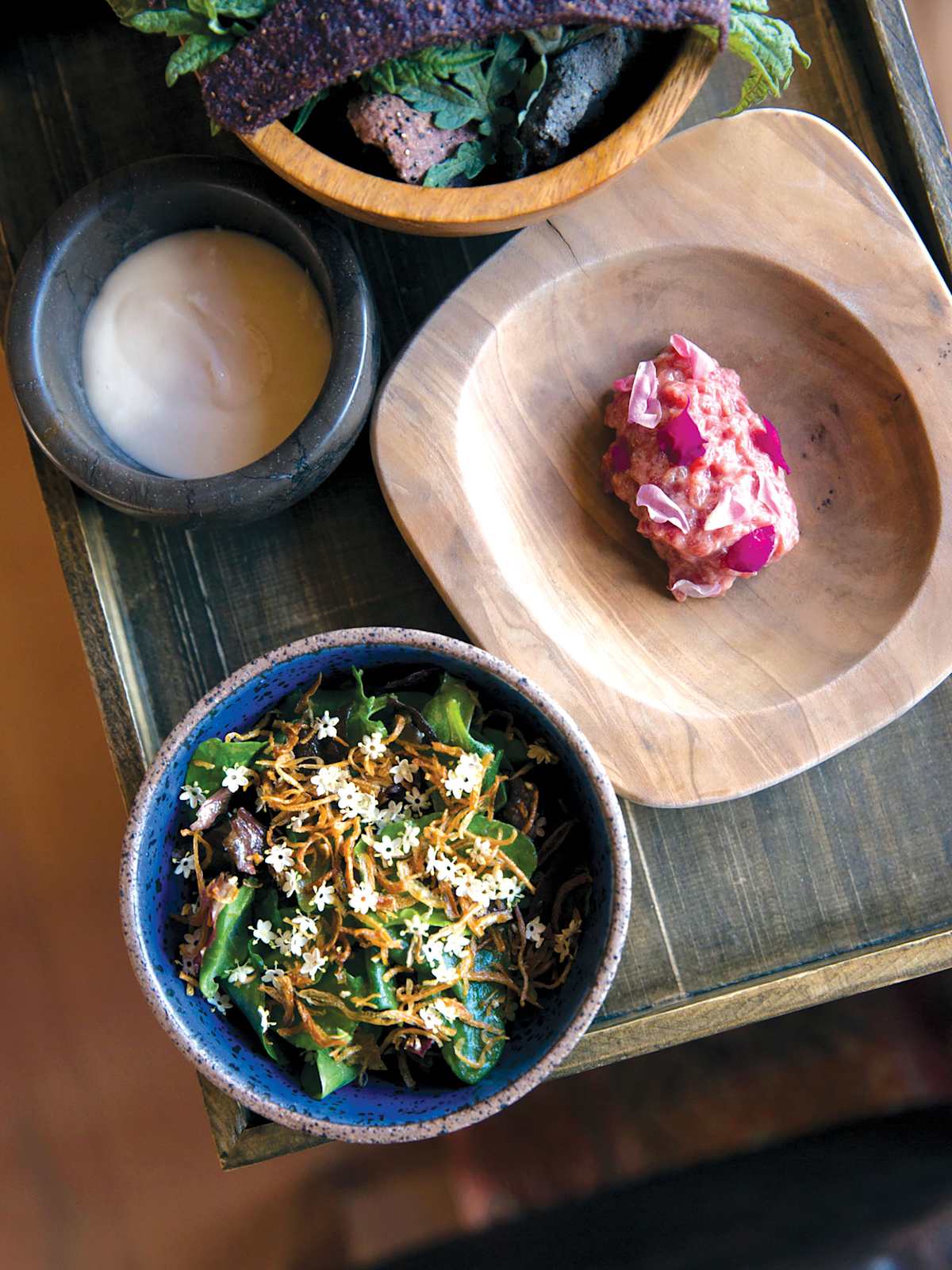
Different leaves and petals, such as fragrant Sambucus peruviana blossoms, are used in Mil’s dishes.
Ben Sklar
Like its sister restaurant, Central, Mil focuses on ingredients unique to Peru and the Andes, but takes the concept to higher altitudes. Everything on the tasting menu is sourced from the mountains at a minimum elevation of 9,800 feet. Even a typical sea-level ingredient like salt is harvested from the Salt Mines of Maras, created in pre-Columbian times and still used by the Maras and Pichingoto communities.
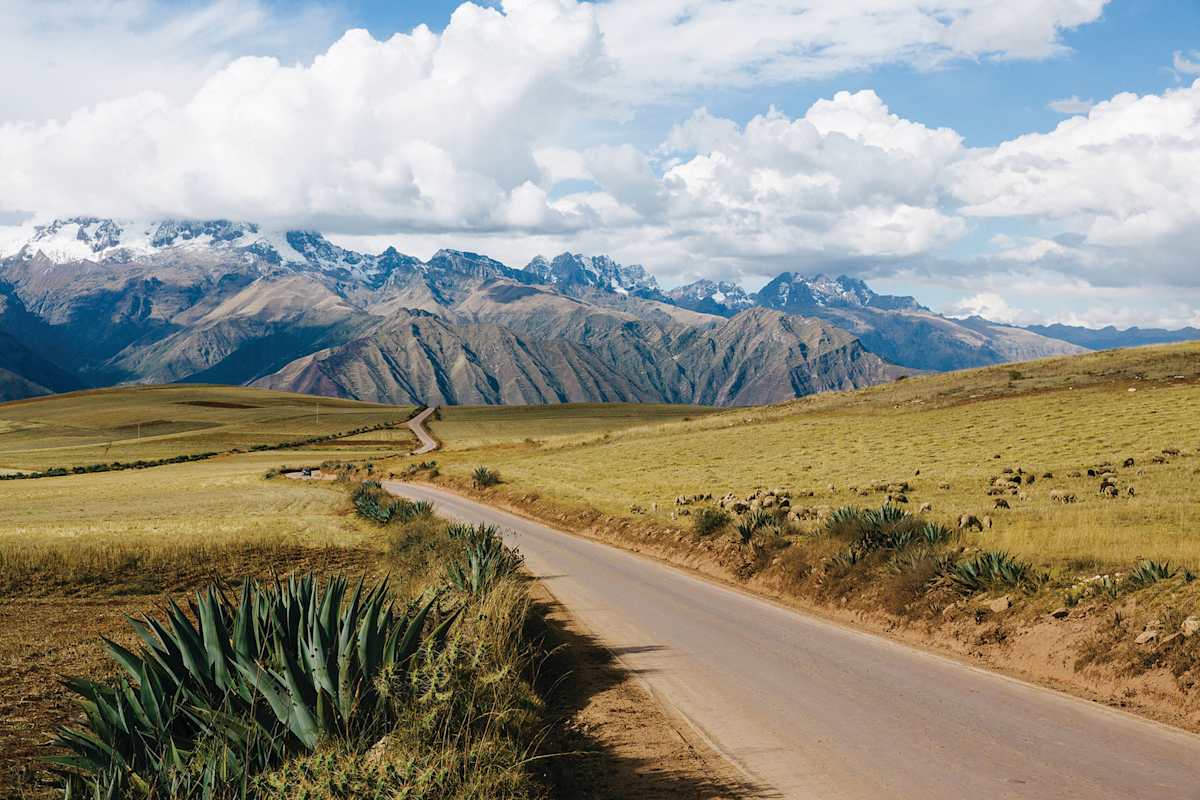
The road to Mil and the Moray ruins, 11,706 feet above sea level in the Sacred Valley region of the Andes.
Ben Sklar
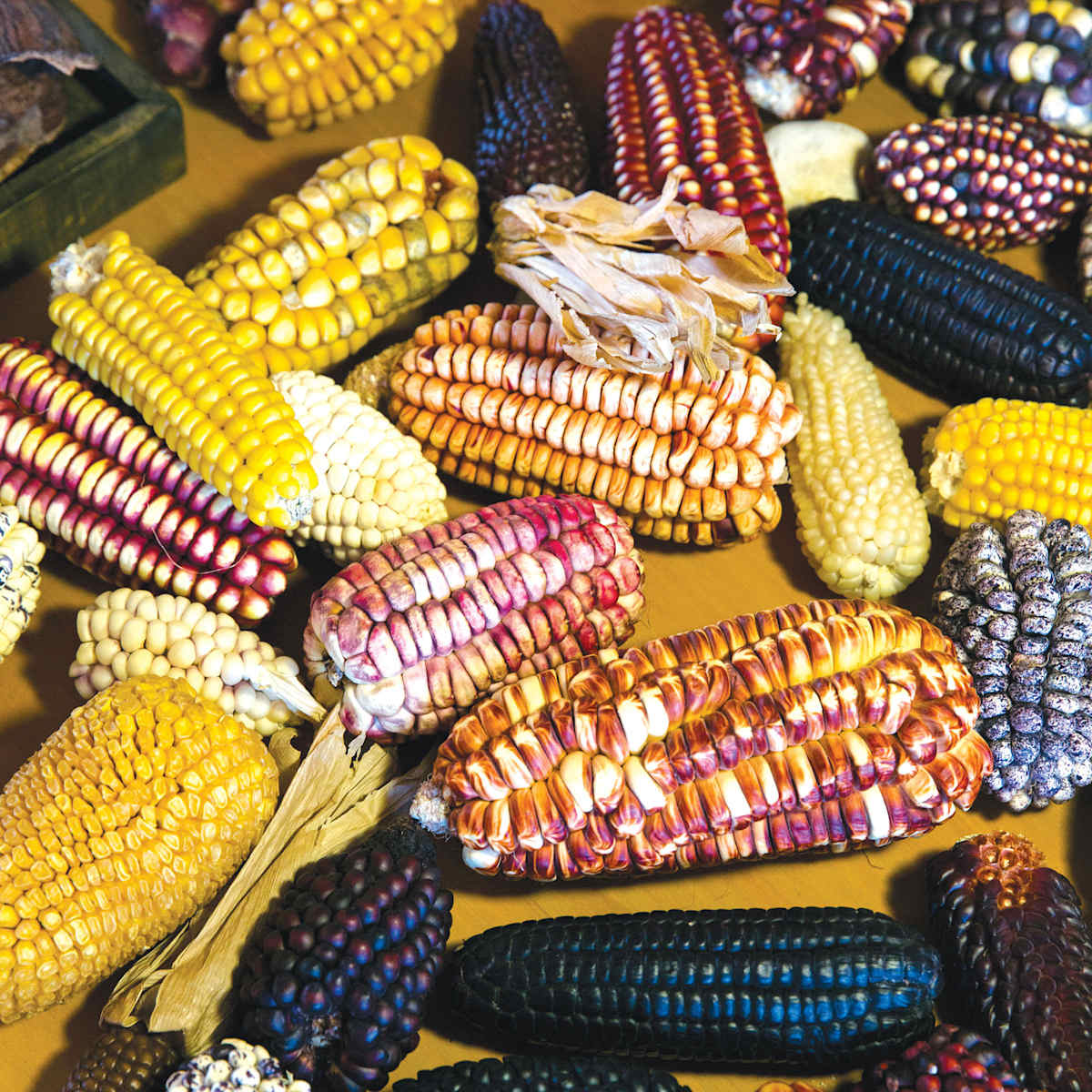
More than 55 varieties of corn are grown in Peru.
Ben Sklar
Myriad hues, intricate patterns and plumper, starchier kernels set Andean maize apart from the corn varieties commonly found in North America and Europe. Near Mil, corn is cultivated in traditional Quechua fields known as chakras. For the families who farm it, corn is more than sustenance; it represents the deep-rooted connection between pre-Columbian civilizations and the Andean peoples of today.
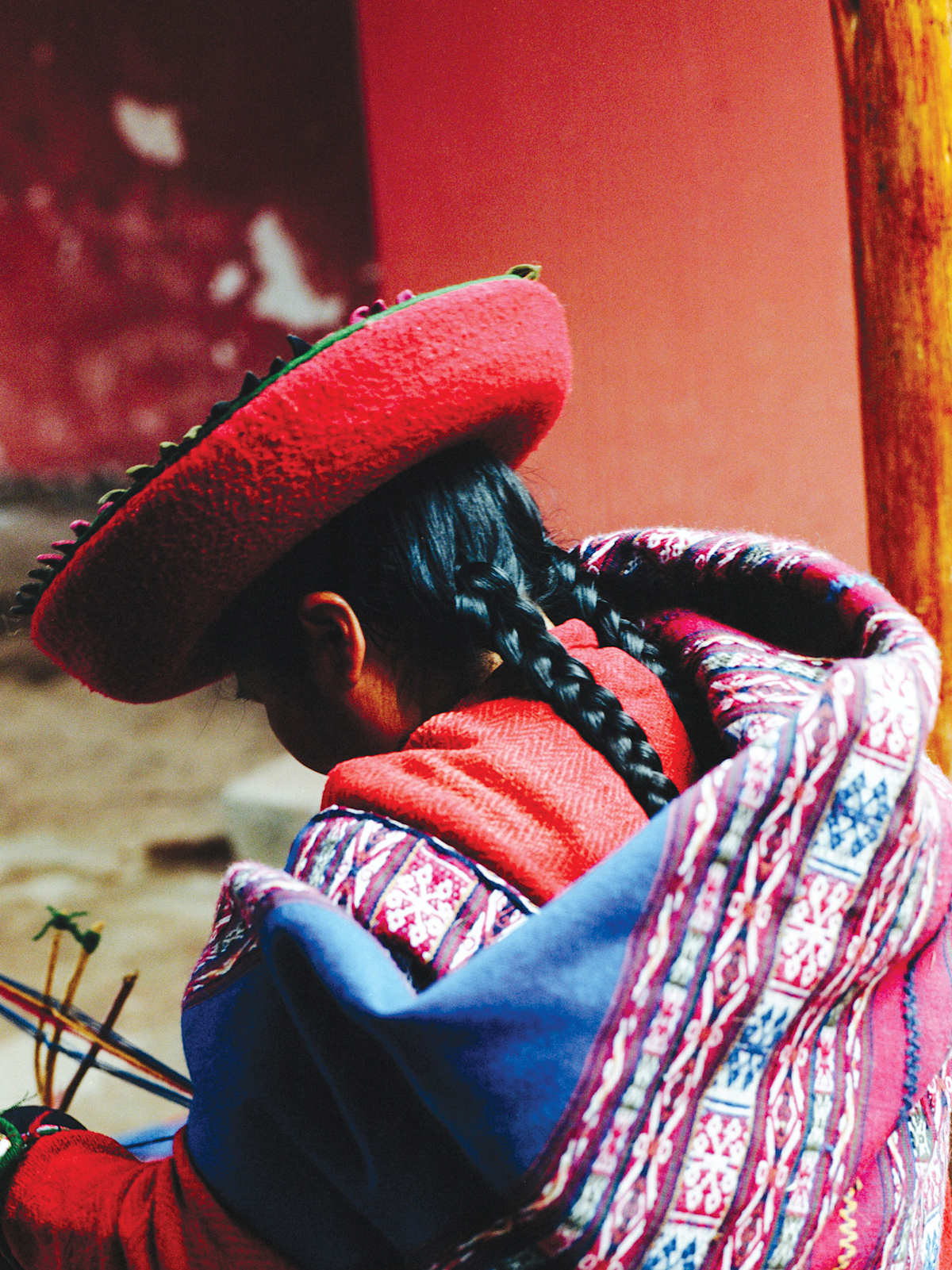
An artisan in the village of Chinchero weaves with naturally dyed yarn.
Ben Sklar
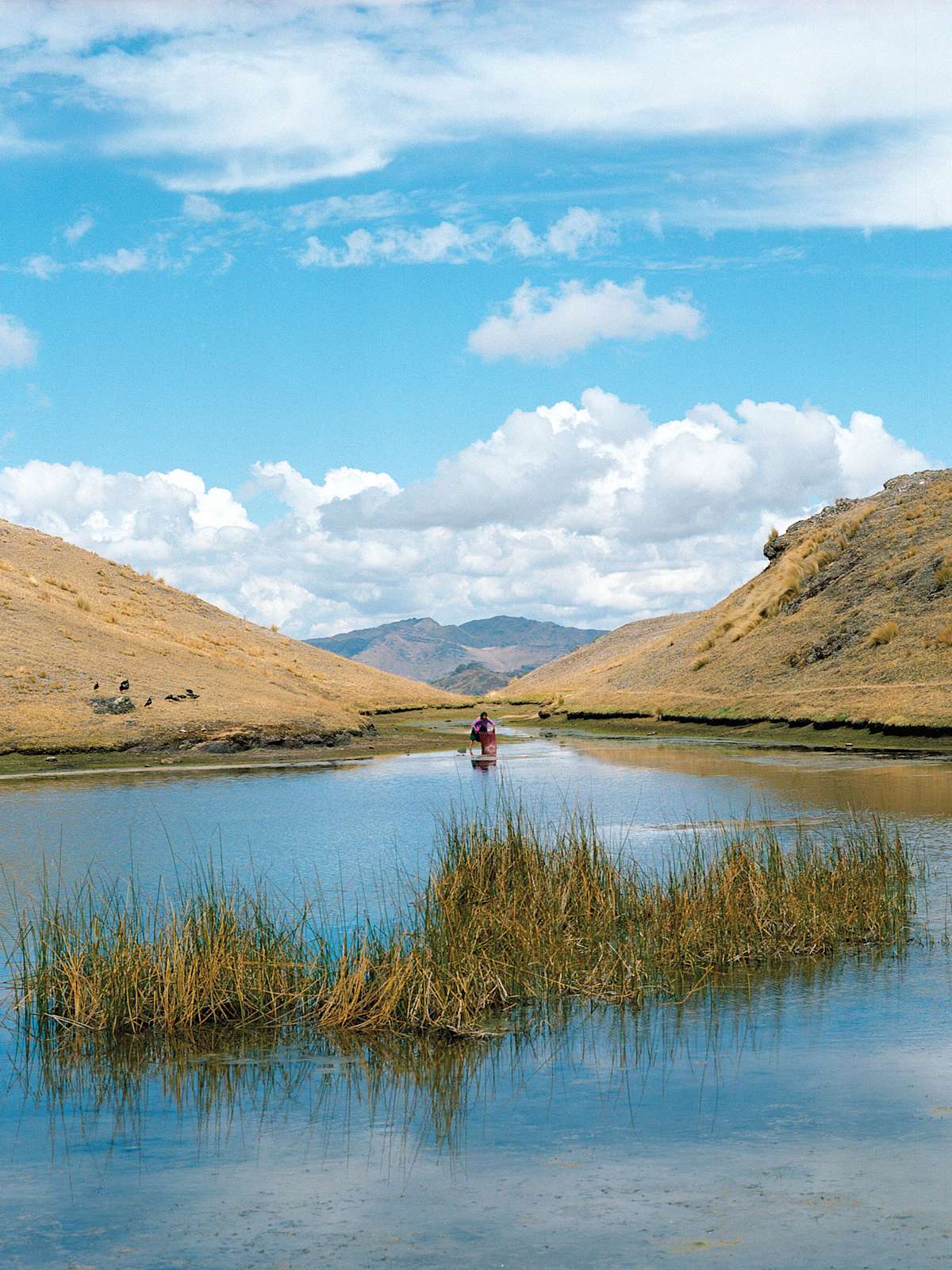
A farmer harvests plants from a high-altitude lake near Urquillos.
Ben Sklar
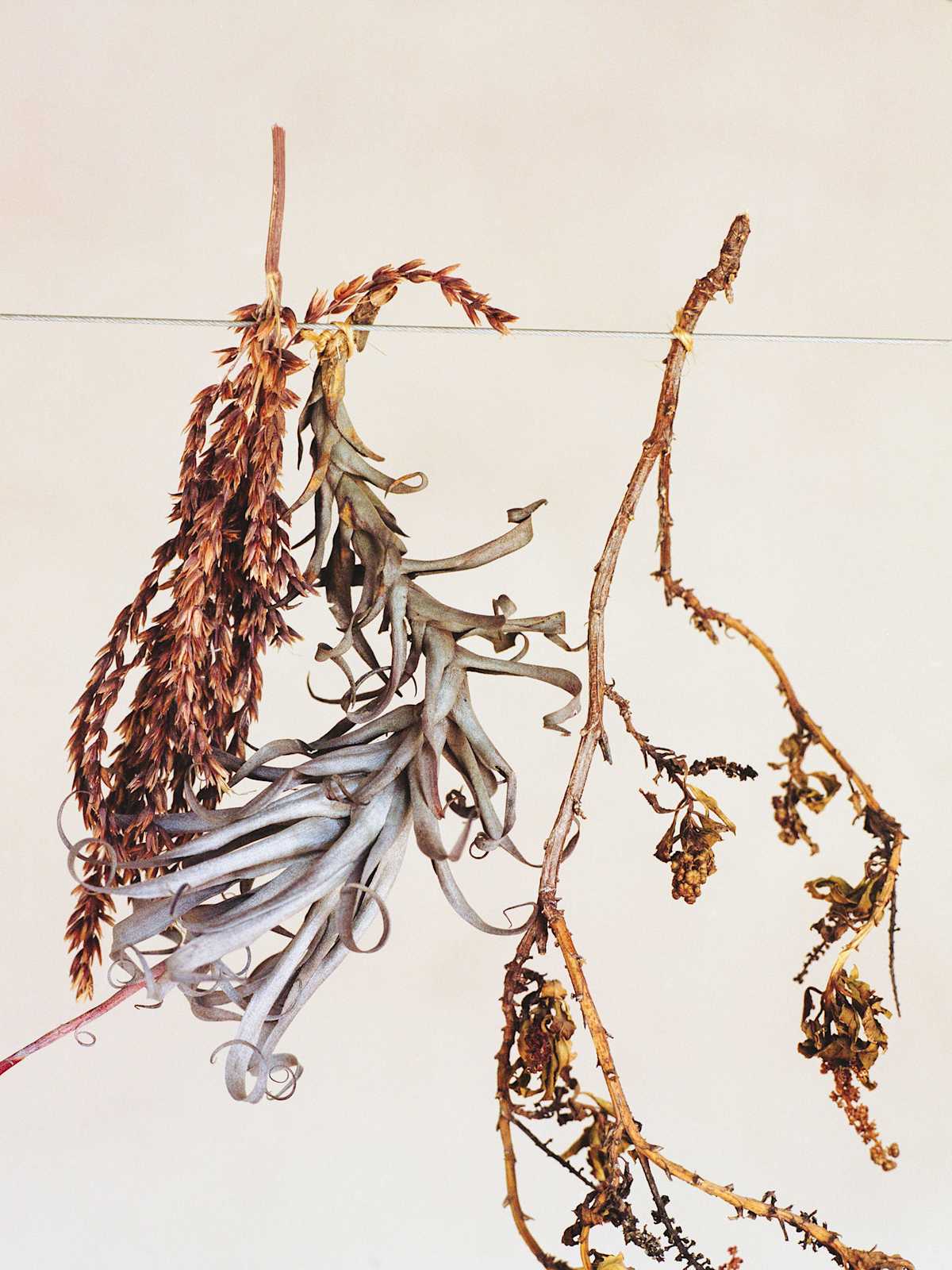
Foraged plants dry at Mater.
Ben Sklar
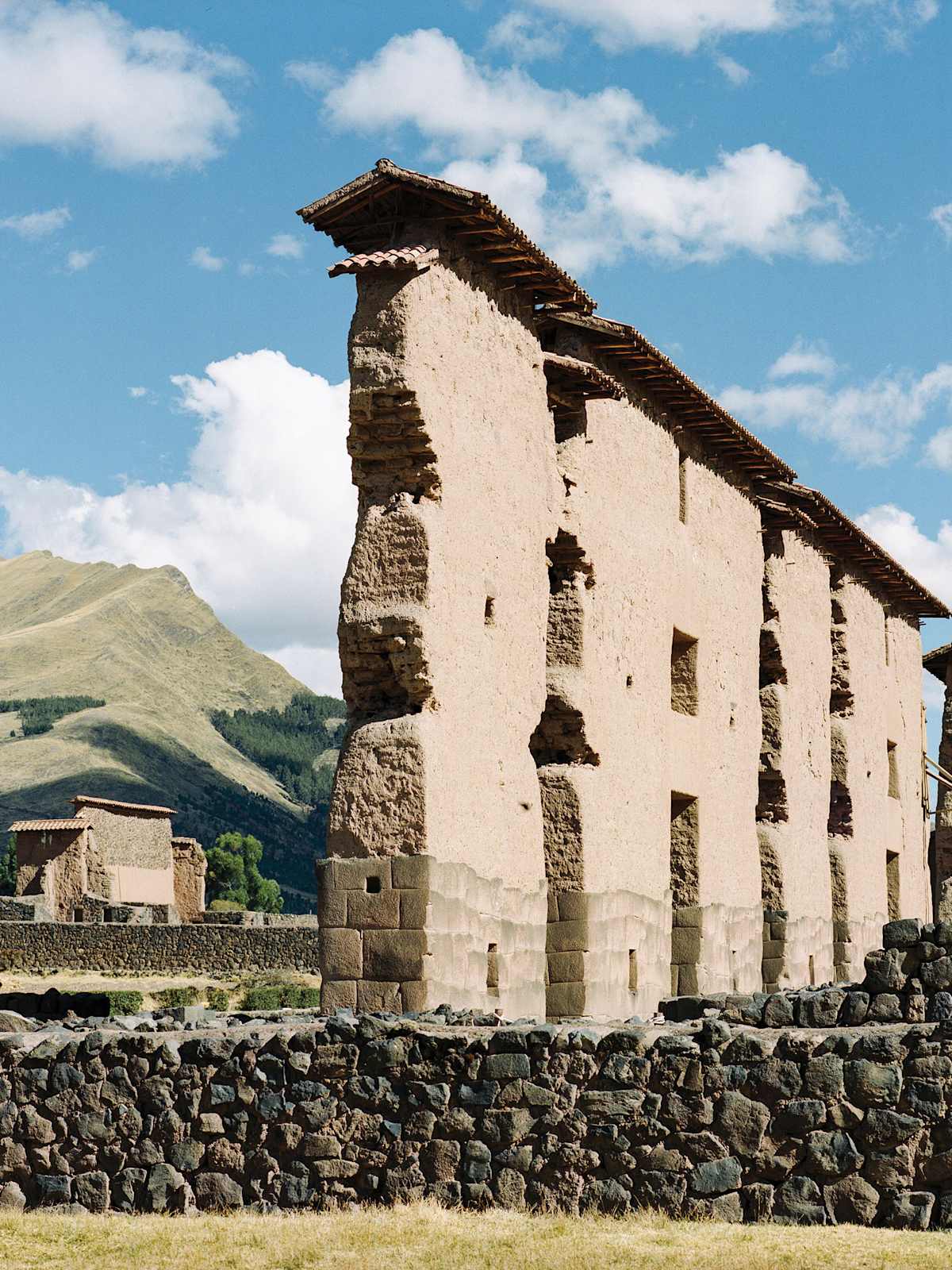
The Incan Temple of Wiracocha at the Raqchi archeological site stands 46 feet tall.
Ben Sklar
Guests are invited to explore beyond the dining table through the Mil Immersion experience, which involves touring the farmlands around the restaurant, foraging for botanicals with a local expert and visiting Mater’s labs before settling in for the tasting menu. Each course represents one of the ecosystems surrounding Mil, and ingredients include several varieties of corn, potatoes and other tubers.
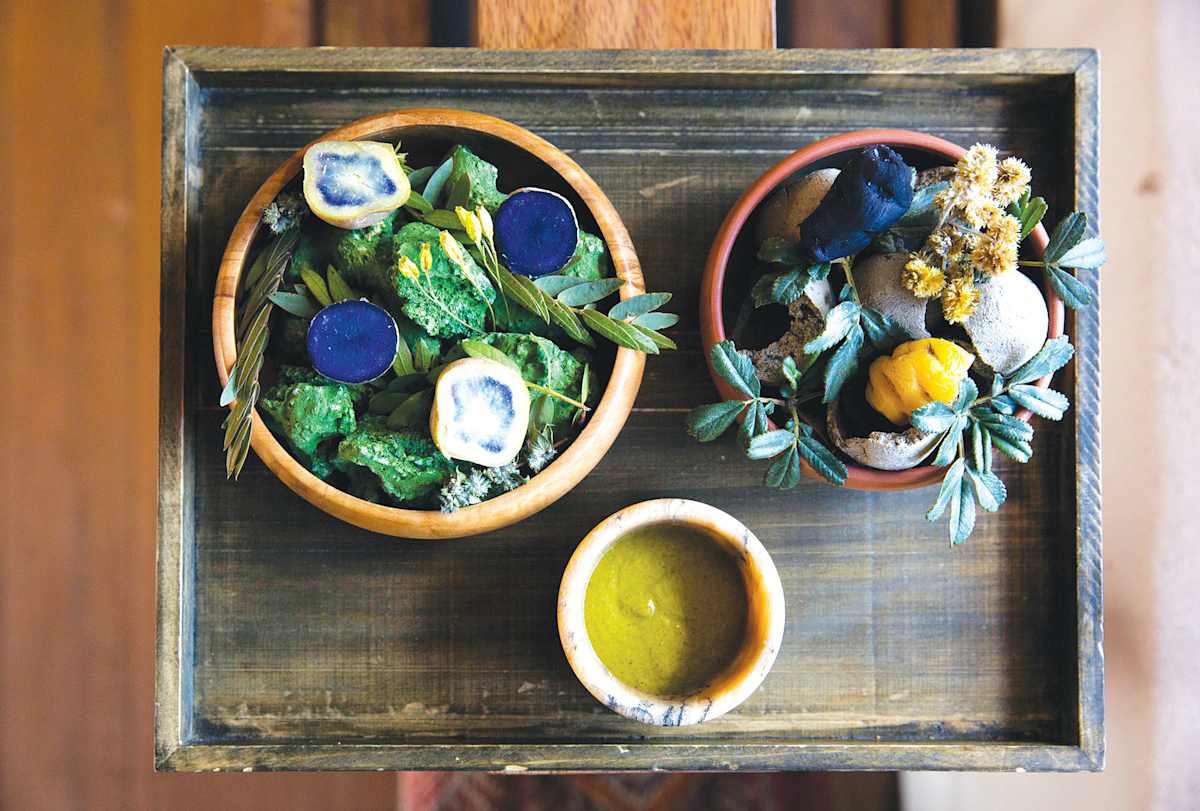
The Central Andres dish.
Ben Sklar
There are more than 4,000 types of potatoes grown in Peru but, until recently, most people in the country cooked with only two varieties. This prompted Malena and her team to showcase the country’s extraordinary diversity of ancient tubers. When Ben was photographing Mil, he sampled several, including some in a dish called Central Andes, which featured an array of native potatoes, stems and chaco (an edible clay) accentuated with wild chincho herbs. He is still wowed by the presentation. “The striking blend of purple, green and gold creates a visually perfect trifecta, stimulating in every aspect,” Ben says. “Realizing that you’re consuming a piece of history elevates the entire dining experience.” ✦