On a preview of a National Geographic Expeditions Signature trip with G Adventures, photography director Lori Morgan discovers a Morocco where stories and traditions are stitched into everyday life.
How G Adventures Finds Morocco’s Heart Through Its People
By Lori Morgan | August 31, 2026
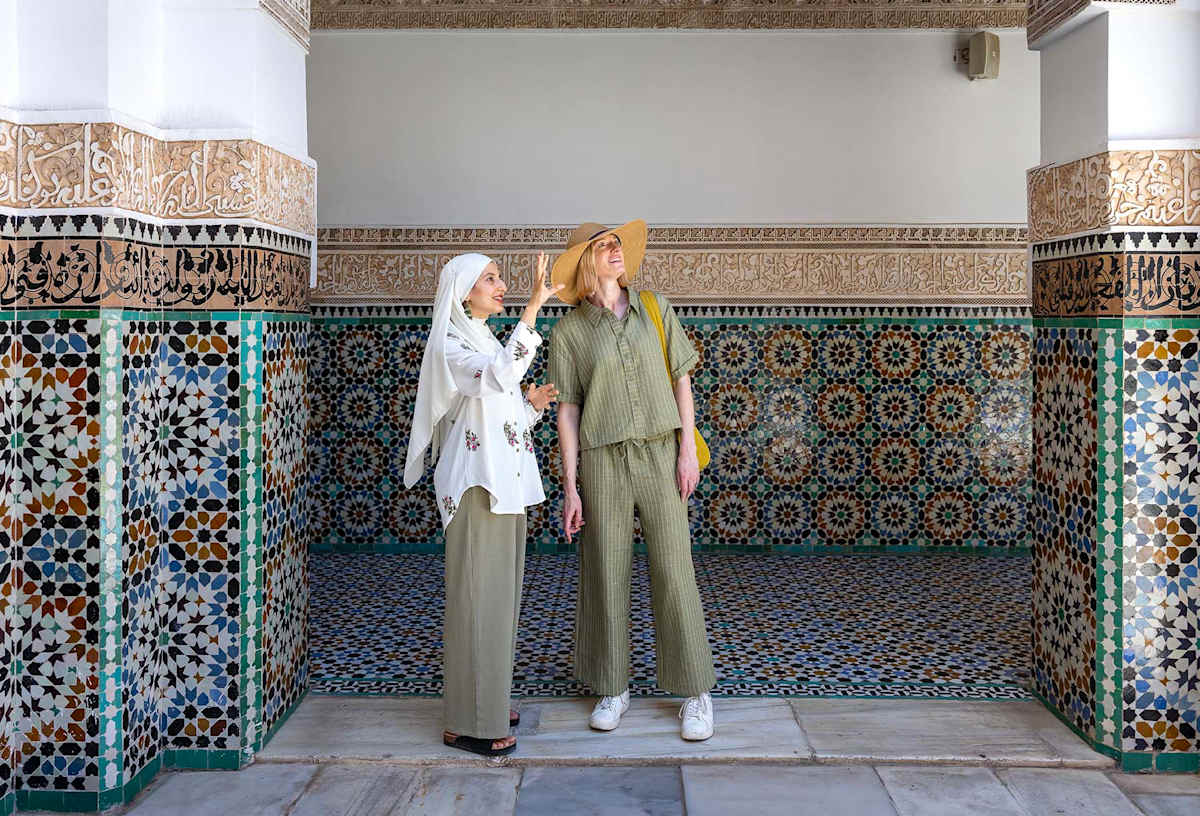
At Madersa Ben Youssef, visitors can find some of the most exquisite examples of Marrakech’s trademark zellige tilework.
Bella Falk/G Adventures
I came to Morocco expecting dramatic landscapes and colorful souks (markets), but what stayed with me long after I returned home were the people: a local storyteller carrying on a fading oral tradition in Marrakech’s medina (old city), a farmer nurturing young trees in the foothills of the Atlas Mountains and artisans weaving centuries of Amazigh culture into each carpet. While I could have happily spent days or even weeks simply wandering and exploring, on this journey, I was invited to look beyond the scenery and spectacle and learn about the stories behind them. In January 2027, the first National Geographic Signature with G Adventures itineraries will depart. These trips combine National Geographic’s decades of exploration, curiosity and storytelling with G Adventures’ dedication to bringing travelers closer to local communities through small-group travel. The more than 65 curated experiences are as varied as the destinations themselves: tracking gorillas and chimpanzees through Rwanda’s ancient forests and meeting the scientists who work to protect them or voyaging through Palau’s Rock Islands and its underwater Serengeti with local elders and researchers. Each journey focuses on experiencing a place beyond its major sights — and getting closer to the people and stories that give it character. Over three days, I get a glimpse of what the Signature itinerary in Morocco has in store for travelers.
Plan your ultimate adventure.
Plan your ultimate adventure.
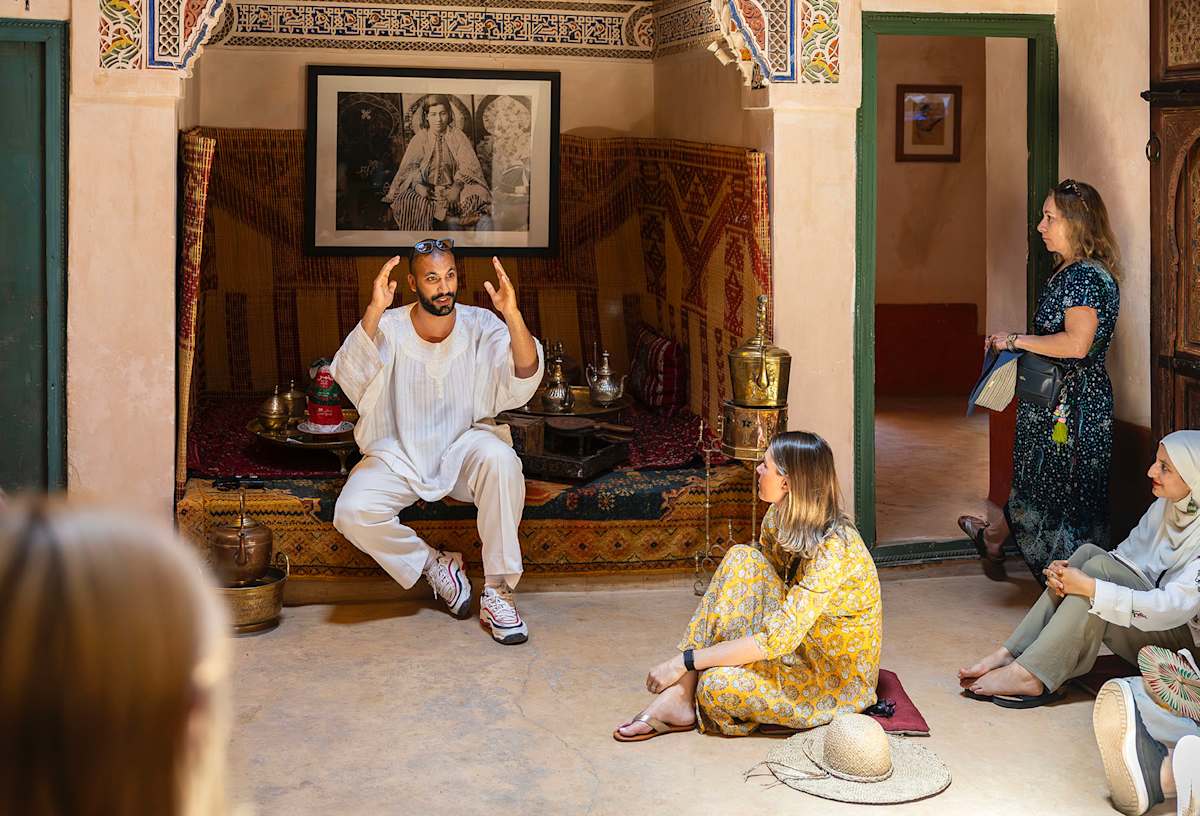
Zouhair Khaznaoii, a master hakawati (traditional Arabic storyteller).
Bella Falk/G Adventures
Storytelling in Marrakech
In Marrakech, in Morocco’s “Red City,” you reach a point where maps become meaningless. Once you step through the ocher walls of the medina, the old city unfolds in layers: Narrow alleyways twist into hidden courtyards, a spice merchant's display coincides with the rhythmic tap of a coppersmith's hammer, and a quiet passage suddenly opens into a bustling market filled with color, sound and movement. Khadija Amahal, a knowledgeable local expert, leads our small group to Jemaa el-Fnaa, Marrakech's legendary square, where the city's pulse beats and there’s always something competing for your attention. Musicians, artisans and performers fill the square, and fresh juices are squeezed to order while steam rises from grills preparing fragrant tagines. The warm air is thick with the unmistakably Moroccan aroma of cinnamon, saffron and anise. We meet Zouhair Khaznaoii, a master hakawati (traditional Arabic storyteller) who introduces us to hikayat, the centuries-old Moroccan tradition of oral storytelling. Chronicles like his were once shared in public spaces across Morocco, but today, the tradition is less common. Settling onto a stool, Khaznaoii recounts old folktales featuring monkeys and sultans. In each story, there is an important lesson to be learned, such as humility. Around us, the sounds of Marrakech reveberate: the clinking of tea glasses, the calls of vendors, the constant buzz of the crowd. Crimson-robed water sellers weave through the square, their jingling hats decorated with coins and bright pompoms. They stop only long enough to pour water from traditional goat-skin pouches into brass cups before disappearing back into the flow of the medina. Just as I’m falling into a story about good and evil, Khaznaoii pauses. “To be continued," he says, promising to pick up the tale at our next historic stops: the 19th-century Bahia Palace and Madersa Ben Youssef, a 16th-century Islamic college.
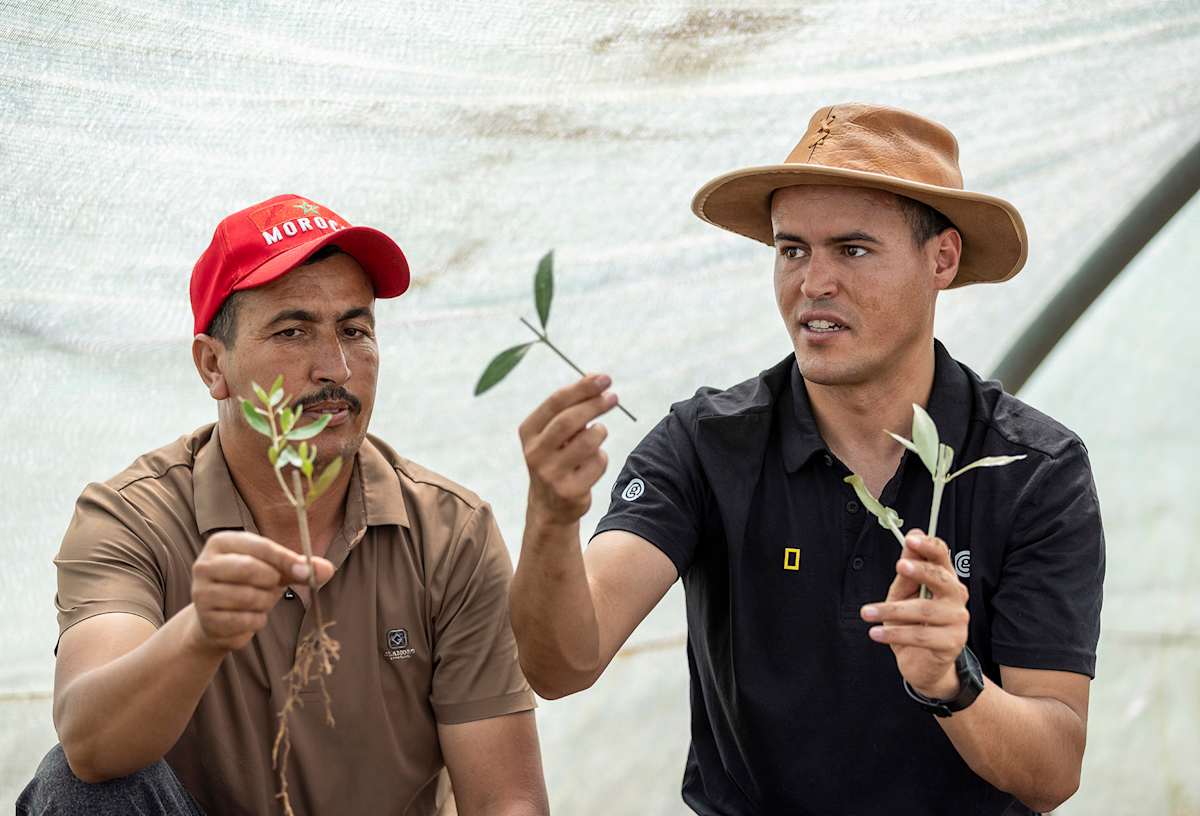
Akrich Nursery is located about 12 miles south of Marrakech in Douar Akrich.
Bella Falk/G Adventures
New Beginnings at Akrich Nursery
The next day as we’re leaving Marrakech behind, I watch from the bus window as the terracotta earth gives way to palms, then to wide open plains. Villages appear without warning and disappear just as quickly, making it difficult to judge how far we have traveled or how much farther remains. We arrive at the Akrich Nursery about 12 miles south of Marrakech in Douar Akrich. Once a Jewish cemetery dating back 700 years, the site is now a center for organic farming and reforestation. Between historic graves, rows of young fig, pomegranate and lemon trees reach toward the sun, part of an effort to restore the soil and create new opportunities for local farmers. Since 2023, Planeterra and the High Atlas Foundation (HAF) have supported this work on behalf of G Adventures’ Trees for Days initiative. The program plants trees and tracks them for their environmental impact and helps foster new jobs in the community. We venture to a nearby plot of land in the village of Akrich where, seated on multicolored rugs, we meet Rachid, a farmer whose livelihood has been shaped by the tree-planting initiative. As I sample locally grown nuts and mint tea, Rachid tells me how farmers were previously discouraged from planting trees due to ongoing water scarcity, but now, with the drip irrigation system and new well installed by HAF, the once-dry fields have been transformed into thriving farmland. After our picnic, I find a shovel laid out neatly next to crisp white gardening gloves. I’m shown the relatively easy process of planting a tree — a shallow hole, a handful of earth, a splash of water. It takes only a few minutes, but when you’re standing beside the farmer who will care for it long after you’ve gone, it makes the simple act feel significant.
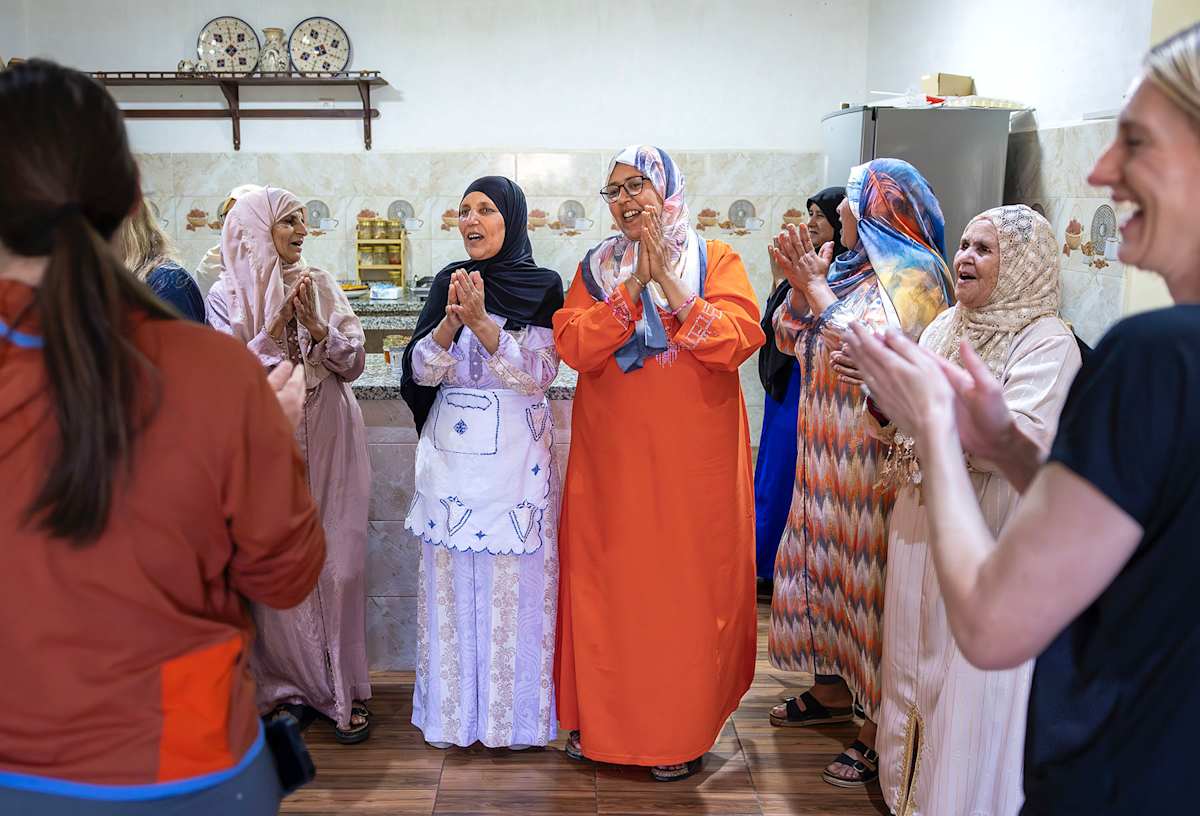
Ashbarou Women’s Cooperative was founded in 2021.
Bella Falk/G Adventures
Weaving Tradition with Ashbarou Women’s Cooperative
Continuing from the winding roads of Morocco's High Atlas Mountains, our next stop is the Ashbarou Women's Cooperative, where I hear the clatter of wooden looms before I even step inside. Led by Samira Driouch, a group of local women are using Amazigh weaving traditions to create rugs that they then sell on site. With support from Planeterra, the cooperative not only provides a place for artisans to carry this weaving heritage forward, but they can also earn a real living for themselves and their families. Inside, bundles of raw wool are spun and woven into richly patterned carpets, each one reflecting the colors, symbols and stories of the Amazigh. Passed down to the women, these techniques preserve a wealth of knowledge that might otherwise be lost. From the moment we arrive, we're treated as guests. We share a meal of fresh tomato salad, chicken and vegetable tagine and couscous made by the artisans, then we linger over glasses of fragrant tea as they sing. When I run my hands across the wool and attempt a few knots of weaving myself, I quickly realize the patience required to make something look so effortless. I now understand how time and craftsmanship go into every carpet. On the drive back to our hotel — The Oberoi, Marrakech, a sprawling five-star property surrounded by citrus orchards and olive groves — I reflect on the journey. The thread connecting these travel experiences was the people who welcomed me into their stories and, for a little while, allowed me to become part of them. ✦