With awe-inspiring gorges and larger-than-life tombs and temples carved into rose-colored sandstone cliffs, the ancient city of Petra is Jordan’s most extraordinary archeological site. Here’s how to make the most of your visit.
Your Guide to Petra, One of the New Seven Wonders of the World
By Robert Liwanag | August 31, 2026
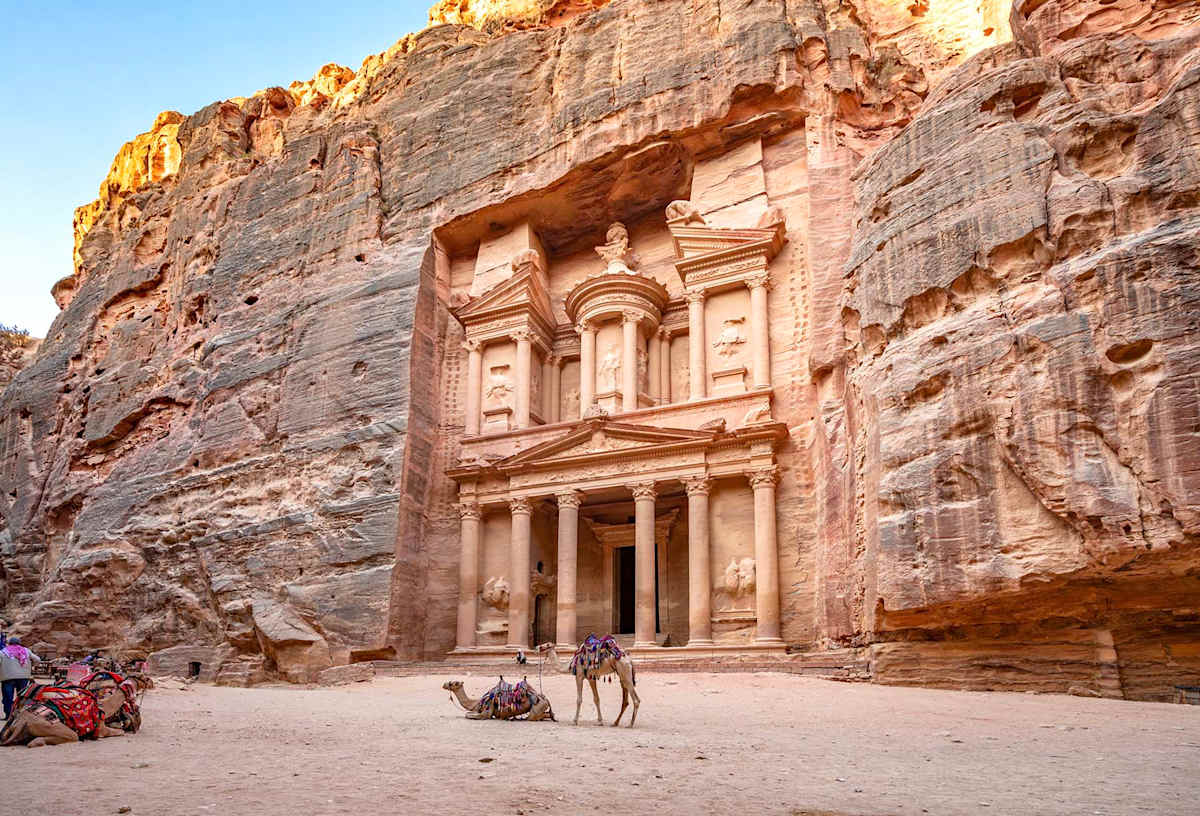
Petra’s Treasury famously made an appearance in 1989’s “Indiana Jones and the Last Crusade.”
Tomasz/Adobe Stock
Covering 102 square miles, Petra is a colossal monument not only to Jordan, but to ancient history itself. Once the capital of the Nabataean Kingdom, Petra flourished as a trading hub, its inhabitants exchanging silk, spices, frankincense and gems with China, India, Egypt and Greece. There are still traces of that wealth today, in both Petra’s grand facades and its sophisticated water systems. Enthusiastic travelers can spend several days exploring the site, but most visitors, including those on G Adventures’ spectacular Geluxe Collection itineraries in Jordan, will experience it in a single day. Here’s how to make the most of your time in the Rose City.
The best time to visit Petra
Petra, a UNESCO World Heritage site since 1985, is at its very best in spring (March to May) and fall (September to November). In spring, temperatures typically reach highs of 68°F (20°C) and lows of 48°F (9°C), while autumn is slightly warmer, with highs of 73°F (23°C) and lows of 52°F (11°C). During the summer, temperatures can reach an uncomfortable 86°F (30°C) — not ideal as large portions of Petra offer little shade. Winter is another option for those who don’t mind bundling up for colder temperatures, but there’s a catch: while the season attracts the fewest visitors, flash flooding can also pose a significant risk.
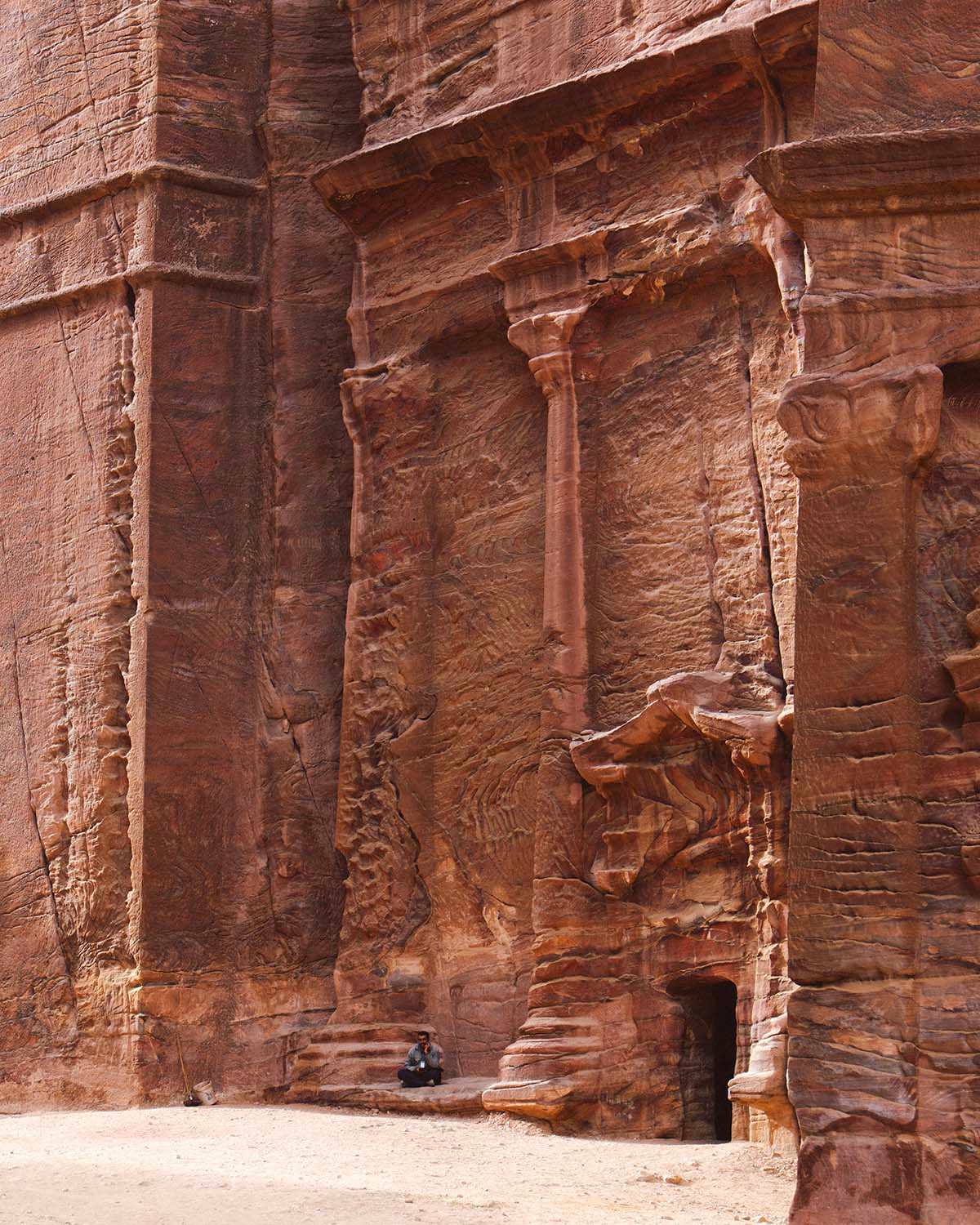
Petra is often called the Rose City on account of its red sandstone.
Robert Liwanag
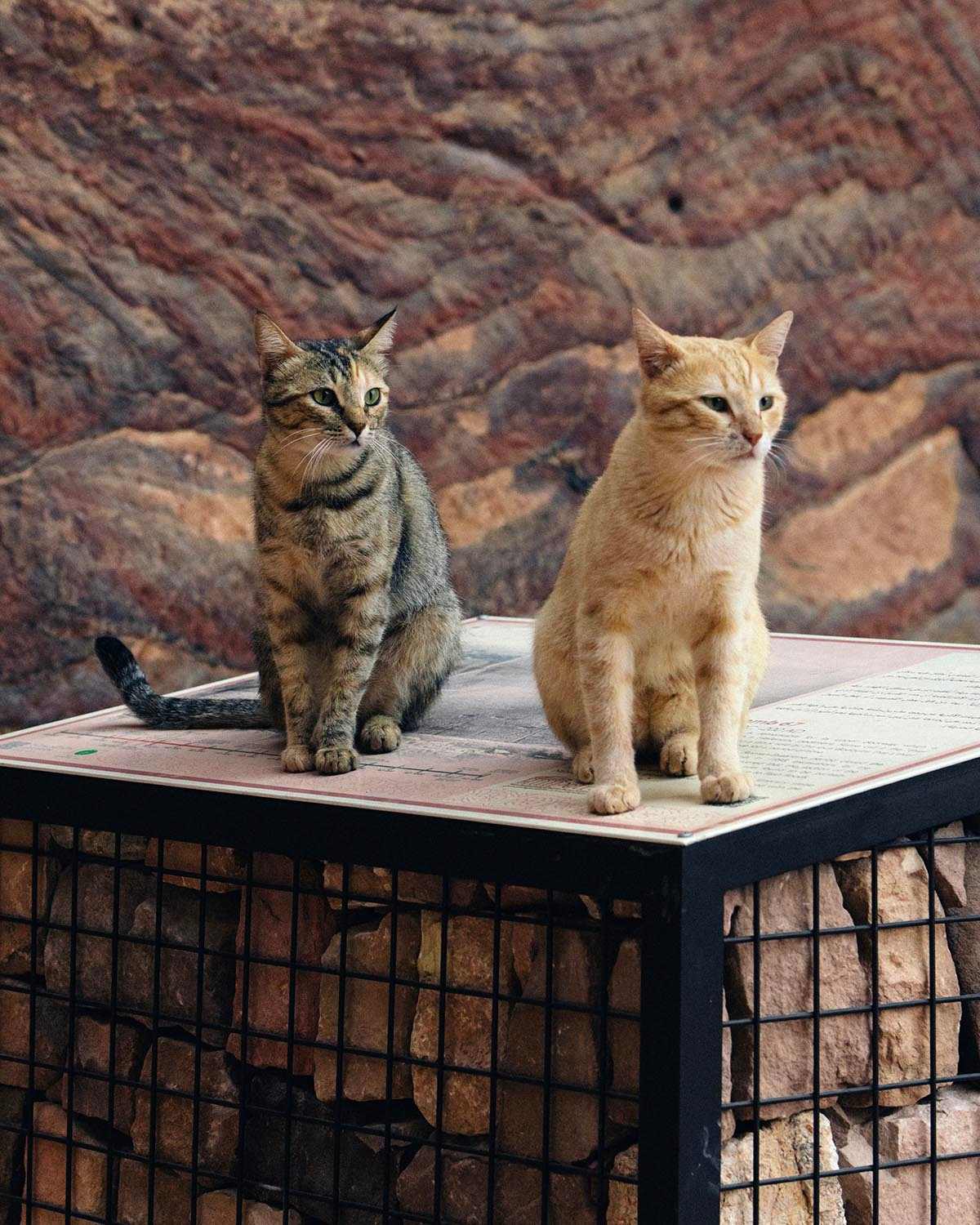
Numerous stray cats and dogs call the ancient city home.
Robert Liwanag
Know before you go
When visiting Petra with a travel company like G Adventures, most logistics are taken care of. That said, exploring the main sights requires some level of hiking experience. The main trail from the visitor center to the Treasury, Petra’s most famous attraction, can take anywhere from 35 minutes to one hour. Meanwhile, the routes to the High Place of Sacrifice and Monastery — both half-day commitments — require medium-level hiking skills. Comfortable, closed-toe shoes are essential, as many trails feature uneven stones. Carry plenty of water, but in case you run out, beverages can be purchased from numerous vendors within the site.
The Treasury
Dramatically framed by the Siq passageway, the instantly recognizable Treasury (“Al-Khazneh” in Arabic) exceeds every expectation. Despite the name, there’s considerable evidence that it was once used as a tomb or mausoleum. Opt to admire it up close from the ground, climb a set of stairs to an elevated viewpoint operated by local Bedouins for a small fee or take the two-mile trail to the famous “cave view.”
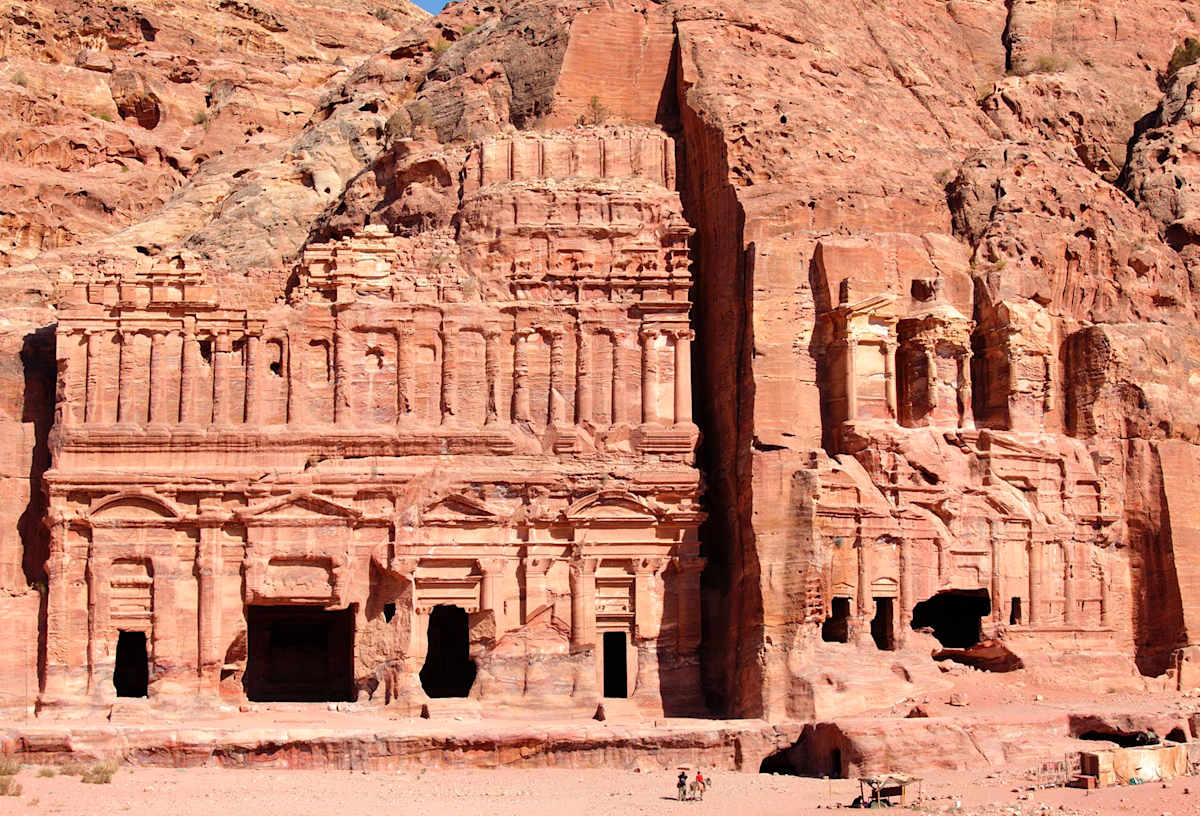
The Corinthian and Palace Tombs.
Massimo Pizzotti/Adobe Stock
The Royal Tombs
There are several reasons to visit the Royal Tombs — four, to be exact. From the Treasury, head right and downhill, past the Street of Facades and Theater, until you reach the western side of the Jebel Al Khubtha massif. The four tombs — the Palace, Corinthian, Silk and Urn tombs — were carved in such a way that it almost appears as if the mountains grew out from the tombs, rather than the other way around. On sunny days, be sure to step inside the burial sites and admire the patterns in the sandstone ceilings, which range in color from vivid red and orange to deep coal.
Plan your ultimate adventure.
Plan your ultimate adventure.
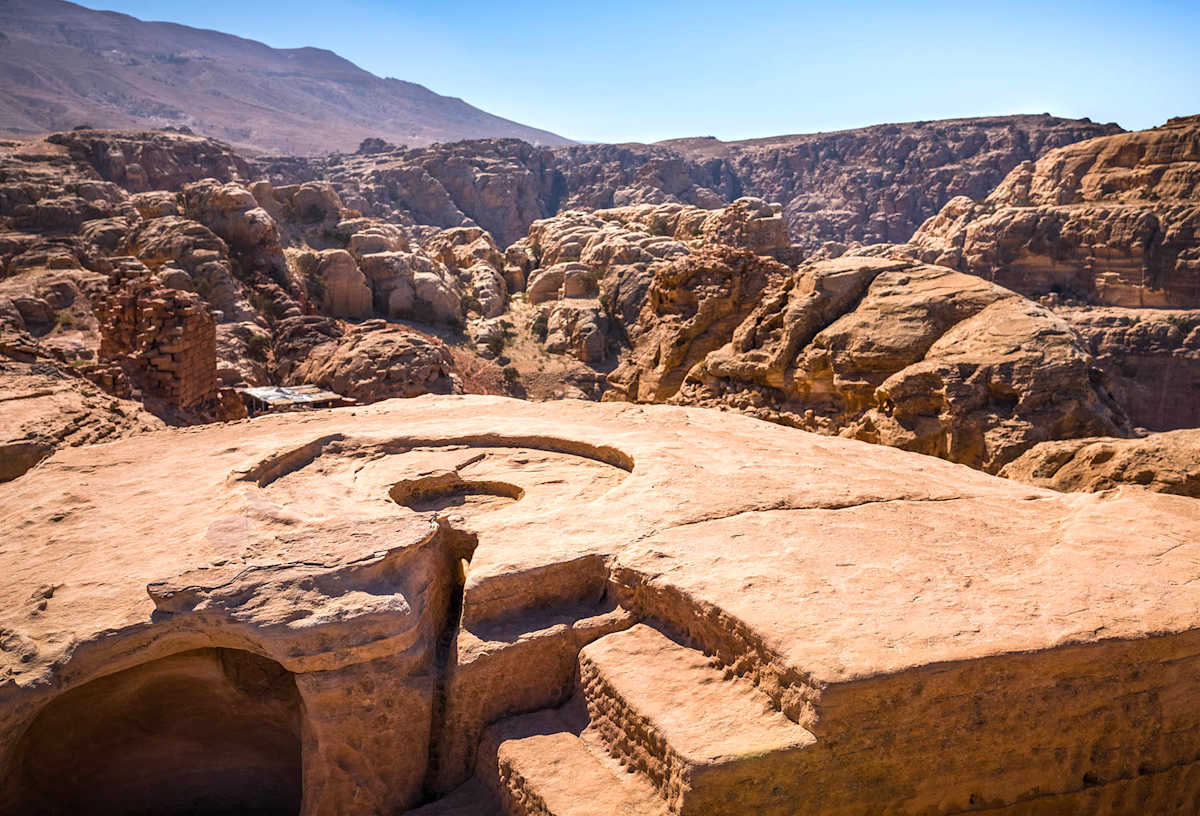
The High Place of Sacrifice is perched atop Jebel al-Madbah.
Maurizio De Mattei/Adobe Stock
The High Place of Sacrifice
If visiting an open-air ceremonial platform for animal sacrifice sounds a little macabre, breathe easy: the High Place of Sacrifice is anything but. That’s because the site wasn’t really about death at all; instead, it was a place of worship where locals would make offerings to the Nabatean gods, including Al-Uzza, the goddess of love and war. Today, remnants include an altar and stone blocks, along with the aforementioned platform — all carved into the mountain in true Petra fashion. Even without the historical and spiritual significance, the High Place is worth visiting for the sweeping views alone.
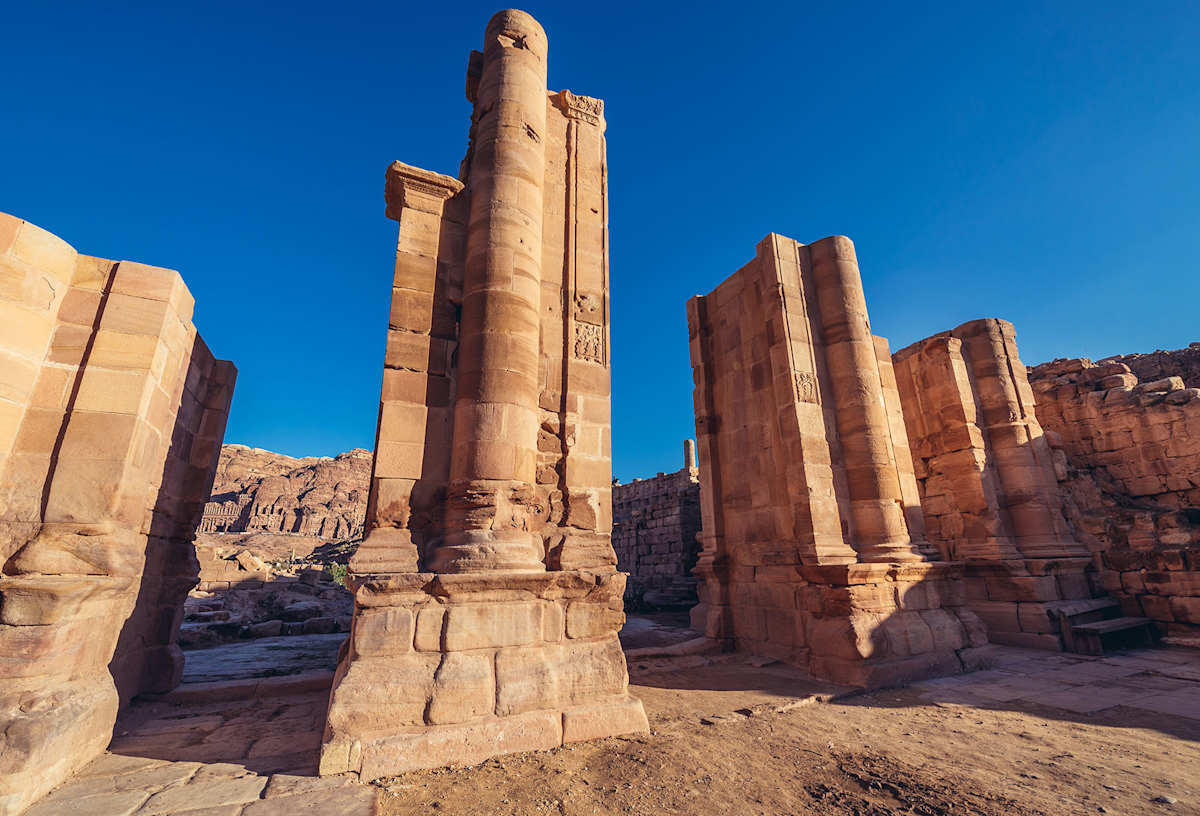
The Romans rebuilt Colonnaded Street in the 2nd century CE.
Fotokon/Adobe Stock
The Colonnaded Street
It may be hard to believe looking at it today, but Petra was anything but serene. At its peak, the city was home to some 30,000 people, and the Colonnaded Street was one of the places to be. The street runs from the Nymphaeum to the Temenos Gate, and historians believe its markets sold everything from frankincense and textiles to spices and stones. If you find yourself wondering why its ruins look suspiciously Roman, you’re onto something: flash floods destroyed much of the original block, and the Romans, who later garrisoned at Petra, added the double row of columns seen today.
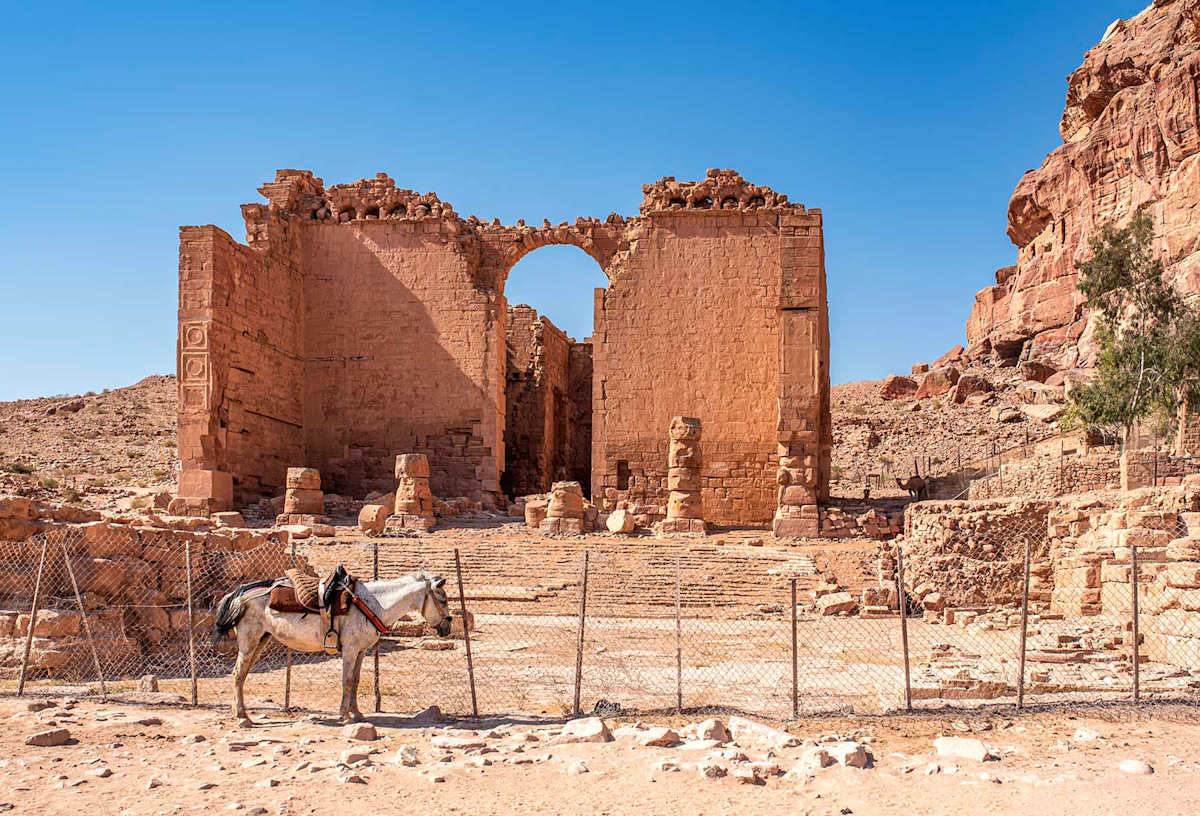
Qasr al-Bint is one of the few freestanding, fully built structures in Petra.
Andrea Tabaro/Adobe Stock
Qasr al-Bint
In a city full of “How did they do that?” monuments, Qasr al-Bint is likely to provoke the same reaction. Situated at the western end of Colonnaded Street, it was the main religious temple in Petra and is believed to have been constructed during the reign of King Aretas IV around 30 BCE. It’s remarkable for two reasons: it’s one of the few freestanding, fully built structures in the city (constructed from cut ashlar rather than carved into the rock), and it flaunts the widest facade in Petra — 13 feet wider than the Treasury.
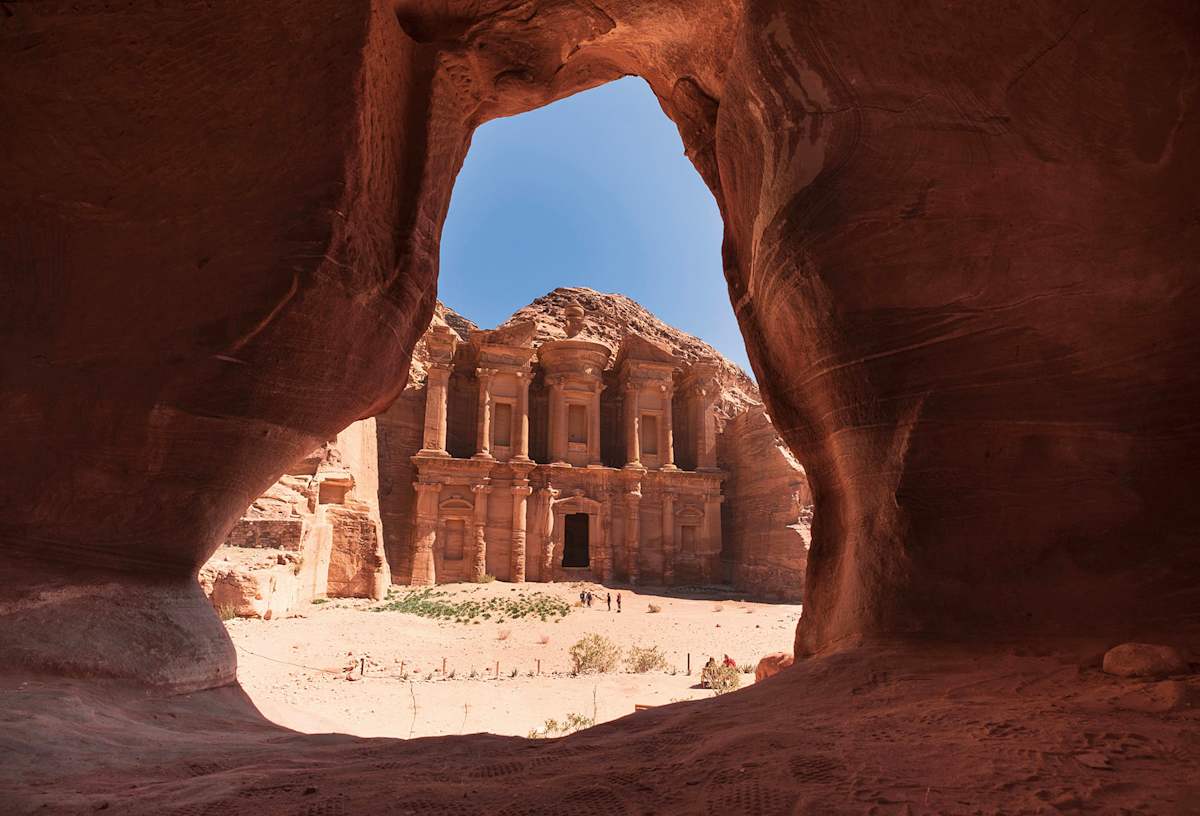
The Monastery is believed to have been used as a church during the Byzantine era.
Lana Kray/Adobe Stock
The Monastery
Reaching the Monastery is no easy feat: it’s located around a two-hour hike northwest of the Treasury, and part of the journey comprises 800 rugged steps up a mountain. But if you’ve got the stamina and the time, it’s well worth the journey to Petra’s second-most visited site. Standing at nearly 150 feet tall, it’s one of the largest monuments in the city — and taller than the Treasury. Although it was later used as a Christian church, there are still debates around its original purpose, adding to its allure. ✦